




Mushing Training 101: How to Build a Strong, Fast, Healthy Dog Team (Data-Driven Guide for Mushers)
16 Dec 2025
Dog mushing is one of the most demanding dog sports – a perfect blend of endurance, strategy, and teamwork. Whether you're running recreational tours, competing in sprint races, or training for mid-distance events, success hinges on knowing your dogs' capabilities and managing their workload carefully.
This guide walks you through the essential metrics every mushing team should track, how to read your team's dynamics, and how structured data helps you prevent injuries, optimize performance, and build a sustainable training program. We'll also show you how Qpaws, the app built for dog sports athletes, makes tracking and managing all this information effortless.
What Is Mushing Today?
Modern mushing spans recreation and competition: leisure touring, sprint racing (short, fast distances), mid-distance events, and long-distance expeditions, plus dryland variants like bikejoring, skijoring, and cart training. At its heart, mushing is a team endurance sport requiring coordinated effort, smart pacing, consistent conditioning, and a deep understanding of each dog's role and recovery needs.
The best mushers combine intuition with data. While experienced mushers know their dogs by feel, adding structured tracking reveals patterns that gut sense alone can miss: workload trends that predict injury risk, seasonal performance shifts, and insights about which dog pairings produce the smoothest, fastest runs.
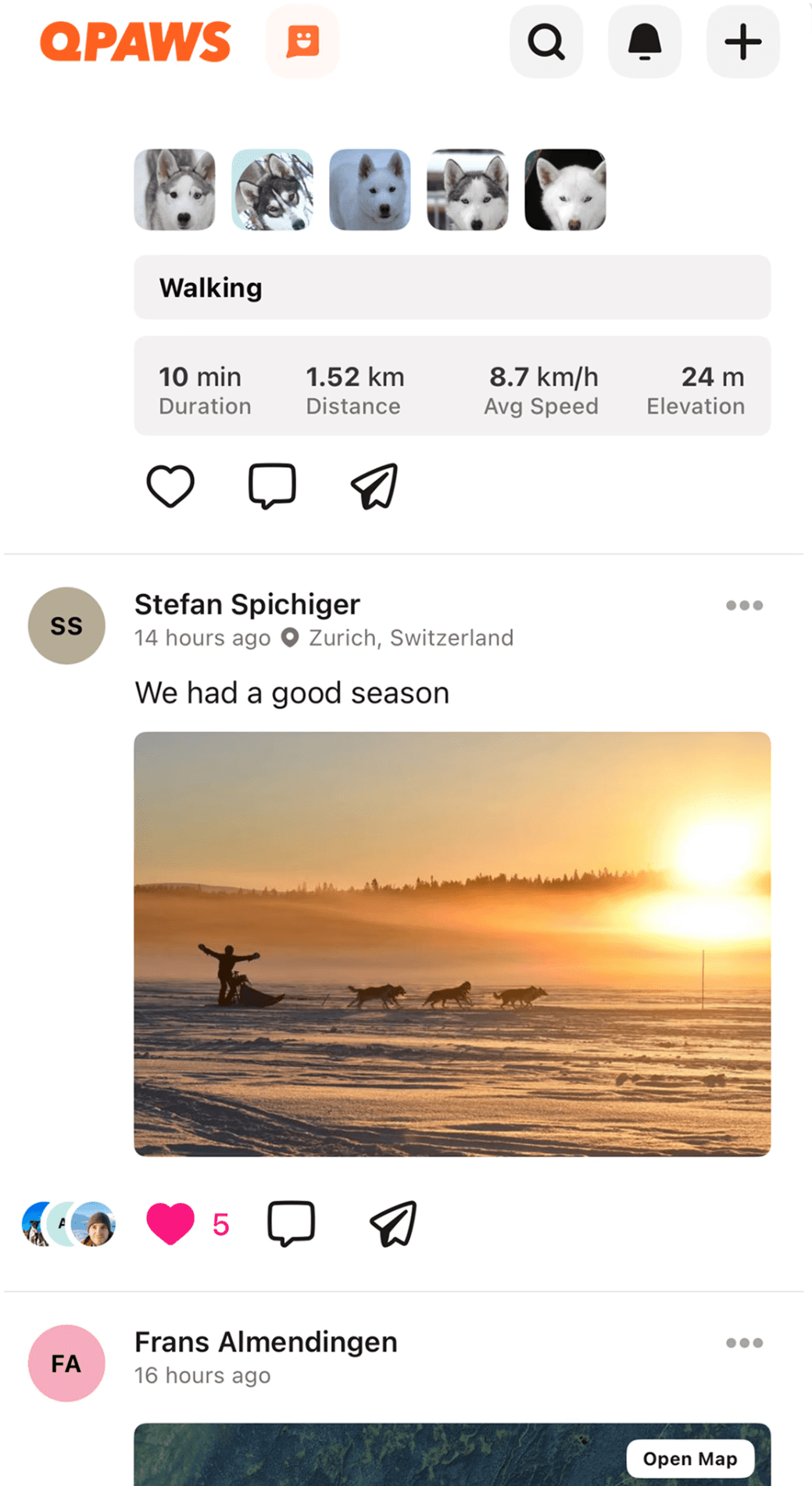
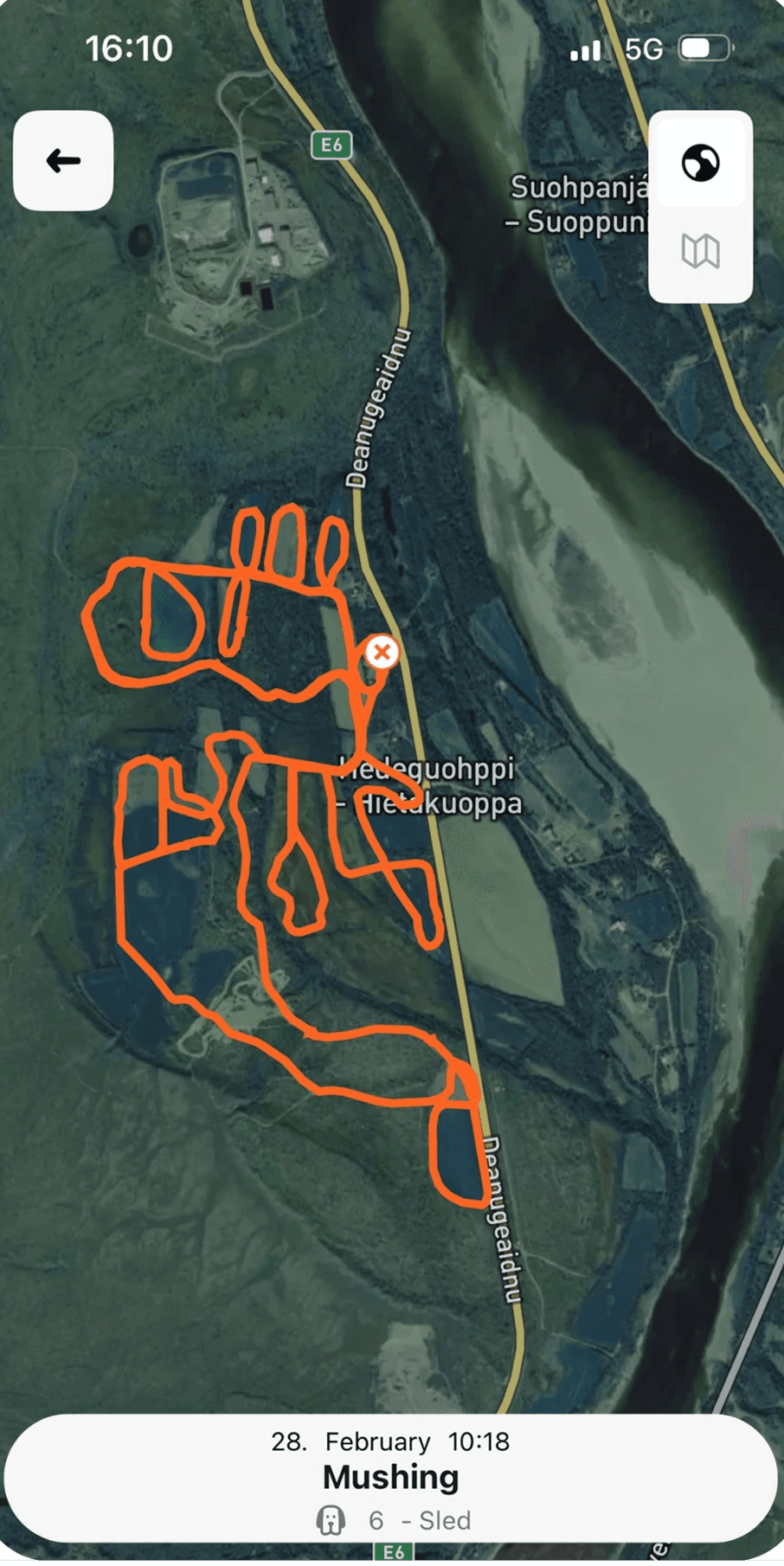
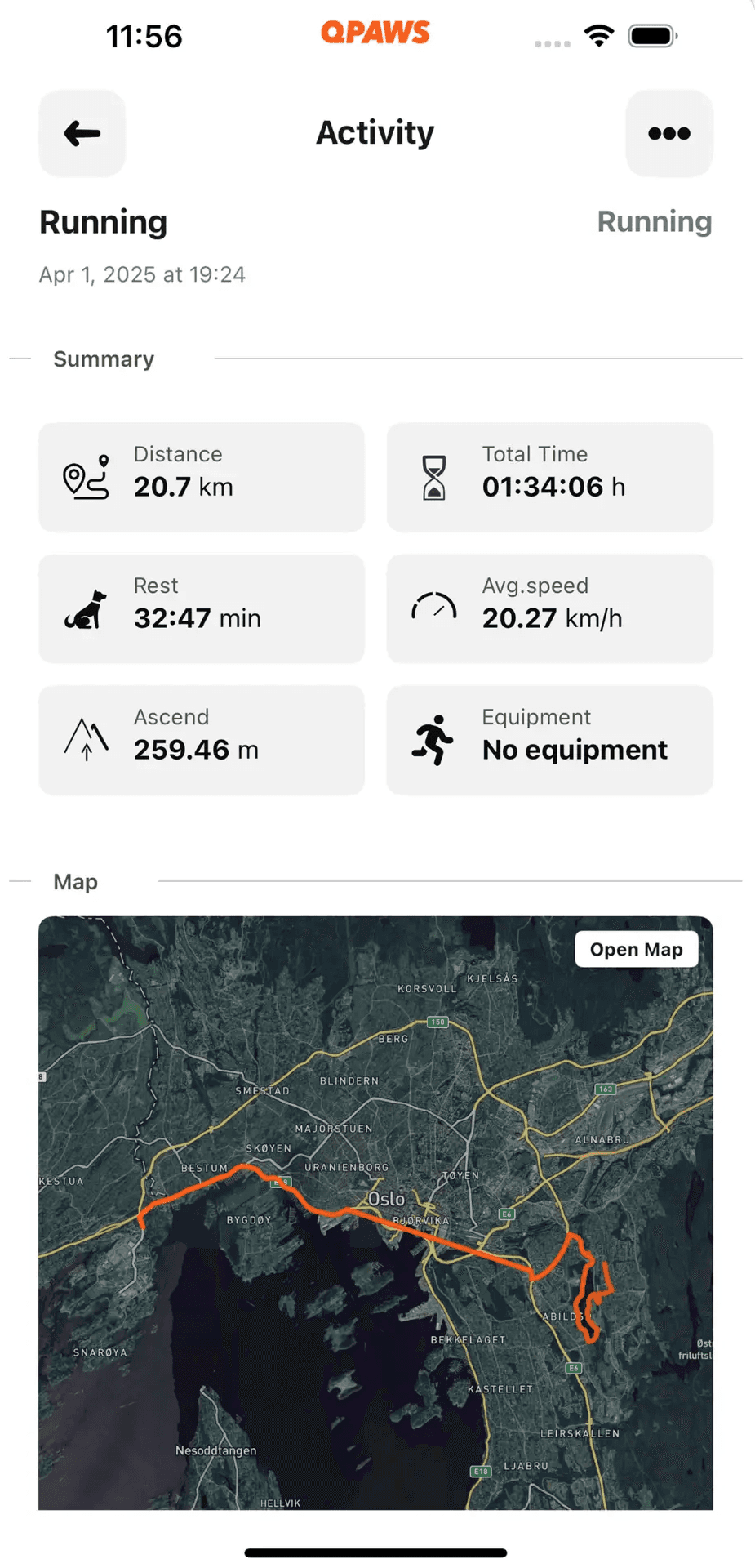
This is where Qpaws comes in. Built for dog sports athletes, Qpaws captures every session with GPS speed, distance, elevation, and time – then links it to individual dog profiles so you can spot trends and manage your entire team's conditioning in one app.
Team Roles and Line Dynamics
Understanding your team's lineup is foundational. Each position serves a distinct purpose, and rotating dogs reveals where each one excels.
Lead dogs set the pace, navigate the trail, and respond instantly to voice commands. They need a calm temperament, focus, and intelligence. Great lead dogs anticipate turns, read snow conditions, and hold the line straight without tangling or drifting.
Swing dogs (or point dogs) run directly behind the leaders. They initiate turns, reinforce the leader's steering, and often serve as backup leaders as they mature. Swing dogs are usually athletic and responsive but slightly less independent than leaders.
Team dogs make up the middle of the line, providing steady power and rhythm. They run at cruising speed and follow the pace set ahead. Team dogs are typically your strongest pullers and maintain consistent effort over long distances.
Wheel dogs run closest to the sled, adding power and stability while staying calm near the sled itself and around obstacles. Wheel dogs experience higher line tension and must be confident, focused, and unflappable.
Over seasons, rotating dogs between positions reveals where each dog naturally excels. A young dog might start in a team position, move to swing as it matures, and eventually step into the lead. A strong, steady dog might thrive as a wheel dog but struggle with the independence required of a leader. By logging every run and tagging which dogs ran in which positions, you build a detailed map of each dog's capabilities.
With Qpaws's team builder, you can create multiple team lineups, assign dogs to each activity, and later compare performance data to see which configurations produce the best results for your training goals.
Key Metrics: Speed, Pace, Cadence, and Workload
Not all miles are created equal. Tracking the right metrics transforms raw effort into actionable insight.
Speed and Pace
Average pace tells you the true intensity of your session. Most training happens below race pace because sustainable conditioning builds endurance without burning dogs out. Tracking average pace in Qpaws lets you keep sessions in the right zone instead of guessing.
Peak speed is useful for short sprint work or assessing acceleration on safe terrain, but it shouldn't drive daily training design. Chasing top speed during every run leads to overtraining and faster fatigue.
Cadence and Rhythm
Cadence is how quickly your dogs cycle their strides and how smoothly they move together. Consistent rhythm—where the line feels tight, the pull is even, and dogs move in unison—usually signals efficient movement and good conditioning. Dogs working at uncomfortable effort levels often break cadence: one dog surges ahead, the line goes slack, or the team slows inconsistently.
Workload and Intensity
Workload is the sum of distance, time, elevation gain, trail type, and weather across a training block—not just one run. A 10 km run on soft snow at 8°C is easier than 10 km on icy trails at 20°C.
Intensity describes how hard your dogs work within that distance: long, easy miles build base fitness; short, fast repeats sharpen speed; hill repeats build power. A smart program mixes these intensities across the week, never doing everything at maximum effort every day.
Qpaws captures distance, pace, time, elevation, and route for each session and aggregates them by dog and by team. You can tag activities with sport type (mushing, skijoring, bikejoring), weather conditions, trail surface, and custom notes. Over weeks and months, seasonal graphs show your training progression and help you spot workload spikes that might precede injury or burnout.
Quick Reference: What to Track
Metric | What to Watch | Why It Matters |
|---|---|---|
Average pace | Pace over the full run and key segments | Keeps training sustainable and comparable across sessions |
Peak speed | Short bursts on safe, open terrain | Useful for race prep but not the goal of daily training |
Distance/time | Kilometers per run and total weekly volume | Controls total workload and prevents sudden mileage jumps |
Elevation | Climbing and descending per activity | Adjusts workload for hills vs. flat terrain |
Conditions | Temperature, humidity, trail surface, snow | Impacts speed, paw wear, and heat stress |
Tracking Individual Dog Performance
The most critical insight in mushing is this: your team is only as healthy as your most stressed dog. Workload spikes don't affect all dogs equally. A young, eager dog might push harder and tire faster. A heavier dog might struggle in heat more than a lean teammate. A dog with old injuries might need longer recovery windows.
What to Log Per Dog
Recent workload: Total distance and time per dog over the last 7–14 days.
Behavioral signs: Reluctance to start, lagging in the line, dropping cadence compared to normal, or unusual irritability.
Recovery patterns: How the dog behaves on rest days, whether voluntary activity rebounds after hard training blocks, and appetite/hydration.
Paw and joint condition: Wear, cracking, or sensitivity on certain surfaces; stiffness or limping after runs.
Weight and body condition: Maintaining lean muscle without underfueling your dog for their workload.
Red Flags for Overtraining and Injury
Sudden drops in performance, stiff movement, changes in gait, or reluctance to engage usually follow workload spikes. Many injuries in sled dogs aren't dramatic—they're the result of accumulated micro-stress from too much distance, too much speed, or not enough recovery.
Heat stress is a silent killer. Dogs can overheat quickly, especially in spring or at altitude where cold air masks rising body temperature. Signs include excessive panting, drooling, staggering, or refusing to continue. Always adjust intensity and timing when temperatures rise.
Using Qpaws for Per-Dog Health Tracking
Qpaws gives each dog a dedicated profile where you log every mushing session, every conditioning run, and every rest day. You can add notes about paw condition, soreness, gait changes, or behavioral shifts, then cross-reference these notes with training data.
You can also track vet visits, medications, and health events so your complete care history is always accessible. When you notice a dog isn't performing as expected, you can review their recent workload, spot if there was a spike, and adjust before a small issue becomes an injury.
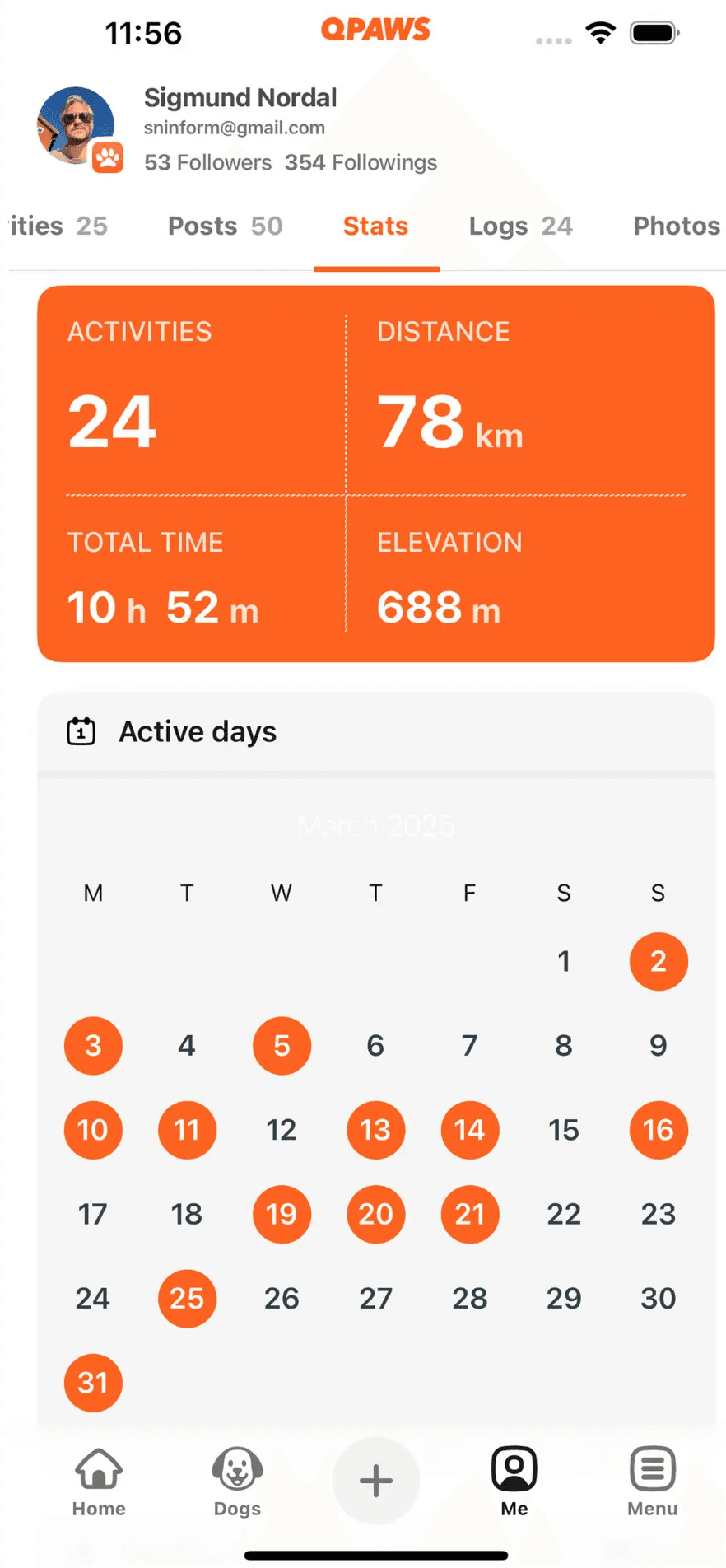
The Qpaws calendar view makes it easy to see weekly and monthly totals for each dog at a glance, helping you honor planned rest days and avoid the gradual creep of excessive volume.
Team Dynamics and Lineup Optimization
Once you're tracking individual dogs, zoom out and read the team as a system. A balanced team maintains even line tension, minimal tangling, and smooth pace at training intensity. Chaotic lineups struggle—dogs pull unevenly, the line goes slack and taut, and corrections interrupt the rhythm.
Building Your Ideal Lineups
Keep detailed notes (in Qpaws's activity tags and notes) on which pairings work best:
Which dogs run most smoothly together in lead?
Does a particular swing dog pair better with specific leaders?
Which dogs thrive in team position vs. struggling there?
Which dogs are rock-solid in wheel?
Over a season, you'll see patterns: maybe your young dog runs beautifully with the calm veteran as lead partner, or your strongest puller moves more efficiently in a certain position. This history becomes invaluable for race prep and for knowing which lineup to choose on any given training day.
Using Qpaws to Compare Lineups
Qpaws lets you build multiple teams (e.g., "A Team", "B Team", "Youngsters") and assign different dogs to each activity. You can then compare pace, distance, and consistency between lineups. Tag activities with the team name or configuration, then filter your history to see which setups consistently deliver smooth runs, faster pace, or fewer stops.
Over time, this data tells you which teams are ready for racing, which need more conditioning work, and which dogs are stepping into new roles successfully.
Seasonal Conditioning and Safe Training Progression
Training programs that work sustain success year after year. Generic schedules don't account for your dogs, your climate, or your goals—so build your own plan anchored in data.
Pre-Season Conditioning (Fall and Early Winter)
Most mushers follow an 8–10 week build before racing or major events:
Weeks 1–2: Very short, slow runs (1–2 km) twice per week. Focus on enthusiasm and consistency, not distance.
Weeks 3–4: Gradually increase to 3–5 km, three times per week.
Weeks 5–6: Mix easier runs (6–8 km at conversational pace) with one slightly harder session.
Weeks 7–10: Add longer runs (10–15 km) and intensity work like hill repeats or tempo segments, ensuring 2–3 easy days for every hard day.
Throughout, monitor weekly totals in Qpaws to ensure no dog's mileage jumps more than 10–15% week to week. Sudden spikes are the leading cause of injury.
In-Season and Racing
Once competition starts, training shifts to maintenance and sharpening. Shorter, faster sessions preserve speed without accumulating fatigue. Always include 1–2 easy weeks after hard races to allow recovery.
Summer and Warm-Weather Training
Sled dogs are built for cold; heat is their enemy. When temperatures rise, dramatically reduce intensity. Avoid midday running; run early mornings or evenings. Switch to lighter, non-pulling activities like swimming, obedience, or agility to keep dogs engaged without the heat stress of pulling.
Many mushers use Qpaws's seasonal tags (e.g., "spring conditioning", "off-season", "race prep") to build a searchable history. This makes it easy to compare how this year's spring training looks vs. last year, and to revisit what worked in past seasons.
Your First Week with Qpaws: A Practical Workflow
Getting structured data into Qpaws takes minutes per session once you're in the habit.
Before Your Run
Open Qpaws and select the team you'll run.
Make sure all participating dogs are added to your dog profiles.
Optional: add a note about weather, trail conditions, or what you're focusing on today (e.g., "speed work" or "long slow distance").
During Your Run
Qpaws records GPS location, speed, distance, time, and elevation in the background while you focus on driving. No extra steps required.
After Your Run
Review the stats: distance, pace, time, elevation gain.
Tag the dogs that ran in the activity, and specify their positions (lead, swing, team, wheel).
Add a quick note: "young dog in lead today – ran smoothly" or "soft snow, slower pace than usual".
Save the activity.
Weekly Review
Once a week, open the stats for each dog and review:
Total distance for the week
Average pace over recent sessions
Any notes about performance or behavior
Cumulative workload trends
This 5-minute review catches workload spikes and lets you adjust the next week before problems develop.
For Dryland and Tech-Heavy Mushers
If you run bikejoring, skijoring, or ATV training, you might already track on a Garmin watch or Strava. Qpaws integrates with these services, so you can sync that data automatically and then tag the dogs that participated. No duplicate logging needed.
Common Mushing Questions Answered
How Fast Should Sled Dogs Run in Training?
Most training happens at conversational pace—a speed where you could chat with another musher while driving. This is usually 8–12 km/h for recreational dogs, depending on terrain and condition. Qpaws tracks your average pace so you can easily see if you're in the right zone instead of guessing by feel.
Race pace is typically 2–5 km/h faster and should only be done in short bursts, 1–2 times per week, after a solid fitness base.
How Far Can Sled Dogs Safely Run?
Safe distance depends on age, conditioning, terrain, and temperature. A well-conditioned adult dog might safely do 20+ km on flat, cool terrain; the same dog might struggle at 10 km in heat or on rough ground.
The key is avoiding sudden jumps. Qpaws's weekly totals make it easy to see if this week's mileage is 10–15% more than last week (safe progress) or 50% more (danger zone).
How Often Should Dogs Rest?
Research on sled dogs shows that voluntary activity drops during sustained training and then rebounds when dogs get two consecutive rest days. This rebound is a sign of recovery.
A typical structure is 2 days on, 1 day off, or alternating hard and easy days with a full rest day every 7–10 days. Qpaws's calendar view makes it simple to plan and visualize your rest schedule.
What Temperature Is Too Warm for Mushing?
Above 15°C (60°F), many sled dogs struggle, especially in sun or at altitude. Above 20°C, reduce intensity sharply or skip running altogether. Below 0°C with direct sun, monitor for overheating even in cold air.
Log conditions in Qpaws and track performance by temperature. Over time, you'll see your dogs' individual heat thresholds and can plan accordingly.
How Do I Choose and Train Lead Dogs?
Lead dogs need intelligence, calm focus, and independence. Start young dogs in team or swing positions, rotating them into lead only when they show interest and maturity. Not every athletic dog wants to lead; it's a mindset.
Track each dog's performance in different positions by tagging activities with their position. Over a season, this history shows you which dogs gravitate toward lead and which thrive elsewhere.
What's the Best App to Track Mushing Training?
An app built for dog sports captures every detail: GPS tracking, per-dog workload logs, team management, calendar planning, health notes, and integrations with your existing fitness trackers. Instead of scattered spreadsheets, notes, and guesswork, you have a complete system in one place, accessible anytime, anywhere.
Next Steps: Download Qpaws and Start Your Season
Structured tracking transforms mushing from intuition-based trial-and-error into a science. You'll spot problems early, build conditioning sustainably, and understand exactly what it takes for your team to excel.
Download Qpaws for free on iOS or Android. Create profiles for your dogs, log your first mushing session, and start building your training history today.
Your team will thank you with stronger performances, better health, and the confidence that comes from knowing your dogs' true capabilities. Happy mushing! 🐕🛷
____
Thanks to Matiu Crusener-Mattei from 🇫🇷 France for providing the photos!
→ https://www.facebook.com/otxoateam/
→ https://www.instagram.com/otxoa_team/