





You've mapped the perfect training plan. Your dog is hitting the trail twice a day, nailing agility drills, pulling harder every weekend. But performance has plateaued – or worse, started slipping.
Here's what most active dog owners get wrong: fitness isn't built during training. It's built during sleep.
The hours your dog spends unconscious are when muscle fibers actually repair, when motor skills from the morning's session get encoded, and when stress hormones get flushed from the system. Cut those hours short (or skip recovery days) and you're pulling the floor out from under every training session you've done.
This isn't a soft wellness claim. Canine sports science now supports what elite sled dog mushers have known for decades: rest is a training variable, not a break from training.
How Dog Sleep Actually Works
Dogs sleep differently from humans, and understanding the architecture of their sleep explains why it's so powerful for recovery.
Sleep cycles in dogs
Dogs cycle through two primary sleep states:
NREM (Non-Rapid Eye Movement): The deeper, restorative stage. Heart rate slows, muscles relax, and the body releases growth hormone – the primary driver of tissue repair.
REM (Rapid Eye Movement): The dreaming stage. The brain is highly active, consolidating memories and processing the motor patterns learned during waking hours.
In humans, one full sleep cycle lasts roughly 90 minutes. In dogs, it's closer to 20–45 minutes, which means they cycle through REM and NREM far more frequently. This has a significant upside: dogs can compress more restorative sleep into shorter windows, but only if those windows are genuinely uninterrupted.
How much sleep do active dogs need?
Adult dogs average 12–14 hours of sleep per day. For dogs in heavy athletic training (working sled dogs, agility competitors, canicross dogs, field trial breeds – that number climbs to 16–18 hours during high-training periods.
Puppies in training need even more: up to 20 hours, because their neuromuscular systems are developing alongside the conditioning work.
When active dogs consistently sleep fewer hours than this, the deficit accumulates. Performance drops. Reaction times lengthen. Injury risk rises.
Three Things Sleep Does That No Training Session Can
1. Muscle repair and growth
Hard work creates microtears in muscle fibers. That's not damage – it's the mechanism of growth. But the repair only happens during sleep, when the body releases the bulk of its growth hormone (GH).
In dogs, GH secretion peaks during deep NREM sleep, typically in the first few hours after they settle in for the night. If training sessions push late into the evening and your dog doesn't settle until late, this repair window gets compressed.
The practical implication: a dog who runs hard and then sleeps fully doesn't just recover – they come back physiologically stronger than before the session. A dog that runs hard and sleeps poorly gets fatigued without adaptation.
2. Motor memory consolidation
This one is underappreciated by most owners and coaches.
When your dog practices a new agility sequence, a contact obstacle, or a harness pull technique, those movements are stored as short-term motor memories during the session. During REM sleep that night, the brain replays and encodes those patterns into long-term motor memory.
Research in both humans and animals consistently shows that sleep between training sessions dramatically improves skill retention – in some studies, doubling the accuracy of complex motor tasks compared to equivalent waking rest.
What this means for your training: if your dog doesn't sleep well after a session, they've done the work but skipped the consolidation. They'll need more repetitions to achieve the same level of skill as a well-rested dog would.
3. Stress hormone clearance
Intense physical effort spikes cortisol – the primary stress hormone in dogs as in humans. At normal levels, cortisol is useful (it mobilizes energy during effort). At chronically elevated levels, it becomes destructive: it suppresses the immune system, degrades muscle tissue, and impairs learning.
Sleep is the body's primary cortisol clearance mechanism. A full sleep cycle brings cortisol back to baseline, resetting the system for the next day's training. Accumulated sleep debt means accumulated cortisol – the physiological signature of overtraining.
What the Data Says: Optimal Rest-to-Training Ratios
There's no universal formula, because breed, age, fitness base, and training intensity all affect recovery needs. But canine sports science and working-dog performance research point to some consistent patterns.
General guidelines for training load
Training Intensity | Active Days | Full Rest Days | Light Activity Days |
|---|---|---|---|
Low (recreational) | 5–6/week | 1 | 1 |
Moderate (competitive preparation) | 4–5/week | 1–2 | 1–2 |
High (peak season / race prep) | 3–4/week | 2 | 1–2 |
Post-event recovery | 1–2/week (easy only) | 3–4 | 2 |
Full rest day means no structured exercise. Leash walks for bathroom breaks only. Mental enrichment (sniff-focused, low-arousal) is fine.
Light activity day means 20–30 minutes of easy, undemanding movement – slow sniff walks, gentle swimming, free-choice play at low intensity.
The 72-hour muscle repair rule
Heavy muscle-loading sessions (long runs, hill repeats, pulling work, intense agility) require a minimum of 48–72 hours before the same muscle groups should be loaded again. This isn't optional recovery. It's the window during which the adaptation actually occurs.
Elite sled dog teams running multi-day races rotate rest and run segments explicitly around this window. Teams that compress rest below it see dropout rates climb and lap times slow — exactly the opposite of what the extra miles were supposed to achieve.
Signs Your Dog Isn't Getting Enough Recovery
Overtraining is more common than most owners realize, and it often looks like laziness or attitude rather than physiological stress. Watch for:
Slower times or declining performance despite consistent training
Reluctance to start – hesitating at the car, slow to gear up, lacking the enthusiasm they usually show
Excessive sleeping during the day even after light sessions (the body is trying to compensate)
Increased irritability or sensitivity – cortisol affects mood and social behavior
Soft stool or digestive upset during heavy training blocks
Minor injuries stacking up – small muscle pulls, paw soreness, joint tenderness
Any three of these together may help you recognize the early signs of overtraining. They are a signal to cut training load by 30–50% for a minimum of one week and prioritize sleep quality.
Building a Recovery-Optimized Training Week
Here's a sample weekly structure for a dog in moderate athletic training – competitive agility, regular canicross, or trail running at 25–40 km/week.
Sample week (moderate athletic dog)
Day | Session | Recovery Priority |
|---|---|---|
Monday | Moderate run (45–60 min) | Full sleep night, no evening activity |
Tuesday | Skill work / short sprint intervals (30 min) | Full sleep night |
Wednesday | Full rest day | Sniff walk only, sleep priority |
Thursday | Moderate run + hill work | Full sleep night |
Friday | Light activity — slow trail, free sniff | Easy evening, early settle |
Saturday | Long session / race day / peak effort | Post-effort cool-down, extra sleep opportunity |
Sunday | Full rest day | Sleep, massage, no demands |
Notice that full rest days fall immediately after the highest-load sessions. That's not a coincidence – it's sequencing rest when the physiological demand is highest, and that's why building a conditioning program for your dog is crucial.
Sleep Quality, Not Just Quantity
Hours of sleep matter. So does the quality of those hours.
Dogs who sleep in high-stress environments – with noise, temperature fluctuations, or interruptions – cycle through sleep stages less efficiently. They wake more frequently and spend less time in the deep NREM stages where the bulk of growth hormone is released.
For athletic dogs, this means:
Sleep location matters. A quiet, consistently temperature-regulated space with familiar scents supports deeper sleep cycles than a shared family room with foot traffic.
Post-session routine matters. A calm wind-down period (not more stimulation) after hard sessions helps the nervous system downshift into restorative sleep faster.
Meal timing matters. A light post-workout meal within 30–60 minutes of exercise supports muscle glycogen replenishment and a smoother sleep onset.
For (not only) elite sled dog teams and working dogs spending nights outdoors, and experienced dog mushers have long observed that dogs sleeping in their own familiar straw beds, in teams, at consistent temperatures, recover markedly faster than dogs in novel or disrupted environments.
Tracking Rest Like You Track Mileage
One reason recovery gets under-managed is that it's invisible. You can log every kilometer, every training session, every PR. But rest days don't show up on the chart unless you put them there.
Treating rest days as scheduled, logging training variables (not as empty space in the calendar), changes how you approach them. When recovery is tracked with the same intention as effort, you start to see the patterns: the weeks with two full rest days produce better performances the following week than weeks with one.
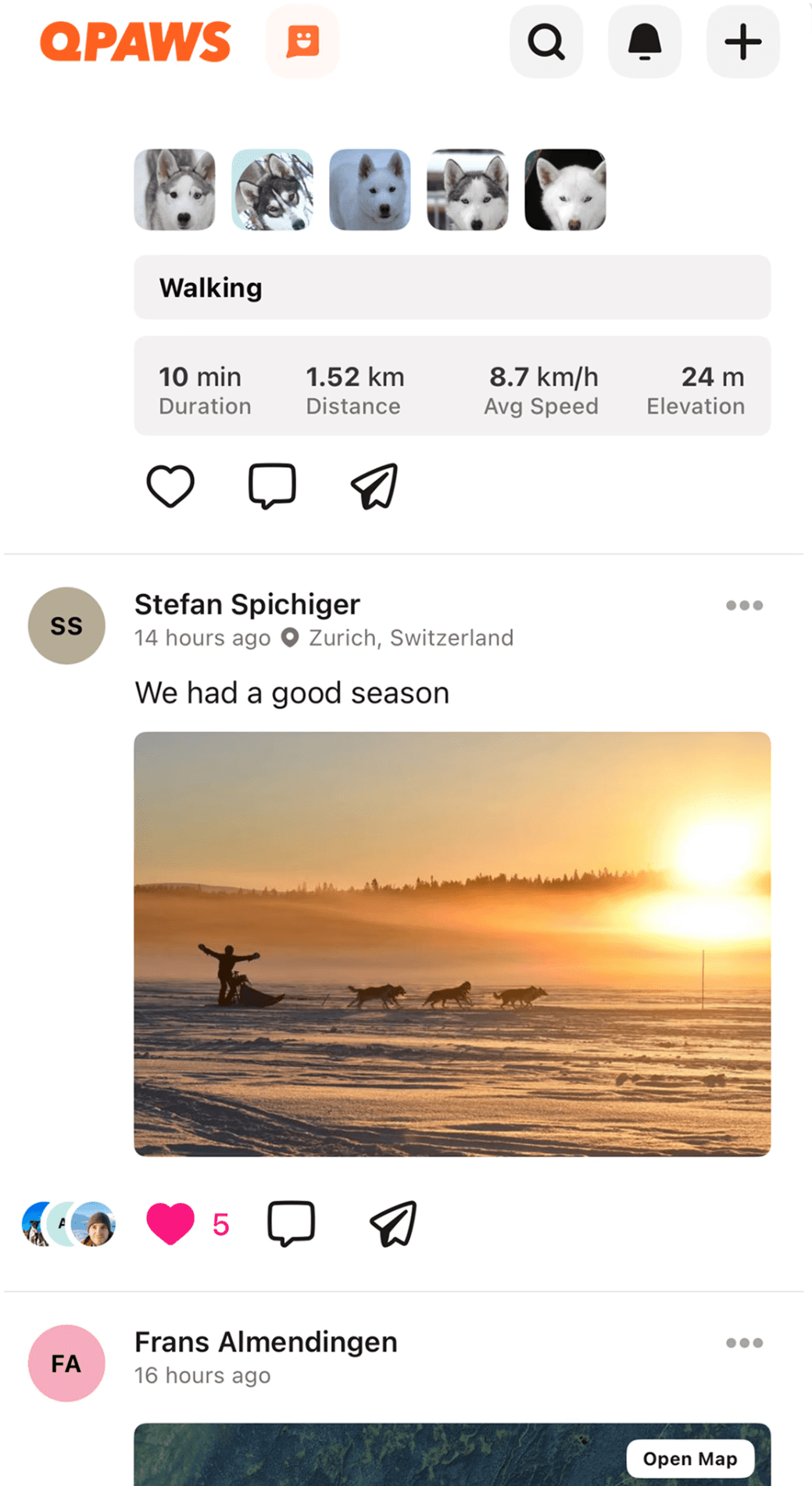
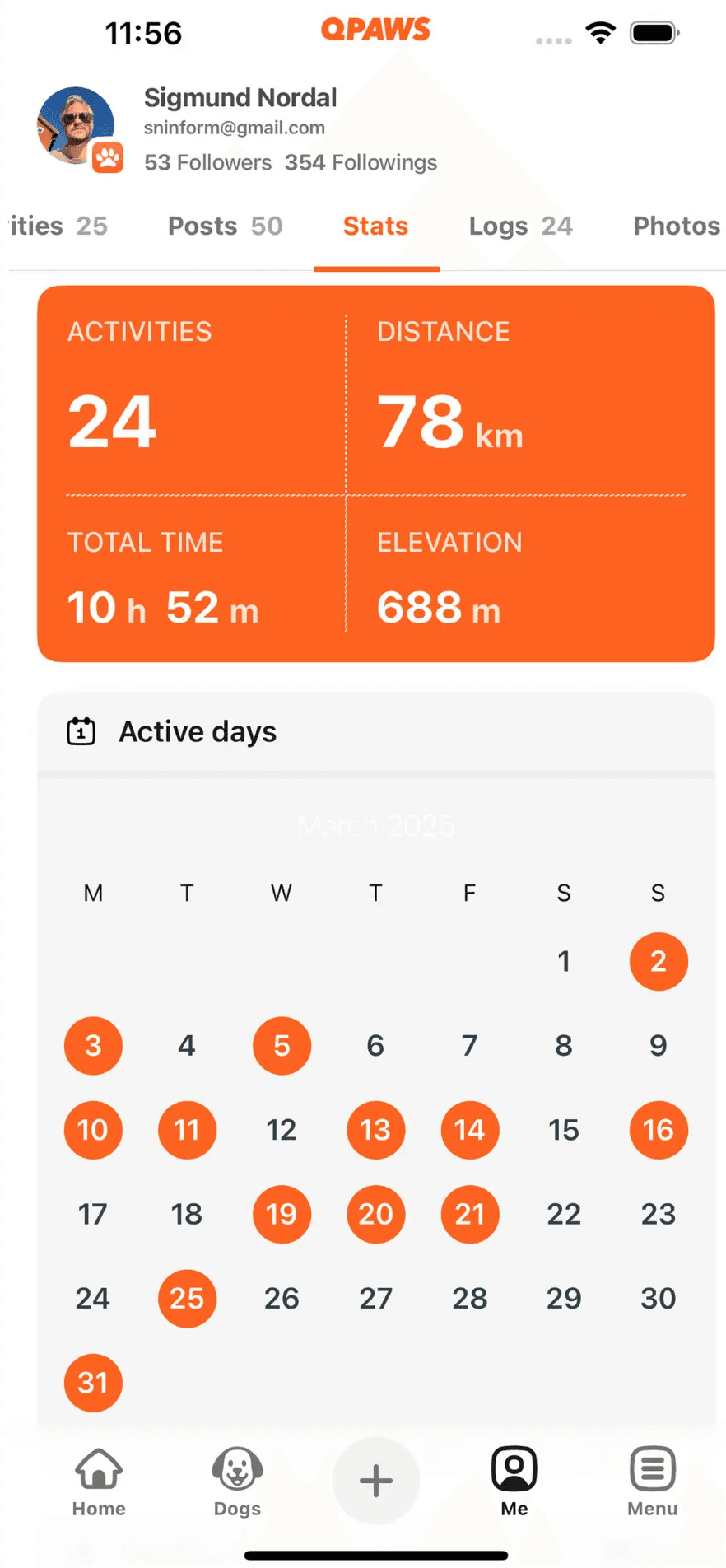
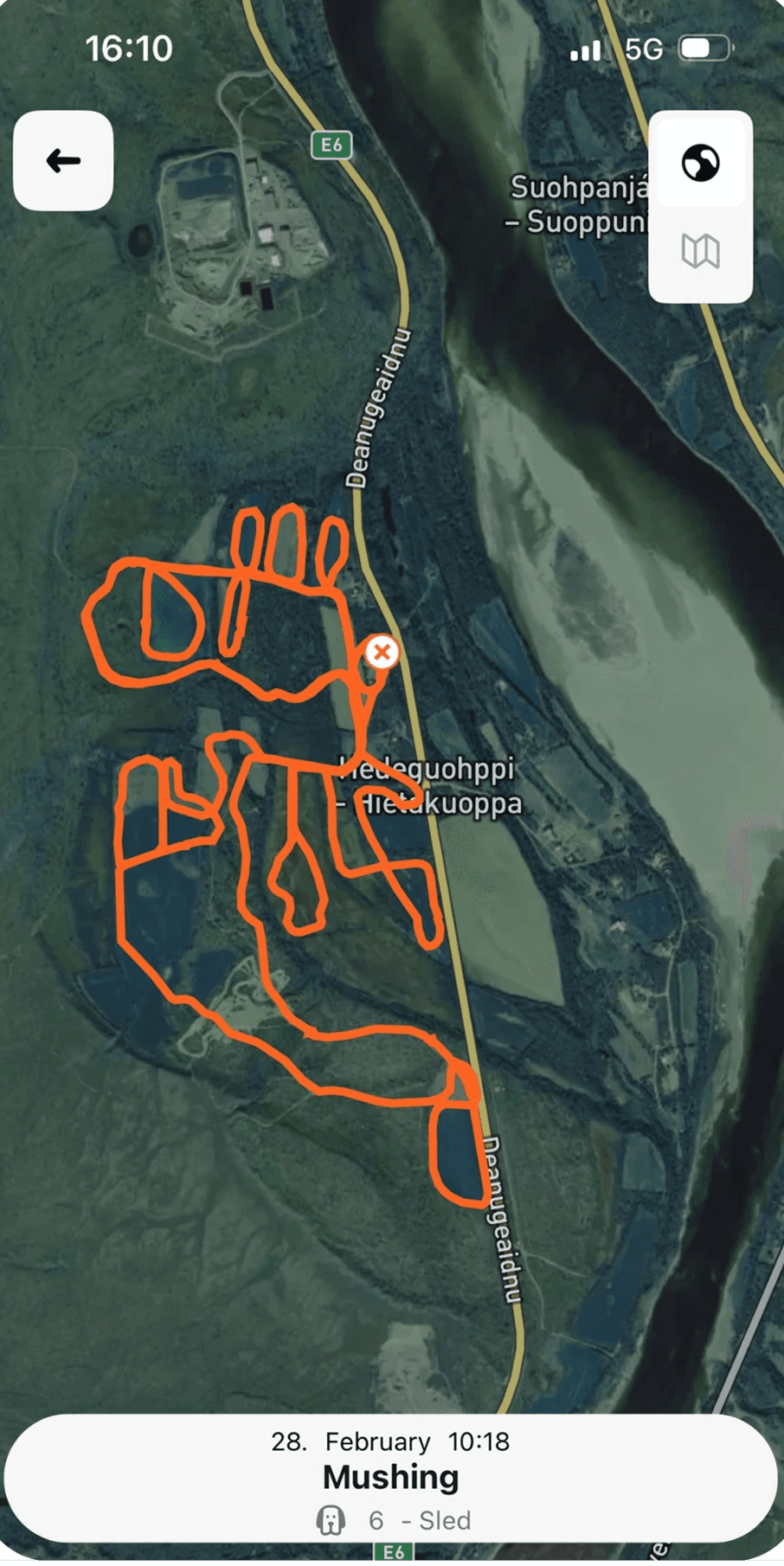
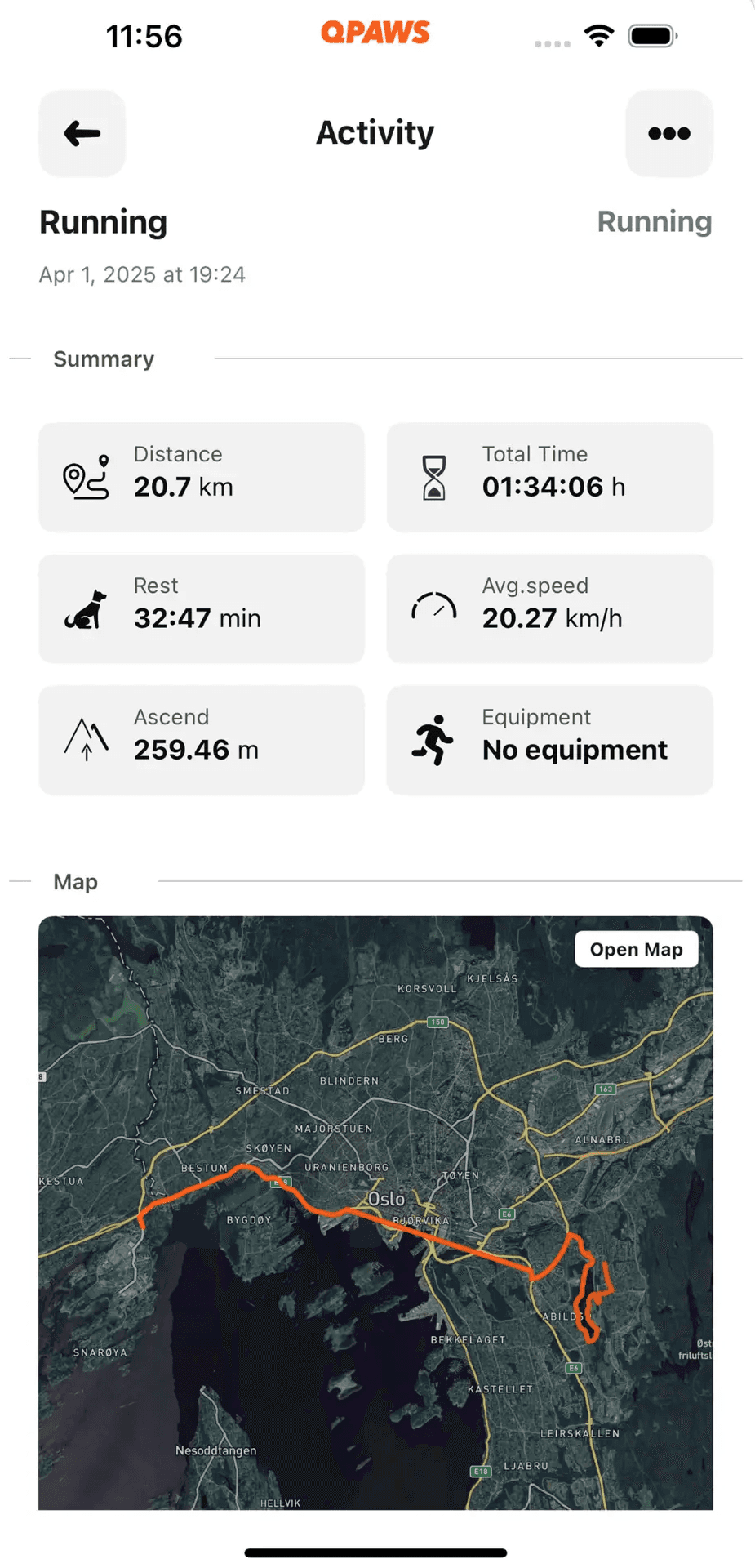
You can use Qpaws to log both active sessions and rest days, giving you a complete picture of your dog's training load over time. When performance dips, you'll be able to look back and see whether it followed a compressed recovery block — or whether something else is worth investigating.
The Bottom Line
The fastest athletes – human or canine – are not the ones who train the most. They're the ones who adapt most efficiently. And adaptation happens during rest.
Sleep is when your dog's muscles rebuild stronger than before. It's when the skills you drilled get locked into long-term memory. It's when the stress of effort gets cleared so the system can absorb the next session.
If you're serious about your dog's athletic performance, rest days deserve the same planning attention as training days. Schedule them. Protect them. Log them.
Your dog's next personal best might not come from one more hard session. It might come from sleeping through Thursday.
Ready to train smarter? Log your dog's workouts and rest days in Qpaws — and start seeing the patterns that drive real performance gains. [Download Qpaws For Free]
Related articles:

![Dog Endurance Training: Build Stamina Safely [Guide]](https://framerusercontent.com/images/7Y2HphZSTrLGkXRZ9TrZXx7u30.png?width=2240&height=1260)