





The Invisible Signs From Your Dog: Catching What You Can’t See Before It Becomes a Problem
27 nov. 2025
Dogs rarely hide how they feel — we just aren’t trained to see the signals. Long before a limp, a bark, or a meltdown, dogs communicate through micro-behaviours, sensory reactions humans cannot perceive, and emotional cues woven into their body language.
Understanding these invisible signs is one of the most powerful ways to prevent stress, reduce the risk of injury, and support your dog’s emotional and physical well-being.
At Qpaws, we believe early awareness (paired with structured activity tracking) helps owners act before small changes turn into pain. Because sometimes the most important signs are the ones you nearly miss.
Why Invisible Signs Matter More Than Obvious Behaviour
By the time a dog’s discomfort becomes visible, the underlying issue has often been building for days or weeks. Subtle stress signals, early soreness, sensory overload, and tiny posture changes can tell you far more than the “loud” behaviours.
Canine behaviour researchers confirm that dogs communicate continuously through tiny gestures and “calming signals” that humans often misinterpret or overlook. A review in Animals notes that dogs use subtle visual cues (eye movements, posture shifts, lip or tongue movements) as primary communication tools long before vocalising.
Learning to read these micro-signals is like unlocking a new language your dog has been speaking all along.
Micro Body Language: Your Dog’s Early-Warning System
Dogs rarely go straight from relaxed to reactive. There’s a “one-second window” of warning signs:
Tail language (not all wags mean joy):
→ a loose, sweeping wag = friendly,
→ a slow, stiff, low wag = uncertainty or tension.Ear position:
→ slightly pinned back or subtly rotated ears often indicate discomfort or fear – long before a bark.Eye signals:
→ the “whale eye” (white sclera showing) is a classic early stress sign, often misread as “funny” or “cute”,
→ according to veterinary sources, whale eye is one of the earliest indicators of canine anxiety.Posture shifts:
→ freezing for half a second, shifting weight backward, or tensing the legs are red flags that your dog is unsure or preparing to react.
Learning to spot these micro-behaviours prevents misunderstandings, accidents, and unnecessary dog-to-dog conflicts.
Invisible Stress Signs Owners Often Miss
Many “cute quirks” are actually displacement behaviours — subtle stress signals dogs use to self-soothe:
yawning (when not tired),
lip licking or nose licking with no food nearby,
sudden scratching or sniffing,
quick shake-offs during tense interactions,
avoiding eye contact, turning the head, or freezing.
A study in Frontiers in Veterinary Science shows that these micro-behaviours often occur before obvious fear responses, meaning they act as early indicators of distress.
These are the classic subtle signs your dog is stressed – and the ones most owners overlook.
Comfort & Affection Signals You May Not Notice
Dogs also whisper their trust in tiny, gentle ways:
soft eyes & slow blinking – a hallmark of relaxation,
loose, wiggly body posture – no tension,
relaxed jaw, slightly open mouth – calm and content,
leaning or settling near you — choosing proximity.
These signals are just as important as stress cues. Rewarding and encouraging calm body language builds safety and strengthens your relationship.
Your Dog’s Super Senses: Living in an Invisible World
Your dog reacts to “nothing” because they perceive what your senses cannot.
Extraordinary hearing
Dogs hear frequencies and distances far beyond human capacity. Research confirms they detect high-frequency sounds humans can’t perceive – making them react to mice in walls, cars far down the road, or subtle metallic vibrations.
Scent perception
Dogs smell emotional changes in humans, identify where another dog was minutes or hours earlier, and detect micro-changes in the environment. What appears like “staring at nothing” may be them following a scent trail up a wall or across a floor.
Vibration & movement sensitivity
Dogs feel thunderstorms, someone walking up stairs, or structural vibrations long before humans sense anything.
Your dog is not “overreacting.” They’re responding to real inputs in their sensory universe.
Why Dogs Stare at Nothing (Logical Explanations)
This is a huge SEO topic (“why is my dog staring at nothing”), and here are the most common, non-scary explanations:
hearing something you can’t (in the walls, upstairs, outside),
tracking scent molecules swirling in the air,
responding to flickering shadows, light reflections, or tiny movements,
sensing vibrations from outside or underground.
Most of the time, this is normal behaviour. But if staring becomes repetitive, accompanied by confusion, pacing, or obsessive actions – that’s when to monitor more closely.
When Subtle Signs Require a Vet Visit
Invisible signs can indicate early medical issues if they appear in clusters:
fly-snapping (biting at air),
sudden confusion, staring at corners, or “getting stuck”,
new obsessive behaviours (pacing, licking, spinning),
night-time restlessness or disorientation in older dogs,
appetite changes combined with withdrawal or irritability.
These signs don’t always mean something serious – but early checks prevent small issues from turning into pain or injury.
Your Dog Feels What You Feel (The Emotional Radar)
Dogs detect:
changes in your breathing,
small posture shifts,
your emotional “scent” when stressed or calm,
micro facial expressions.
They read you long before you speak. This makes your emotional state part of their safety system — one reason nervous humans often have nervous dogs. When you regulate your energy, your dog relaxes too.
Invisible Bonding Moments You Might Miss
Dogs support humans in ways that are subtle and deeply emotional:
staying close when you’re sad or unwell,
blocking or nudging you away from perceived threats,
lying facing a doorway to “guard” you,
resting a paw or head gently when you’re tense.
These tiny acts reflect loyalty and a desire to keep you safe – even if you barely notice.
How to Read Your Dog’s Body Language in 5 Minutes a Day
You can train your eye quickly:
Pick one routine (walk, greeting, feeding).
Watch only ears, tail, eyes, jaw tension.
Record short clips and replay in slow motion — patterns become obvious.
Keep a simple behaviour diary (time, environment, triggers).
This builds awareness faster than any book or course.
How Tracking Helps You Catch Early Signs Before They Become Injuries
No app or device can replace your eyes – but data adds the missing context. Changes in:
activity intensity,
duration,
pace,
sleep,
rest patterns,
recovery after exercise.
…often reveal micro-injuries or emotional stress before physical symptoms appear.
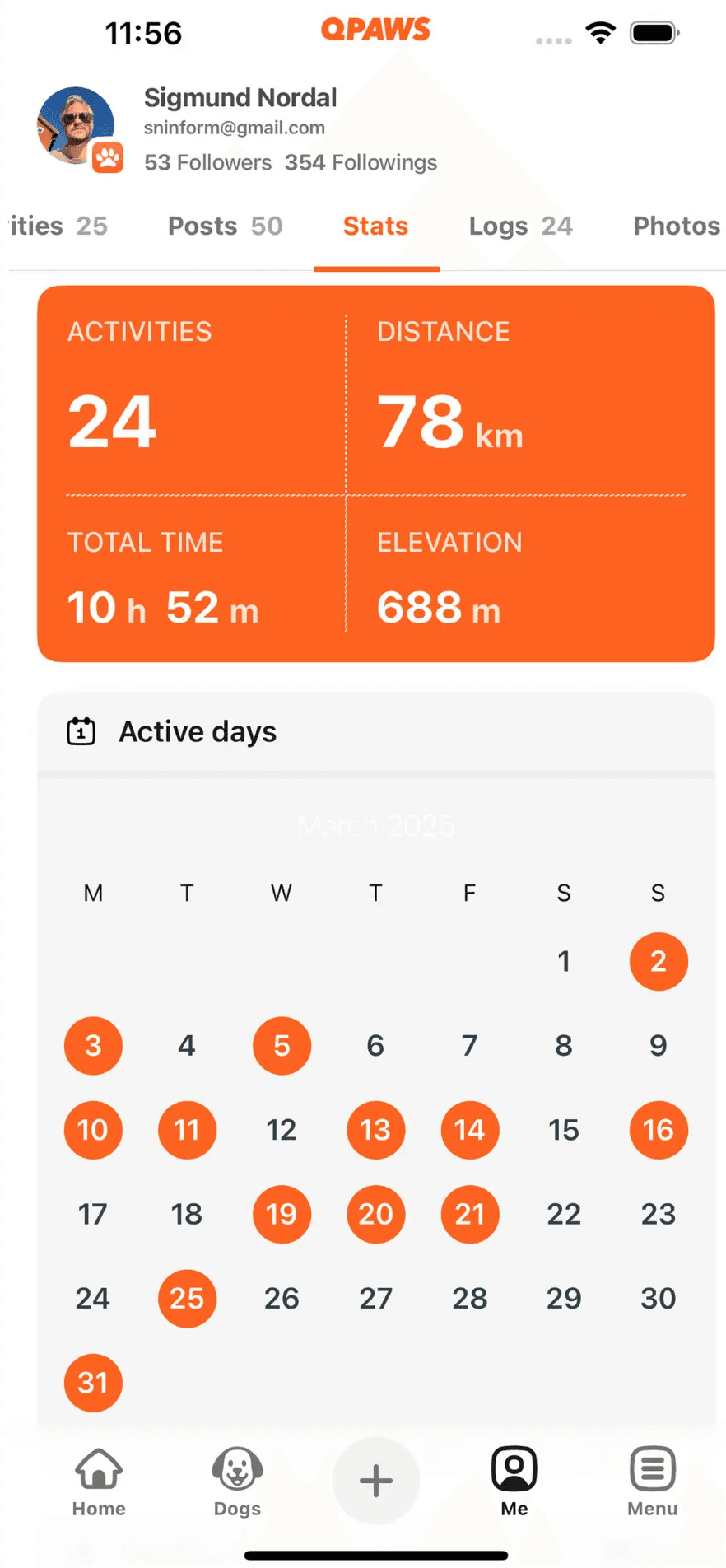
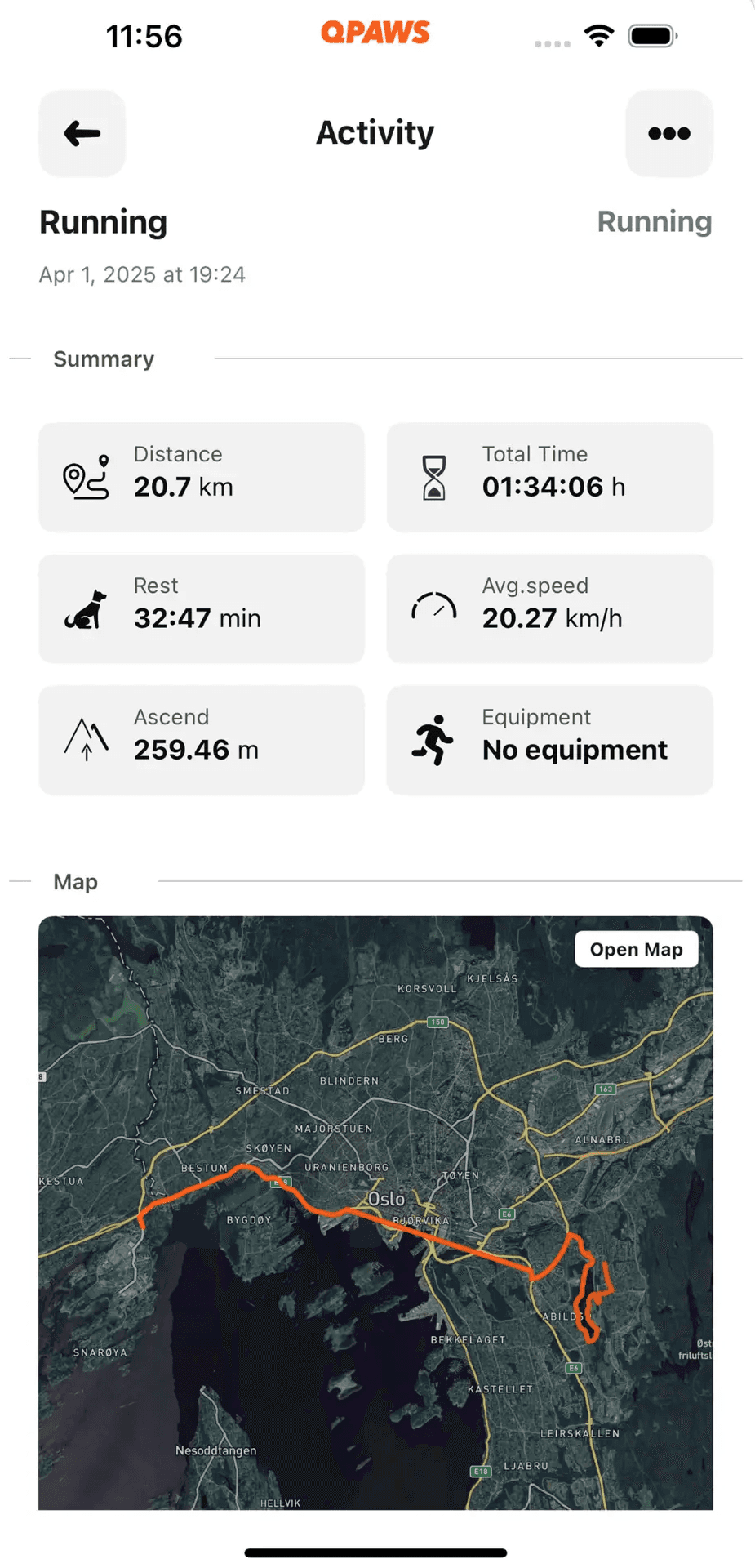
When you track activity through Qpaws + Garmin or Strava integrations, you see your dog’s baselines – and can spot when something shifts. Even small drops in distance, changes in cadence, or longer rest times after play can indicate early discomfort.
For deeper reading, explore how dog activity data improves health and fitness – especially for dogs who hide pain well.
From Subtle Sign to Action: What to Do Next
If you see early stress signs: increase distance, give a break, offer slow sniffing time.
If movement patterns change: reduce intensity and monitor the next 24–48 hours.
If recovery takes longer than usual: review your dog’s exercise balance using the Qpaws endurance and recovery guidelines.
If changes repeat: schedule a check-in – prevention > treatment.
Building a Stronger Bond Through Better Observation
Reward your dog not only for “good behaviour,” but for calm, relaxed body language. Support them when they show early stress cues. Give space when needed.
The more you understand the invisible signs, the more your dog feels genuinely seen and safe – and the fewer injuries or behavioural incidents you’ll face.
Conclusion: Be the Human Who Notices the Small Things
Your dog’s hidden language is always there – in soft eyes, stiff tails, tiny licks, subtle freezes, or distant stares. When you learn to see these invisible signs, you protect your dog from stress, prevent injuries, and deepen your relationship.
And with tools like Qpaws to track activity, rest, and performance patterns, you can combine intuition with data – giving your dog the care they deserve long before problems become visible. Because when you catch what you can’t see, you become the human your dog truly needs.
____
Thanks to Matiu Crusener-Mattei from 🇫🇷 France for providing the photos!
→ https://www.facebook.com/otxoateam/
→ https://www.instagram.com/otxoa_team/