






Why Dogs Are Becoming Athletes: The Rise of Canine Endurance Sports
8 janv. 2026
From casual walks to canicross, mushing, and bikejoring, dogs are stepping into serious endurance roles – and data is reshaping how owners train them.
From Couch Companions to Canine Athletes
Not long ago, a “good walk” was the benchmark for an active dog. Today, dogs are running mountain trails, pulling bikes, logging structured mileage, and competing in endurance events across Europe and beyond. Activities such as canicross, bikejoring, skijoring, and recreational mushing have moved from niche communities into the mainstream of active dog ownership.
This shift reflects a broader change in how people view their dogs. Increasingly, dogs are not just companions but athletic partners – trained, conditioned, and supported much like human endurance athletes. Owners plan sessions, manage recovery, and think in seasons rather than sporadic outings.
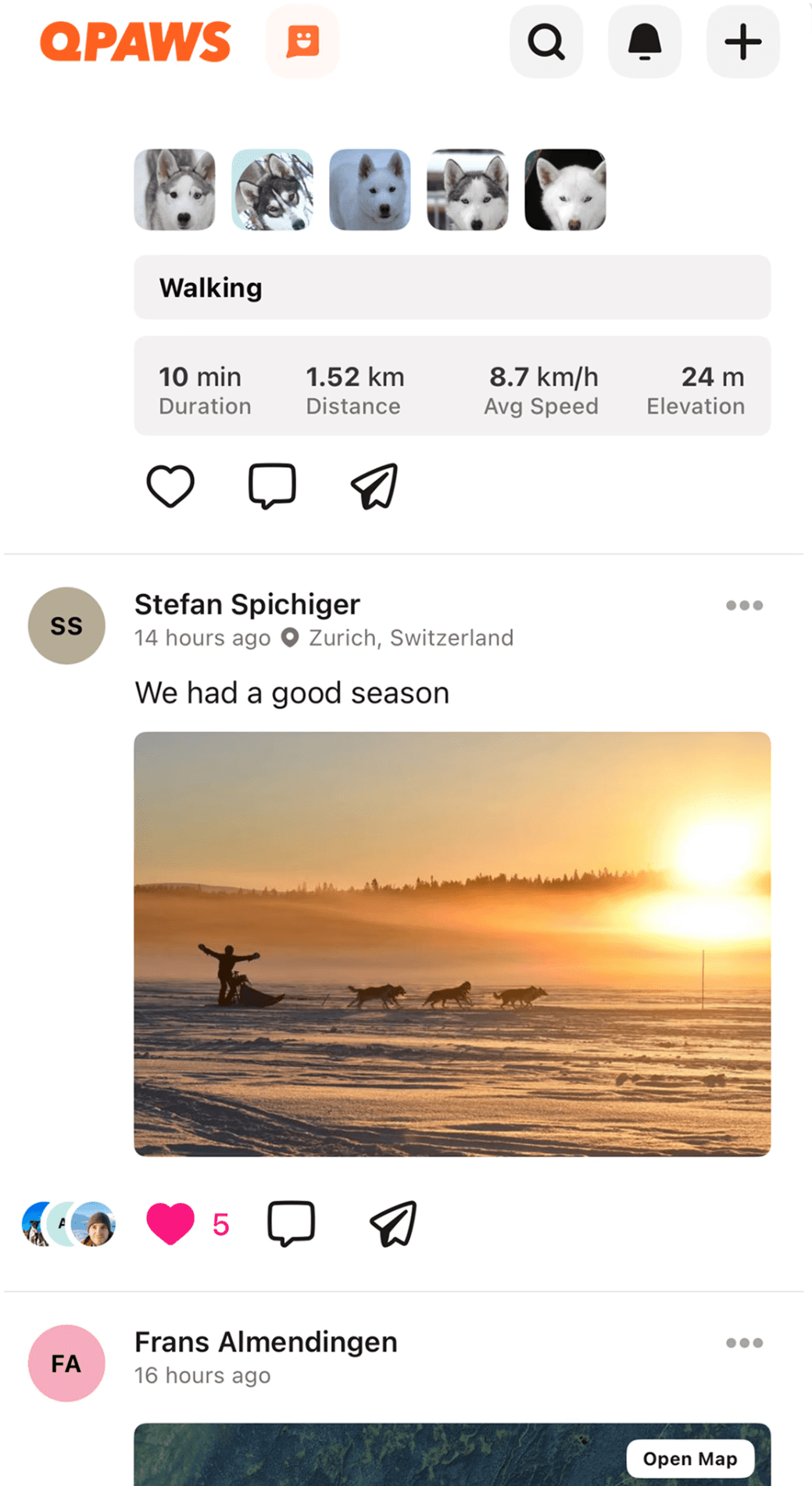
At Qpaws, this evolution is visible every day in how users track activities, compare progress, and treat training as a long-term investment in their dog’s health and well-being.
The Cultural Shift Toward Athletic Dog Lifestyles
Several cultural forces are driving the rise of canine endurance sports.
First, human fitness culture has expanded dramatically. Trail running, gravel cycling, ski touring, and long-distance hiking have become lifestyle identities – not just hobbies. For many people, it feels natural to share these pursuits with their dogs rather than leave them behind.
Second, sports like canicross and bikejoring have evolved from off-season training methods for mushers into accessible entry points for everyday dog owners. What once required deep involvement in sled dog culture is now supported by beginner-friendly gear, local clubs, and organized events.
Finally, social media and dog sport communities have amplified visibility. Well-fitted harnesses, GPS tracks, elevation profiles, and finish-line photos have made “training with your dog” aspirational. The result is a growing group of owners who want structure, progression, and measurable improvement – not just unstructured exercise.
The Science Behind Canine Endurance
Dogs are naturally suited for endurance work. From a physiological perspective, they possess:
efficient cardiovascular systems adapted for sustained effort,
musculoskeletal structures designed for repetitive motion,
thermoregulation mechanisms that support long-distance movement when managed correctly.
Evolutionarily, dogs descend from animals built to travel long distances in search of food and territory. Endurance, not short bursts of power, is their natural strength.
Modern veterinary and sports science research shows that structured, progressive exercise can improve body composition, joint stability, cardiovascular fitness, and overall longevity in dogs. However, these benefits depend on appropriate load management.
Endurance training without progression, rest, or monitoring increases the risk of overuse injuries, fatigue-related behavioural changes, and long-term joint issues. Just like in human sports, adaptation happens when stress is followed by recovery—not when intensity is uncontrolled.
This is why experienced dog sport practitioners emphasize gradual mileage increases, rest days, and close observation of behaviour and performance trends.
Endurance Disciplines: Mushing, Canicross, and Bikejoring
Mushing: The Origin Point
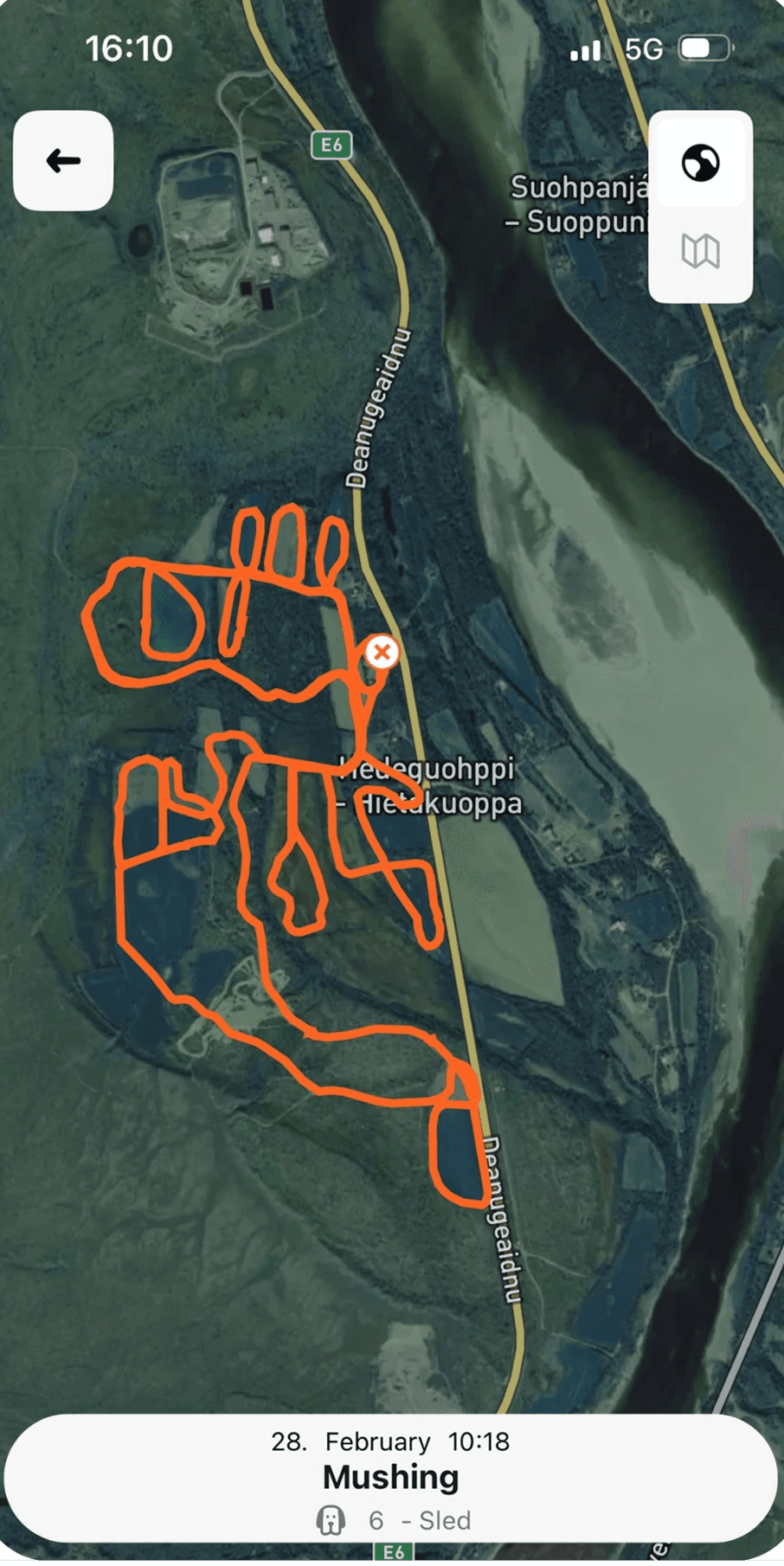
Mushing originated as working sled transport in snowy regions, evolving into competitive sled dog racing. Today, it remains the most structured and data-driven dog endurance discipline, with teams, training cycles, and detailed performance tracking.
Canicross: Running as a Team
Canicross pairs a human runner with a dog connected via a waist belt and bungee line. Training focuses on rhythm, communication, and pacing – making it one of the most accessible endurance sports for active owners.
Bikejoring: Speed and Control
Bikejoring adds speed and technical skill, combining cycling with a pulling dog. Terrain choice, surface conditions, and braking technique all influence training load, making planning essential.
Importantly, these sports are no longer limited to traditional sled dog breeds. With proper conditioning and realistic expectations, a wide range of dogs now participate – each with unique strengths and limits.
Why Structured Tracking Is Becoming Essential
Endurance sports place repetitive, sustained stress on a dog’s body. Without insight into workload, it becomes difficult to answer critical questions:
Is this increase in distance sustainable?
How does terrain or temperature affect performance?
Is the dog adapting – or accumulating fatigue?
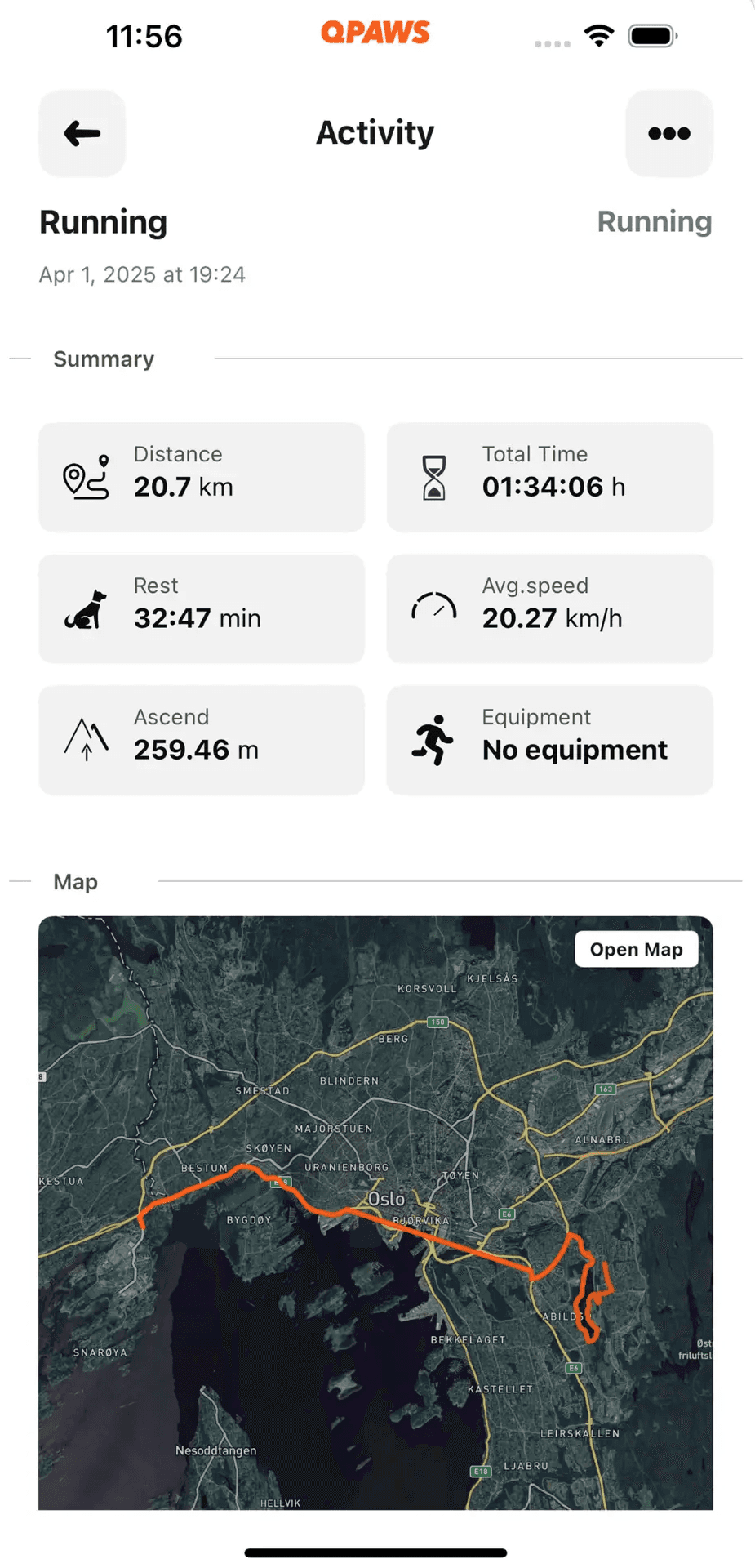
Structured tracking allows owners to move beyond guesswork. Useful data points can include distance, duration, pace trends, elevation, environmental conditions, and recovery patterns between sessions.
This is where platforms like Qpaws play a central role. By consolidating activities, visualizing trends, and enabling long-term comparisons, tracking supports smarter decisions – especially for multi-dog teams or dogs at different life stages.
For owners interested in deeper insight into canine health signals, this approach connects naturally with topics explored in “Why Dogs Hide Pain: Behaviour, Body Language, and Sensor-Based Insights” and discipline-specific guides like “Bikejoring for Beginners: Training Tips & Injury Prevention.”
The New Dog Owner Mindset
As canine endurance sports grow, so does a new mindset among owners. Many now think like coaches: building base fitness, planning peaks, scheduling rest, and adjusting goals over time.
Yet the motivation is not purely performance-driven. Owners consistently describe deeper bonds, clearer communication, and shared purpose. Training becomes a form of dialogue—one built on trust, observation, and mutual effort.
Looking ahead, canine endurance sports are moving from niche to normal. As tracking tools, education, and communities mature, the idea of the “everyday canine athlete” will continue to expand. Qpaws is being built for that future – where structured training, health awareness, and shared experiences define what it means to live actively with a dog.