





Most mushers remember the last race. Fewer think seriously about what happens on the first dry morning in April when the snow is gone, the team is restless, and the next winter race is eight months away.
That gap is where seasons are decided.
Spring dryland training isn't filler between winters. It's when the aerobic base that gets a team through January gets built. A team that trained systematically through spring and summer arrives at the first snow in October, ready to load. A team that didn't spend the first six weeks of the conditioning season playing catch-up – and catching up is harder than building forward.
This guide covers the dryland disciplines, how to structure a spring-to-fall training block, what changes when you move from snow to dry terrain, and what to track so the data you collect now is actually useful come October.
What Dryland Mushing Is (and Why It Matters More Than You Think)
Dryland mushing is any dog-powered discipline run on surfaces other than snow – gravel paths, dirt trails, grass, and compacted earth – using wheeled equipment instead of sleds. The disciplines used in training overlap with those used in formal competition, and the vocabulary is standardized enough that it's worth being precise.
The main dryland formats:
Wheeled rig: A cart or multi-dog sled on wheels, pulled by teams of 2–8 dogs, depending on rig class. This is the primary dryland tool for teams of four or more. Rigs vary from light scooter-style two-wheelers to full three- and four-wheeled carts for larger teams. Most mushers use rigs for their bread-and-butter off-season sessions.
Scooter: A kick-scooter adapted for dog traction. Used with 1–2 dogs, it's a practical option for individual dog conditioning or working young dogs before they join the main team.
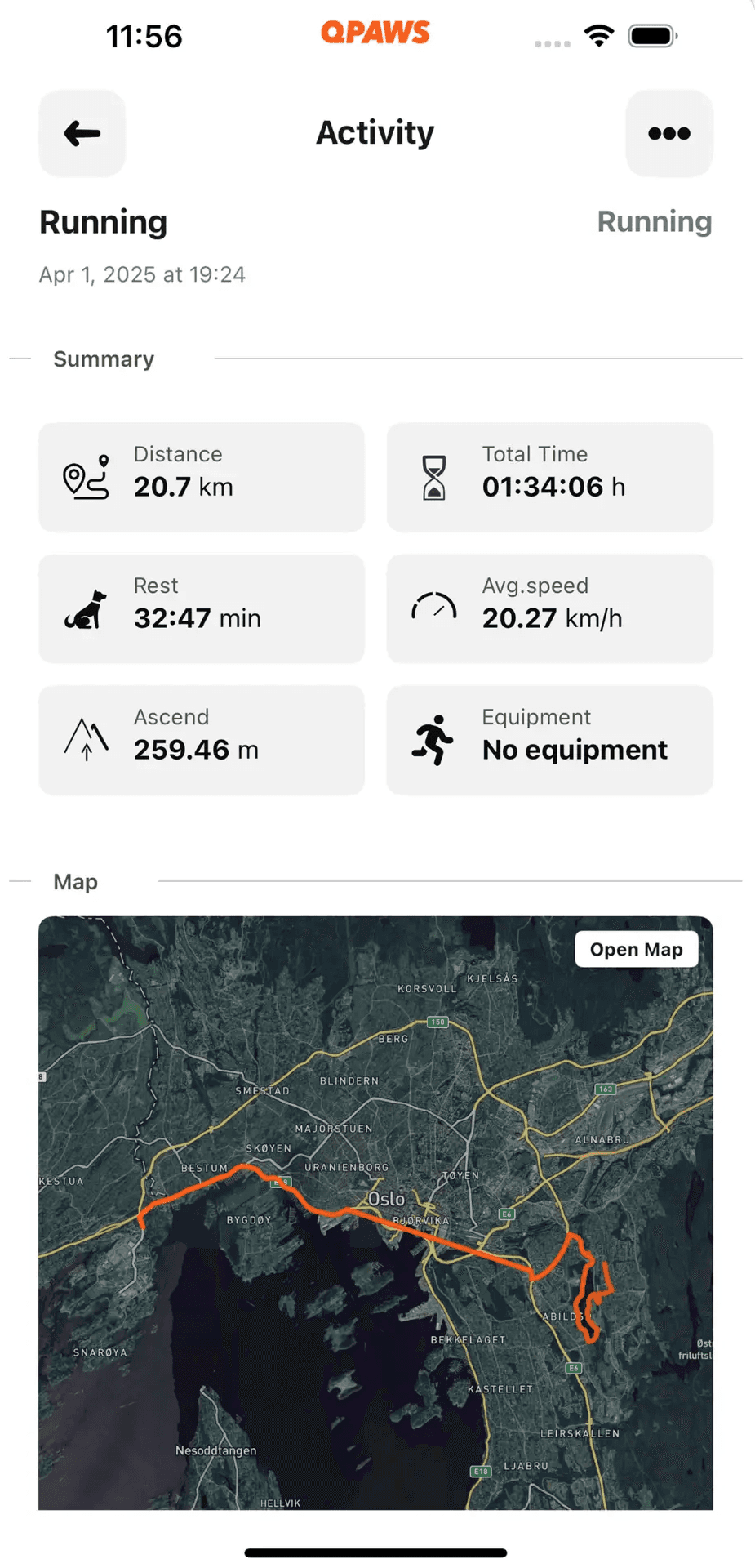
Bikejoring: A dog – or 1–2 dogs – attached to a bike via towline and bungee. Fast, flexible, and useful for interval work and maintaining pace feel across the off-season. How to track bikejoring sessions when your fitness app doesn't support the discipline is worth reading before you start logging.
Canicross: Running with the dog in a harness. Effective for conditioning individual animals and maintaining human-handler bond work, but loading capacity is limited compared to wheeled options.
Formal dryland competition uses these disciplines with standardized classes (by team size and vehicle type). But even if you have no interest in dryland racing, these tools are how serious mushing teams stay fit from April through October.
Why Spring Is Where Serious Mushers Separate Themselves
There's a widespread assumption in recreational mushing that the off-season is a maintenance phase – do enough to stop your dogs from losing ground, then ramp back up in the fall. That assumption is wrong, and it shows in November.
The aerobic adaptations that allow dogs to sustain race pace across multiple consecutive run days take months to develop. Mitochondrial density, red blood cell concentration, fat-oxidation efficiency – these are not fitness qualities you build in a six-week fall block. They accumulate over a long conditioning season that starts in spring, when temperatures are still manageable and dogs can work at meaningful intensity before summer heat forces the team into shorter, lower-load sessions.
A dog that enters the fall conditioning block already carrying a strong aerobic base from spring training handles the first mileage increases without stress and is ready for race-specific intensity by late fall. A dog that spent the summer largely idle has to rebuild that base first – burning weeks of the conditioning window before any quality work can happen. The conditioning foundation that separates competitive sled dog teams from the rest is built across this full-year cycle, not in the weeks before a race.
Spring is also the time to assess and address problems. Lingering stiffness, paw recovery from winter racing, weight adjustments, and team dynamics that didn't work in the previous season all get resolved more easily before the next training block starts than during it.
Building a Spring Dryland Training Block
Phase 1: Deload and Assessment (Weeks 1–3 After Last Snow Session)
The first two to three weeks after the snow season ends are not training. They're transition.
This phase should look like easy movement: short sessions on grass or flat dirt, low intensity, no harness pressure. Let the team rest and recover. Assess each dog individually – check paw pad condition, body weight, coat quality, and movement quality at a relaxed trot. Dogs that raced through late winter often carry soft tissue fatigue that isn't visible in behavior but shows in gait if you're watching for it.
Don't cut this phase short. The temptation to start building mileage while motivation is high is one of the most common errors in off-season structure. Two weeks of true recovery now pays back in sustained training quality through summer.
Phase 2: Base Building (Month 2 Through Early Summer)
Once the deload is complete, start building aerobic volume at easy effort. The goal is mileage accumulation at paces well below intensity – this is the phase where cardiovascular and metabolic adaptation happens at the cellular level, and it requires volume, not speed.
Practical targets for a recreational to competitive team in the base phase:
Session frequency: 4–5 sessions per week, including at least 2 full rest days
Session length: 30–60 minutes per session at an easy aerobic pace
Terrain: Mixed – grass, compacted dirt trails, light gravel – but avoid hard tarmac, which increases impact loading on paws and joints
Weekly mileage increase: No more than 10% week-over-week to avoid connective tissue overload
This is also the right phase to introduce rotation across dryland formats. A team that does rig training every session develops the specific fitness demands of rig pulling – but misses the stabilizer muscle activation and gait variation that bikejoring, scooter work, and loose trail running provide. Cross-training across disciplines builds the structural resilience that single-format training doesn't – rotate deliberately, not randomly.
Phase 3: Intensity Introduction (Mid-Summer)
As the base solidifies, begin introducing structured intensity. This doesn't mean race-pace work – summer heat makes high-intensity efforts genuinely dangerous for dogs, and the goal at this stage is developing the aerobic ceiling, not pushing it.
Useful summer intensity tools:
Hill work: Short hill repeats on a consistent grade develop pulling power without requiring high absolute speeds. Four to six climbs of 60–90 seconds with full recovery between them is a sustainable format for mid-summer.
Interval structure: Alternating effort and easy pace within a session – not sprint intervals, but deliberate pace variation that teaches the team to shift gears. This is also where pace tracking becomes useful: you need to know whether intensity sessions are actually producing different effort levels, or whether "faster" just means "slightly less slow."
Individual assessment sessions: Use scooter or bikejoring sessions to work individual dogs at effort levels that the full team rig session won't reveal. A dog that hides a fitness deficit in a team session often shows it clearly when working 1:1.
Phase 4: Pre-Snow Conditioning (Late Summer Through First Snow)
By late August or September, depending on your location, you should be building toward the early fall conditioning block with enough aerobic base behind the team that the first structured mileage increases land on a prepared system. How to shift training load across seasonal transitions without creating injury risk is covered in the seasonal conditioning guide – the principles apply in both directions.
What Changes When You Move From Snow to Dry Terrain
Training on snow and training on dry terrain are different in ways that require concrete adjustments, not just general awareness.
Pace Targets Are Not Comparable
Dogs naturally run slower on dry terrain than on packed snow. Snow reduces friction and allows dogs to stride more freely; dry ground – particularly loose gravel or rough dirt – increases resistance and changes gait mechanics. If you're using snow-season pace data to evaluate dry-season sessions, you'll misread what you're seeing.
Set separate pace baselines for dry terrain and track against those, not against winter data. This requires logging dry-terrain pace data early in the spring block so you have a reference point by the time intensity sessions begin. The mushing training fundamentals around pace tracking and session structure are worth reviewing before you establish your dry-terrain baselines.
Heat Management Becomes the Primary Safety Variable
Snow provides passive cooling. Dry terrain, particularly in spring and early summer when dogs are still carrying a winter coat, does not. Dogs overheat faster than you expect – and the signals are easy to miss until they become serious.
Practical heat management rules for dryland training:
Run in the early morning or evening. If the ambient temperature is above 15–18°C at ground level, delay the session. Dogs work at ground temperature, not air temperature, and gravel and dirt surfaces absorb and retain heat significantly.
Know your dogs' individual heat responses. Some dogs show clear heat signals (excessive panting, snow-eating behavior translated to water-seeking, pace drop) early; others push through until they're genuinely compromised. Fueling dryland training and managing hydration around heat load is a different challenge than winter fueling – carry more water than you think you need and offer it at every stop.
Shorten session length, not just pace. In genuine heat, a 20-minute easy session at correct effort is more valuable than a 45-minute slow session in which the dog is managing heat throughout.
Let the coat cycle naturally. Don't strip the coat prematurely. The undercoat serves as insulation in both directions. Dogs shed on their own schedule – racing it introduces more problems than it solves.
Paw Care Is a Different Problem
Winter paw challenges (ice-balling, pad cracking in cold, booties wear) are replaced by a different set in spring: loose gravel abrasion, thorns and debris in trail footing, and the pad softening that happens when dogs transition away from hard-pack snow.
Pads that were toughened over a winter racing season often soften quickly in spring, particularly if training volume drops during the deload phase. Bring them back up gradually – prioritize softer surfaces in the first weeks of base training, and introduce harder surfaces progressively rather than jumping straight to gravel rig trails. Inspect pads after every session during the transition period.
What to Track Across a Dryland Season
Most mushers who train seriously through spring and summer keep notes. Fewer keep structured records in a format that's actually useful when fall arrives and decisions need to be made about load, team composition, and intensity timing.
The data points that matter most across a dryland season:
Per-dog metrics (track individually, not just as a team):
Distance and duration per session
Pace (with separate baselines for each terrain type)
Effort level – subjective scale is fine if you use it consistently
Paw condition after the session
Heat response: any signals, at what ambient temperature, and how quickly they recovered
Appetite at the post-session rest stop
Rest day behavior: animated vs. flat
Session-level metrics:
Terrain type and surface
Ambient temperature and time of day
Team composition (which dogs ran together)
Harness and equipment notes (fit changes as body condition shifts through summer)
Block-level tracking:
Weekly mileage per dog – not just team total
Any gait changes observed over the block, even minor ones
Days missed and why (heat, handler, injury, management)
By October, this data tells you which dogs built a base effectively, which ones need more time before intensity increases, and what your team's actual dry-terrain performance baselines are. Starting next winter without it means making decisions on memory and gut feeling instead of six months of structured observation.
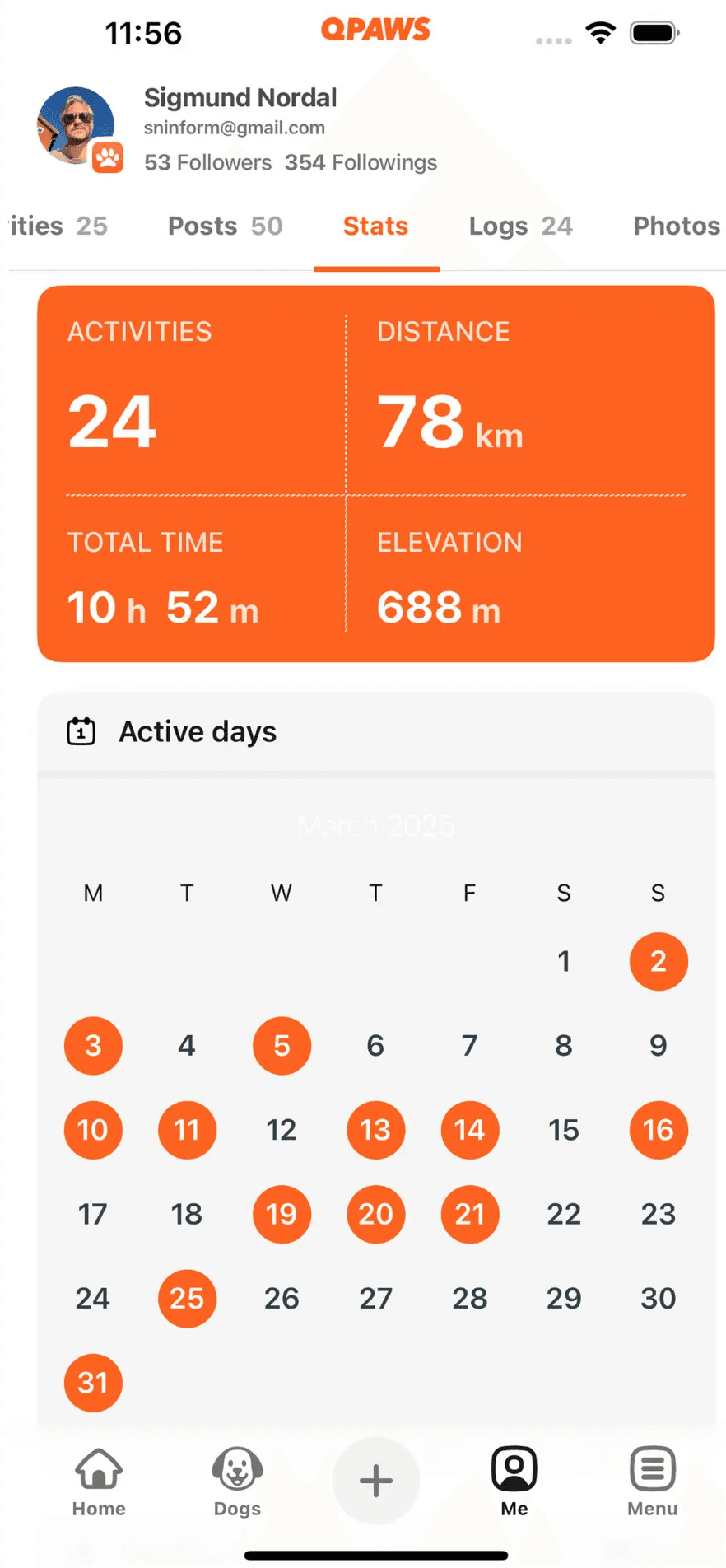
If you're managing a team of four or more dogs across a full dryland season, the Qpaws platform for hard-core dog mushers is built specifically for this kind of multi-dog, multi-session tracking – per-dog profiles, team session logs, and the seasonal stats view that lets you compare individual development across a training block. For active owners managing smaller teams or working with individual dogs across disciplines, the active owners app experience covers the same logging fundamentals at whatever scale fits your setup.
The Bottom Line
Spring dryland training is unglamorous work. No race results, no snow, no season arc to give the sessions obvious stakes. That's exactly why it matters: the dogs who arrive at first snow in October already fit, already paw-conditioned, already familiar with the harness and the rig and each other – those dogs don't spend the conditioning season rebuilding base. They spend it getting better.
Eight months of structured dryland work, properly logged, gives you something more valuable than a well-conditioned team: it gives you data. Data that tells you which dogs are ahead of where they were at this point last year, which ones need more base time before intensity, and what pace targets are realistic at each point in the season.
Mushers who build their off-season systematically and track it carefully don't just arrive at the start line ready. They arrive knowing they're ready. That's a different position to be in.
Start logging your dryland sessions now. Every rig run, scooter interval, and bikejoring session you record this spring becomes the baseline your fall training block is built on. Set up your team in Qpaws – free on iOS and Android. [Download Qpaws – Free]
____
Thanks to Matiu Crusener-Mattei from 🇫🇷 France for providing the photos!
→ https://www.facebook.com/otxoateam/
→ https://www.instagram.com/otxoa_team/
Related articles:


![Dog Endurance Training: Build Stamina Safely [Guide]](https://framerusercontent.com/images/7Y2HphZSTrLGkXRZ9TrZXx7u30.png?width=2240&height=1260)