





Open Strava. Open Garmin Connect. Open Apple Fitness. Look for "bikejoring."
It isn't there.
The activity types available across every major fitness platform were built around one implicit assumption: the human is the engine. Running, cycling, rowing, swimming – in every supported format, pace and effort belong to the person holding the device. That model breaks completely when a dog is pulling a bicycle.
Bikejoring athletes have been working around this gap for years, logging sessions as cycling or using the generic "other" workout type just to get a GPS track on record. It works in the same way that writing in the margins of a book works – you've preserved something, but you've lost the structure that makes it useful.
Why "Log It as Cycling" Doesn't Work
The damage from mislabeling is specific, not just cosmetic.
Calorie calculations are wrong. Cycling calorie estimates are built on rider power output and cadence. In bikejoring, your pedaling is minimal or absent for significant stretches – the dog is driving pace. The calorie estimate the app produces describes a completely different kind of effort.
Cadence data is meaningless. Strava and Garmin use cadence (pedal revolutions per minute) as a primary effort proxy. When your dog is pulling you at 25 km/h on a descent and you're barely pedaling, your cadence reads near zero – but the training stimulus on your dog is at its highest.
Training load calculations mislead you. Platforms like Garmin calculate Training Status and Recovery Time from your heart rate and power data. A bikejoring session where your dog carried most of the effort but your heart rate stayed moderate will read as "easy" – which is correct for you, and completely wrong for the dog.
There is no dog. The most significant gap is not a calculation error – it's an absence. The metrics that tell you the most about a dog sport session – which dog ran, at what effort, on what surface, how their paw pads looked afterwards – exist nowhere in any mainstream fitness platform. They have no field for it.
What Bikejoring Data Actually Needs to Capture
Useful bikejoring tracking requires two parallel data streams. One is yours. The other belongs to your dog – and it's the one that most often predicts whether your next session goes well or badly.
Dog-side data that matters:
Distance per dog. If you're running one dog, the distance is simple. If you run two, total distance doesn't tell you how each dog was loaded.
Terrain and elevation. Dogs work significantly harder on climbs and technical surfaces than on flat ground at the same pace – terrain determines how much effort a given session actually cost.
Run/rest ratio. Long bikejoring sessions often include natural breaks – stopping for water, resetting commands, assessing paw condition. That ratio matters for training load calculation and recovery planning.
Paw condition post-session. Surface type changes weekly in spring and summer. Gravel, dry trail, and tarmac at summer temperatures hit paw pads differently. A brief post-session check is a training data point, not just animal welfare.
Drive and engagement through the session. Did your dog pull hard for the full 12 km, or did effort drop in the final third? That qualitative signal tells you more about fitness and load than pace data alone.
Your data still matters – it's just not the whole story. GPS track, your heart rate, total distance and time are worth keeping. The problem is that every current platform captures only your half.
What You Can Do Right Now in Existing Apps
If you're committed to tracking in Strava or Garmin until a better native option exists, here's how to lose the least data:
Strava: Log as "Other" activity. This preserves your GPS track, elapsed time, and heart rate without forcing you into a cycling activity type that will produce meaningless effort metrics. Use the description field to note terrain, dog(s) run, and any post-session observations. It's manual and not searchable, but it's honest.
Garmin: Some devices support custom activity profiles. If yours does, create a "Bikejoring" profile based on the cycling activity type but strip out cadence as a primary metric. Log heart rate as your primary data stream. Use Training Effect for aerobic load only. Export the GPX file if you want to import it elsewhere.
Apple Watch: Log as "Other workout." You'll get heart rate and active calories (not accurate, but consistent). Use the Health app workout notes or a separate note to capture dog-specific observations.
None of these are good solutions. They are damage control.
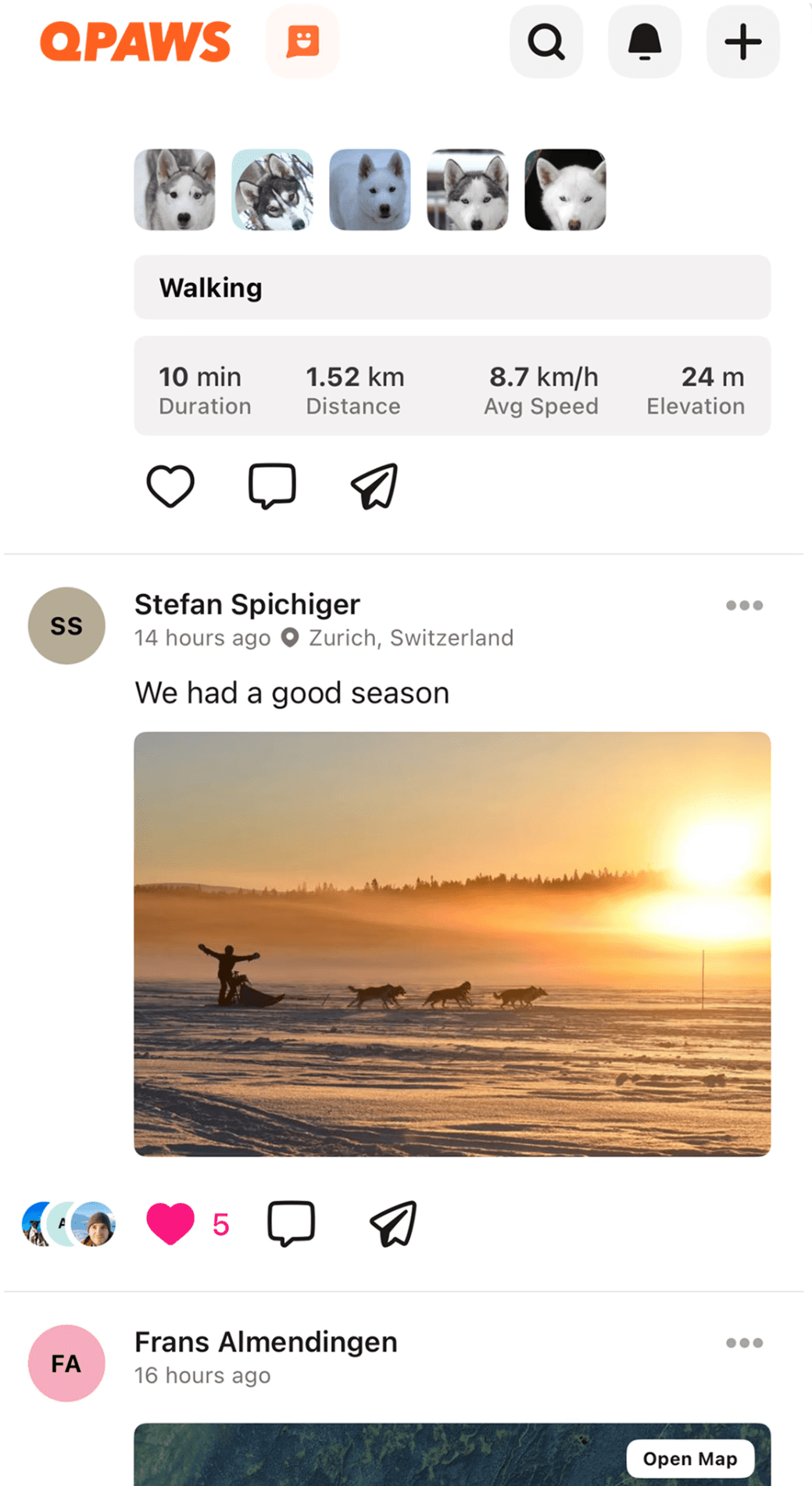
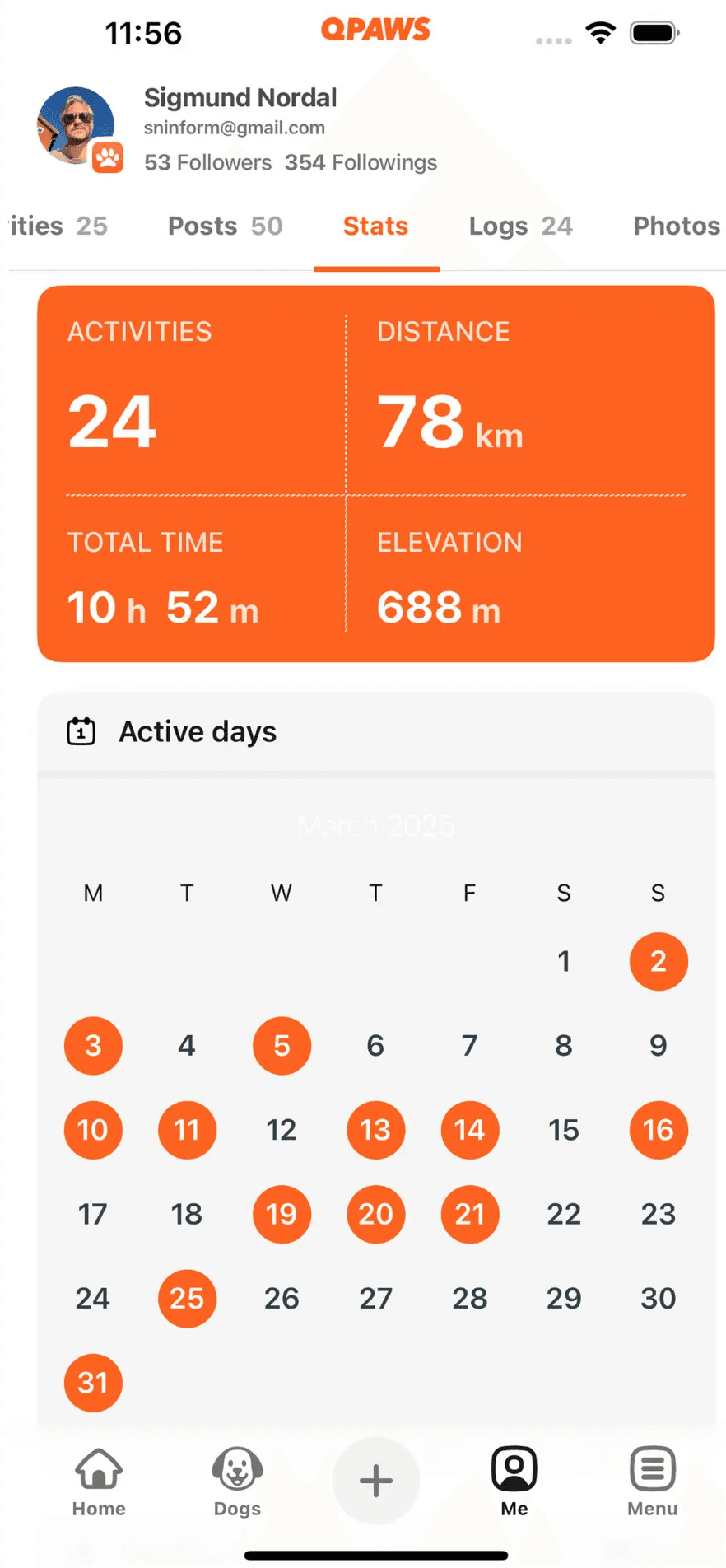
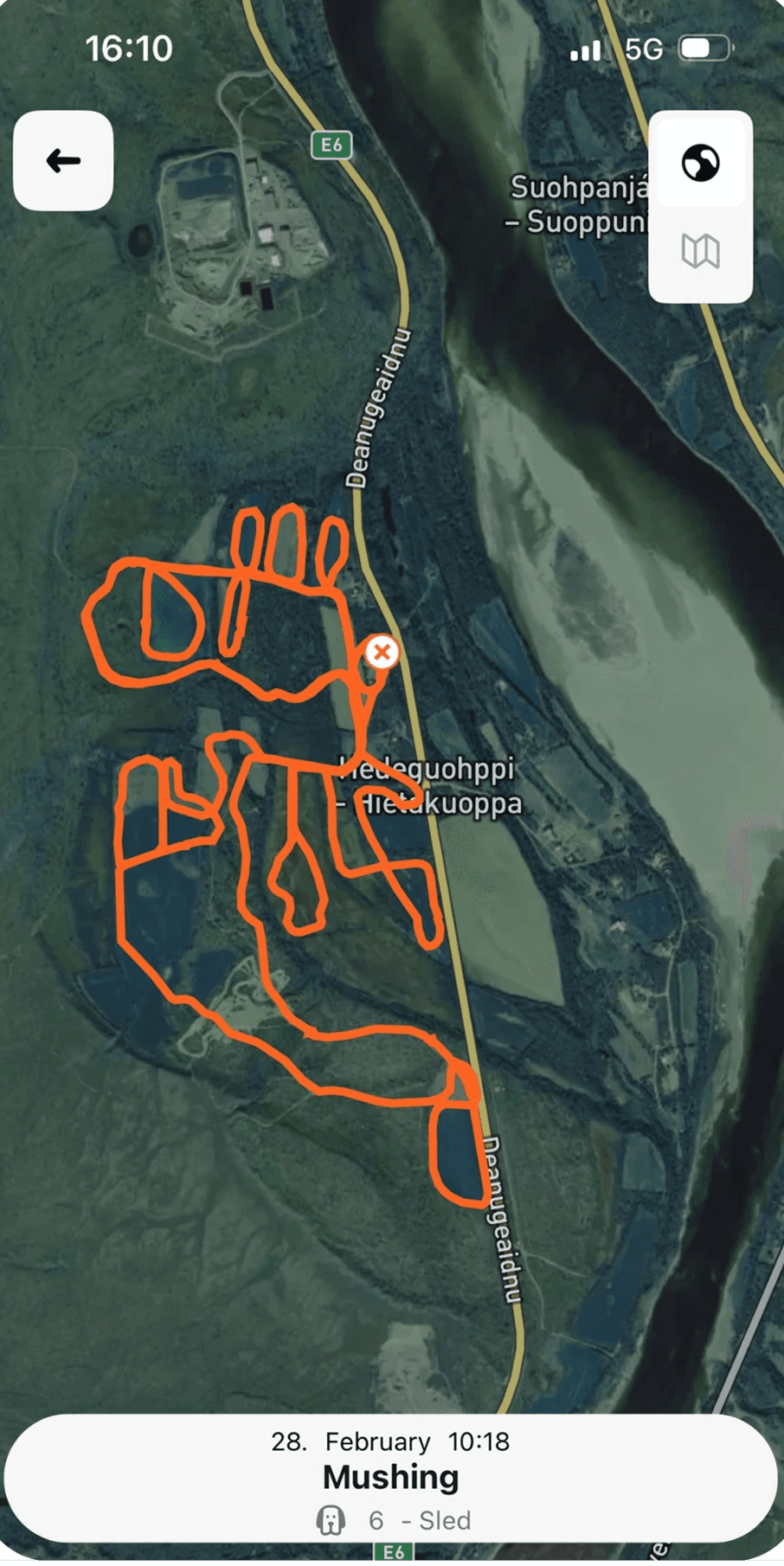
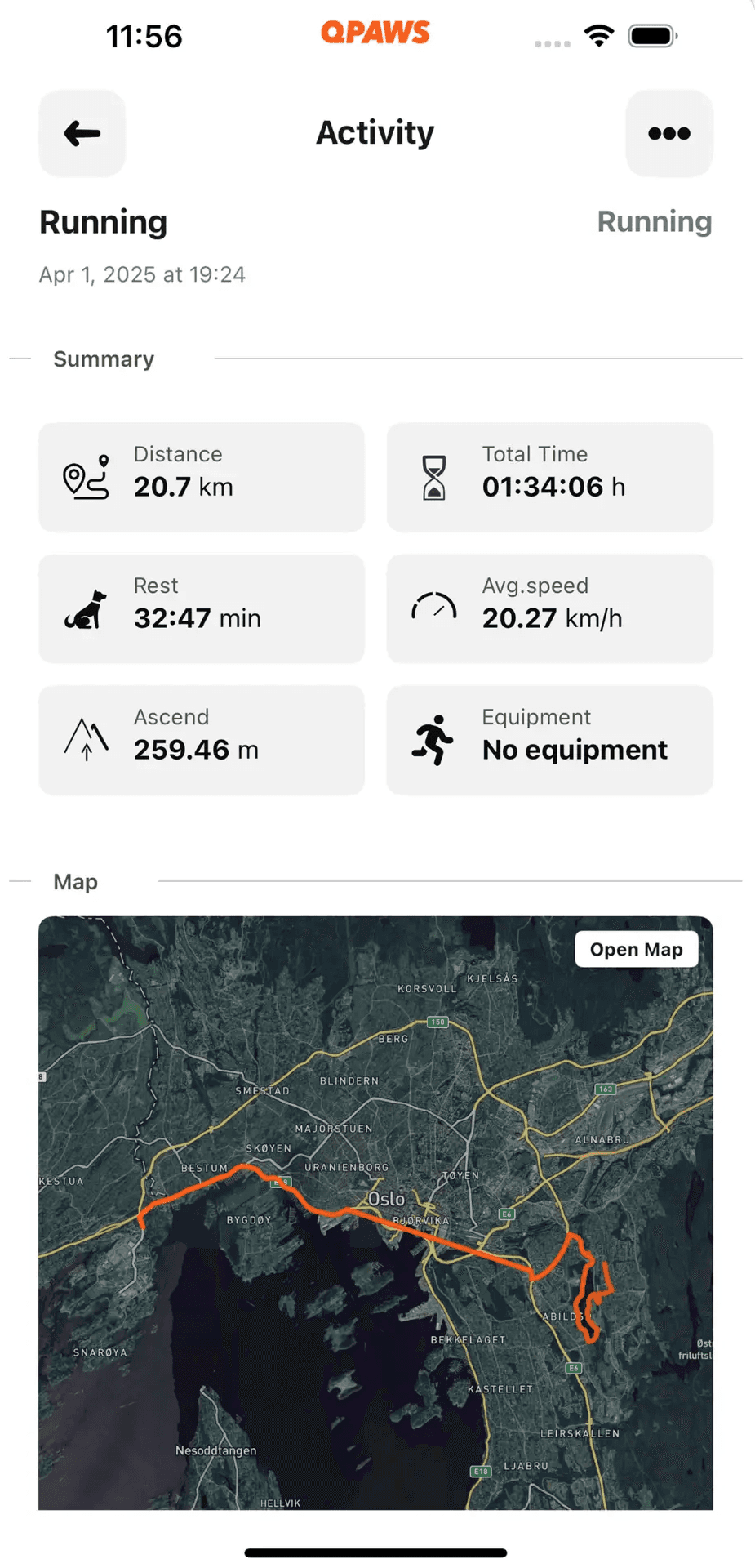
The real workaround is to decouple tracking: use whatever device you have for your own GPS and heart rate data, and log the dog-specific data separately in an app that has fields for it. Connecting Qpaws with Garmin or Strava lets you keep both streams without choosing between them – your activity lives in the platform you already use, and your dog's data lives somewhere it actually fits.
What Native Bikejoring Tracking Looks Like
Qpaws logs bikejoring as a named activity type. That means:
The session is categorized correctly from the start – no activity-type workaround needed
Per-dog logging: which dog(s) ran, distance per dog, effort level
Post-session checklist built into the log: paw condition, appetite, drive through the session
Recovery tracking between sessions – so you can see whether your dog is absorbing load across a training block, not just within a single run
The data accumulates into a picture. Over four weeks of bikejoring sessions, patterns become visible that no single session reveals: the sessions where paw condition rated lower predicted the following session's performance. The efforts where drive dropped in the final third consistently preceded longer recovery times. That kind of signal requires weeks of consistent data – and it only exists if you've been logging at the right level of specificity.
Per-Session Logging Checklist
Whether you use Qpaws or a manual method, these are the five things worth recording after every bikejoring session:
Distance and terrain type – trail, gravel, tarmac, mixed
Dog(s) run and any team composition change – one dog vs. two changes the load per dog significantly
Drive through the session – strong throughout / faded in the final third / reluctant to start
Paw condition check – no issues / minor wear / cracking or tenderness
Post-session behavior – normal appetite, eager on rest day / flat and slow to recover
The fifth point is the one most often skipped and the most predictive. A dog that's flat and disengaged the day after a session hasn't recovered from it – and that flatness, logged consistently, becomes an early-warning system before it shows up as a performance problem.
The Bottom Line
The fitness platform gap isn't going to close soon. Bikejoring is a growing sport with a small enough user base that adding a native activity type isn't a priority for platforms built around the mass market.
What that means in practice: if you're serious about tracking bikejoring training, you need a system that treats your dog's data as primary – not as notes appended to a cycling workout. Log the session accurately. Capture what the dog did, not just what the GPS recorded. And build enough data history that patterns become visible.
Your dog's performance doesn't live in your Strava feed. It lives in what you consistently record about them.
Track your bikejoring sessions natively – dog pace, terrain, paw condition, and recovery – in Qpaws. Free on iOS and Android. [Download Qpaws – Free]
Related articles:

![Dog Endurance Training: Build Stamina Safely [Guide]](https://framerusercontent.com/images/7Y2HphZSTrLGkXRZ9TrZXx7u30.png?width=2240&height=1260)