





After 25 field days, you will not remember which dog flagged early in session 12, which brace pairing produced the cleanest work in cover, or which terrain type consistently produced limping on the walk back to the truck.
You'll remember the good days. The retrieves that went perfectly, the dog that held point in impossible conditions, the morning when everything clicked. What you won't remember – not accurately, not usefully – is the pattern underneath all of them.
That pattern is what trains smarter dogs.
Spring is when hunting dog season opens in most markets, and it's the right time to build the habit. Not just getting out with the dogs, but building a field day record that compounds across a season. Twenty-five outings of structured data tell you things that twenty-five outings of unrecorded experience never will.
This guide covers what to record, how to structure a seasonal training log for hunting dogs, and how to use that data to make better decisions – about conditioning, health, brace composition, and next season's training priorities.
Why Mental Recall Fails After 20 Field Days
Every hunter believes their memory is better than it is. This isn't a criticism – it's how memory works. We remember peaks and recent events with reasonable accuracy. We systematically compress, merge, and revise everything in between.
After 20+ field days across a season, what remains in memory is:
the best outings,
the worst outings,
whatever happened in the last two or three sessions.
The middle – where most of a season actually lives – becomes a blur. You remember that one dog was "a bit slow in late October," but you don't remember which sessions, on what terrain, in what temperatures, or whether it correlated with a heavier conditioning load that week. That information is gone, and the decisions you make about that dog's training next spring are built on inference rather than record.
A field day log doesn't require hours of documentation. It requires five minutes at the end of each outing, consistently applied. That consistency is what turns raw experience into usable data.
What to Record on Every Field Day
The goal is a record that's complete enough to be useful but fast enough that you'll actually maintain it. Five to eight data points per session, entered immediately after the outing ends – not from memory two days later.
Location and Conditions
Location name or GPS point (general area is enough – you're building a terrain reference, not a navigation map)
Terrain type: upland, wetland, mixed, brushy cover, open field, wooded
Ambient temperature at the start of the outing
Weather: wind level, cloud cover, humidity (these affect scenting conditions significantly)
Ground conditions: dry, wet, frost, snow cover if relevant
Scenting conditions vary dramatically with temperature and humidity, and a dog that appears to be underperforming on nose work may simply be working in conditions where scent dissipates quickly. Without a record of conditions, you can't separate a real pattern from a weather variable.
Dogs and Brace Composition
Which dogs were out
Brace pairings (which dogs worked together and in what order)
Run time per dog or pair – not total session time, but active field time per animal
If you're running multiple dogs, this is the piece that matters most for individual assessment. A dog's performance in a four-hour session where they ran for 90 minutes differs from that of the same dog in a three-hour session. You can't compare across sessions without knowing the load. Managing multiple dogs with different fitness levels on the same outing requires individual run-time records, not just overall session notes.
Performance Notes Per Dog
This is the substantive core of the log. For each dog that ran, record:
Drive at the start: Alert and engaged, or slow to engage?
Range and style: Did they work at a typical range, or contracted/pushed? Consistent pattern, or erratic?
Bird contact: Flushes, points, retrieves – and quality of each (steady, creeping, broke early)
Stamina through the outing: Did they maintain drive and pace across the full session, or fade in the second half?
Handler responsiveness: Commands acknowledged cleanly, or needing repetition? Off-whistle moments?
Drive at the end: What was their energy level on the walk back?
You don't need paragraphs – a sentence or two per dog is enough. The value is specificity and consistency. "Worked well" is useless data. "Faded at the 90-minute mark, range contracted, needed two whistles to recall by session end" is a data point you can act on.
Health and Physical Check
Before the dogs go in the truck, do a quick physical check and log what you find:
Paws: Any cuts, cracking, heat, or tenderness on pad pressure
Coat and skin: Burrs, cuts, abrasions from the cover
Gait: Any stiffness, shortening, or uneven loading visible on the walk out
Appetite: Did they eat normally at the midday break or after?
Any unusual behavior: Reluctance to move, guarding a leg, excessive licking of a joint
This takes two minutes per dog and catches things that would otherwise go unnoticed until they've compounded into something that pulls a dog from the season. The signals dogs send before pain becomes visible are easy to miss in the post-outing routine – a quick, structured check makes them findable.
Building a Seasonal Performance Baseline
A single field day log is useful. Ten sessions of field day logs are a different tool entirely.
What emerges across a season, when records are kept consistently, is a performance baseline per dog – the picture of what each animal normally looks like across the dimensions you're tracking. That baseline is what makes deviation meaningful.
Without it, you're guessing whether a dog's reduced drive in session 18 is fatigue, illness, a conditioning gap, or just a mediocre day. With six weeks of records behind session 18, you can see whether the pattern started in session 14, whether it correlates with a heavier workload or a specific terrain type, and whether the physical checks have flagged anything subtle in the same window.
What to Look For Across a Season
Stamina development: Is the dog's range and drive in the final hour of outings improving as the season progresses? If not – if performance is consistent in the first half and consistently dropping in the second – that's a conditioning gap, not a behavioral issue. Recovery between field days matters here: a dog that isn't getting adequate rest between outings will show cumulative fatigue as the season deepens, and it looks exactly like a conditioning problem until you track it.
Nose work patterns: Scenting performance varies with conditions, but across twenty sessions on varied terrain and weather, a genuine trend is visible if you're recording it. A dog that consistently underperforms in warm, dry conditions is pointing at something specific – heat load, hydration, scent physics in those conditions – that you can address.
Brace dynamics: Some dog pairings work better than others. Logging which braces ran together and how each dog performed in that pairing, over time, reveals combinations that push both dogs and combinations where one dog consistently underperforms. Brace composition isn't a fixed decision – it's a management variable, and the data tells you how to manage it.
Conditioning relative to workload: If you're also logging total run time per dog across the season, you can plot condition against load. Dogs that are being run harder than their current fitness supports will show degrading performance before they show obvious physical symptoms. What signs indicate a dog's training load is outpacing their recovery capacity is worth knowing before you see them in the field.
Injury and Health Tracking Through the Season
Hunting season is one of the highest soft-tissue-injury windows for working dogs. Cover penetration, uneven ground, sustained effort across irregular terrain, and the sustained drive that suppresses pain signals until the session ends – these combine to produce injuries that often surface 12–24 hours after the outing that caused them.
The most common soft tissue problems in hunting dogs mid-season:
iliopsoas and lower back strains from repeated uphill surges and cover penetration,
paw pad abrasion from sustained running on variable terrain, particularly transitioning between surface types,
shoulder and elbow overuse in dogs doing heavy retrieve work, particularly in water,
toe injuries – cuts, tears, and webbing splits that often go unnoticed in the field and become infected within 48 hours.
The field day health check catches these early. But the log is what connects early-stage findings to the pattern around them.
If a dog shows mild paw pad heat in session 14, mild stiffness at session start in session 16, and reduced drive in session 18 – those three data points in isolation look like nothing. In sequence, with session notes alongside them, they're a clear progression you can intervene on before session 20 becomes a vet visit.
Working dogs are motivated to hide discomfort. They will push through pain that would stop a pet dog from engaging. That drive is what makes them exceptional in the field – and what makes handler observation and structured health logging the primary early-detection system available to you.
Fueling and Hydration: The Logistics That Determine Late-Season Performance
Working dogs in hard field seasons burn significantly more than their maintenance caloric requirements. A pointer or setter running six hours of active field work in cool conditions is burning substantially more energy than a comparable dog doing a two-hour morning run.
That demand compounds across a season if it isn't being matched. Dogs that run a moderate caloric deficit across the first month of the season arrive at November lighter, less recovered between outings, and more susceptible to soft tissue problems – not because of any single outing, but because the aggregated deficit has reduced the physiological buffer.
Log body weight at the start of the season and again every three to four weeks. A dog losing more than 2–3% of body weight across a four-week window is in caloric deficit and needs a feeding adjustment. How to fuel a working dog through sustained field season effort – including pre-outing feeding timing, mid-session snack strategy, and post-outing recovery nutrition – is covered in the nutrition timing guide.
Hydration is the other variable. Dogs hunting in cool weather often show blunted thirst signals despite losing significant fluid through panting and exertion. Offer water at every natural break in the session, not just when the dog asks for it.
How Qpaws Handles Hunting Dog Tracking
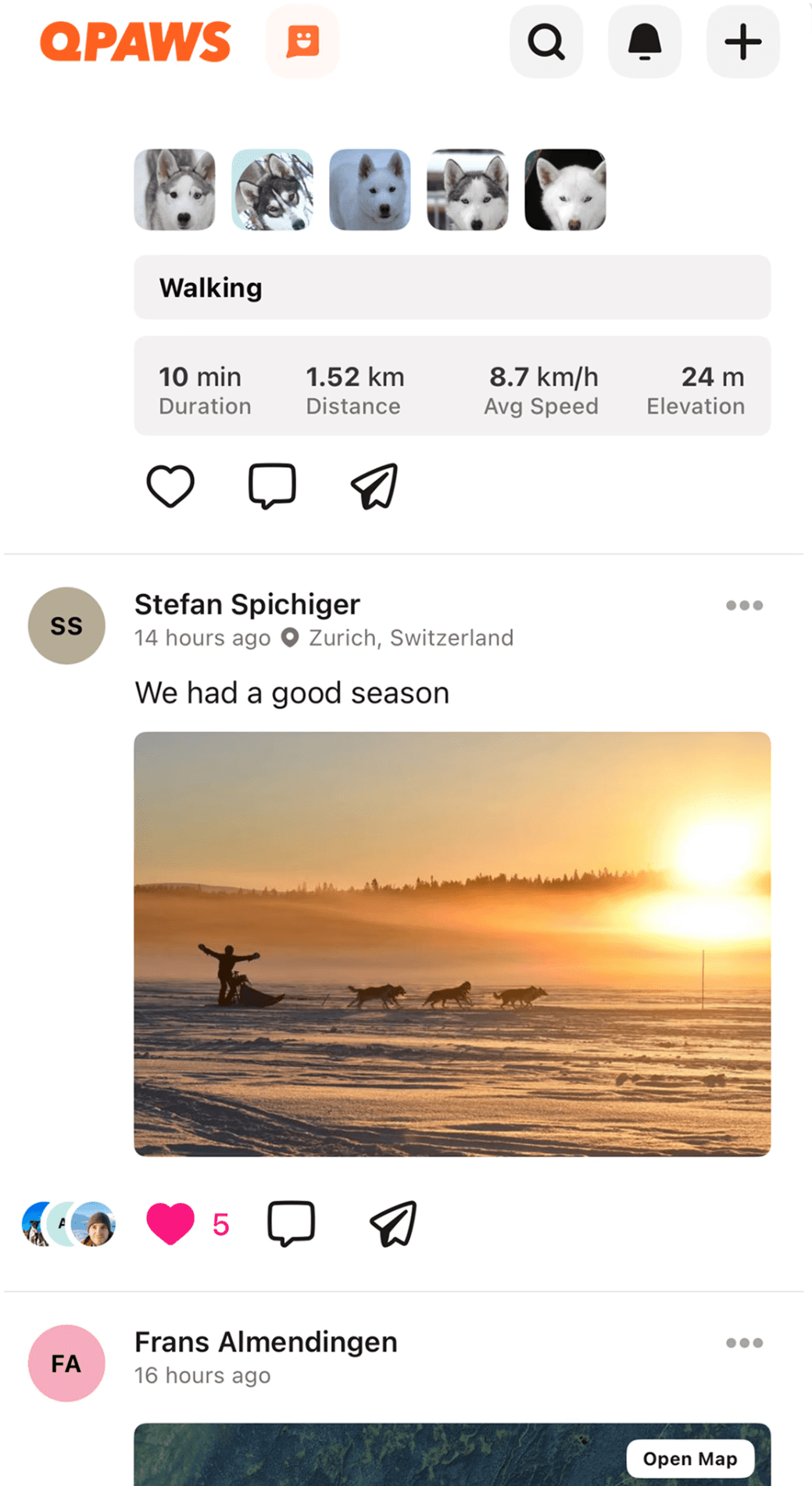
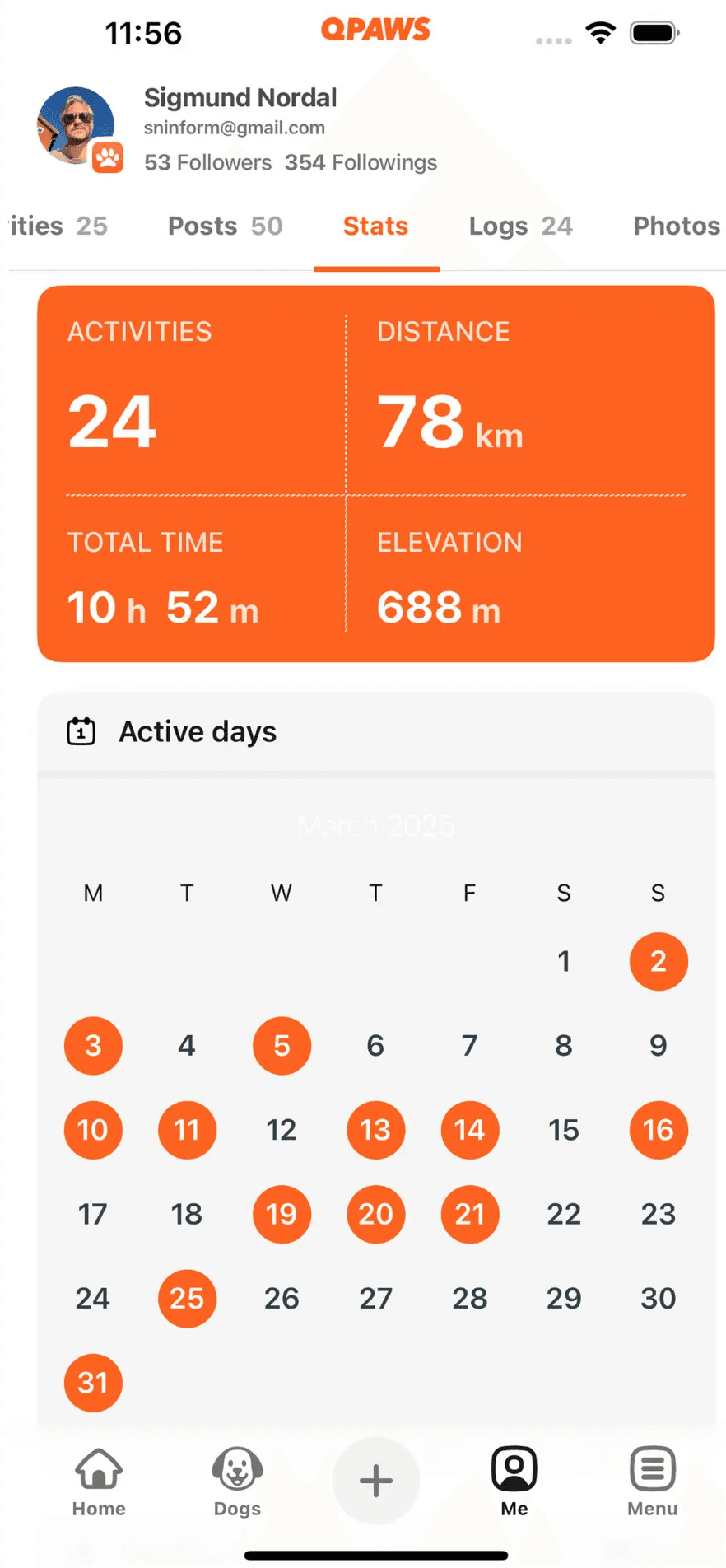
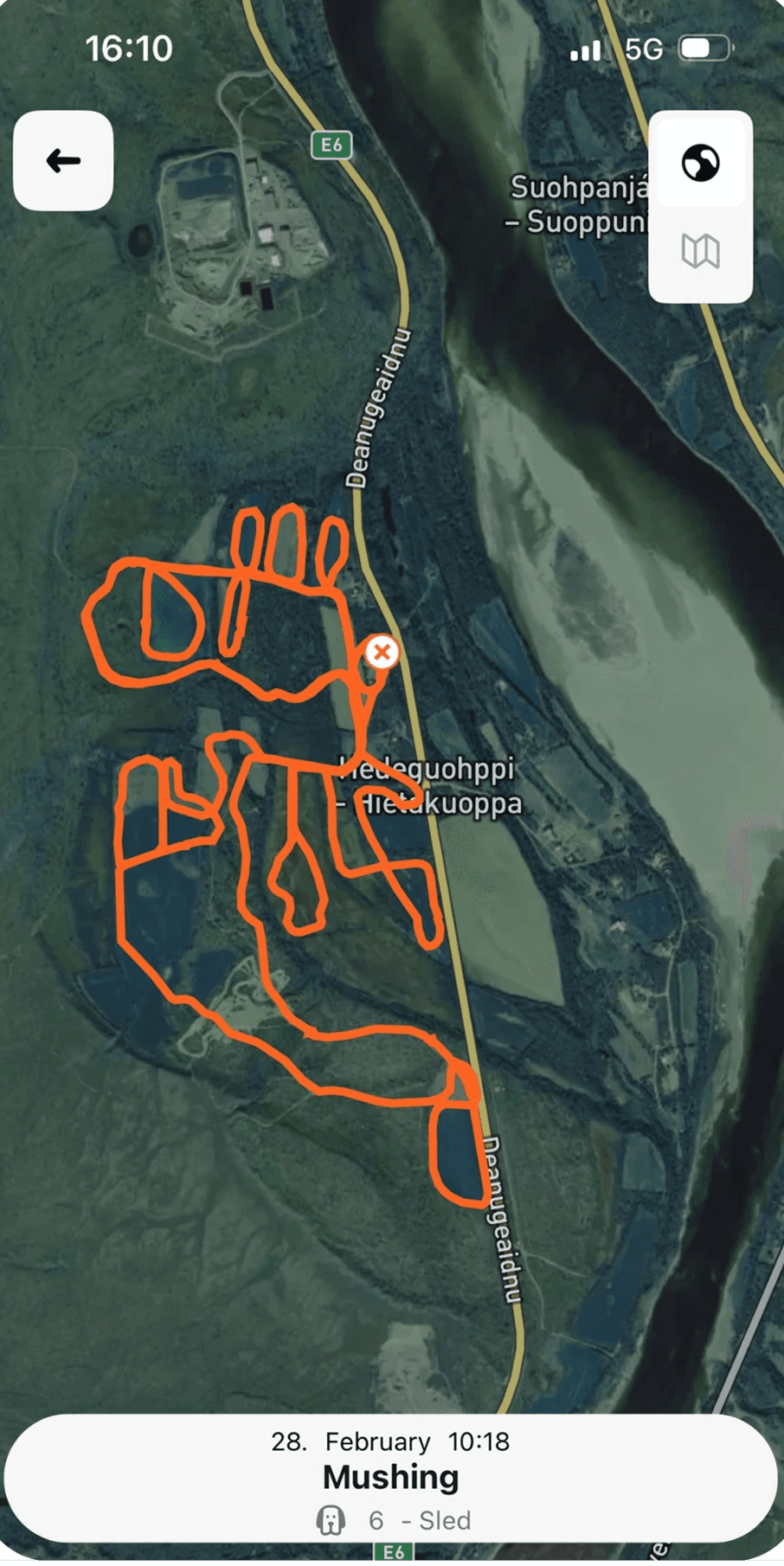
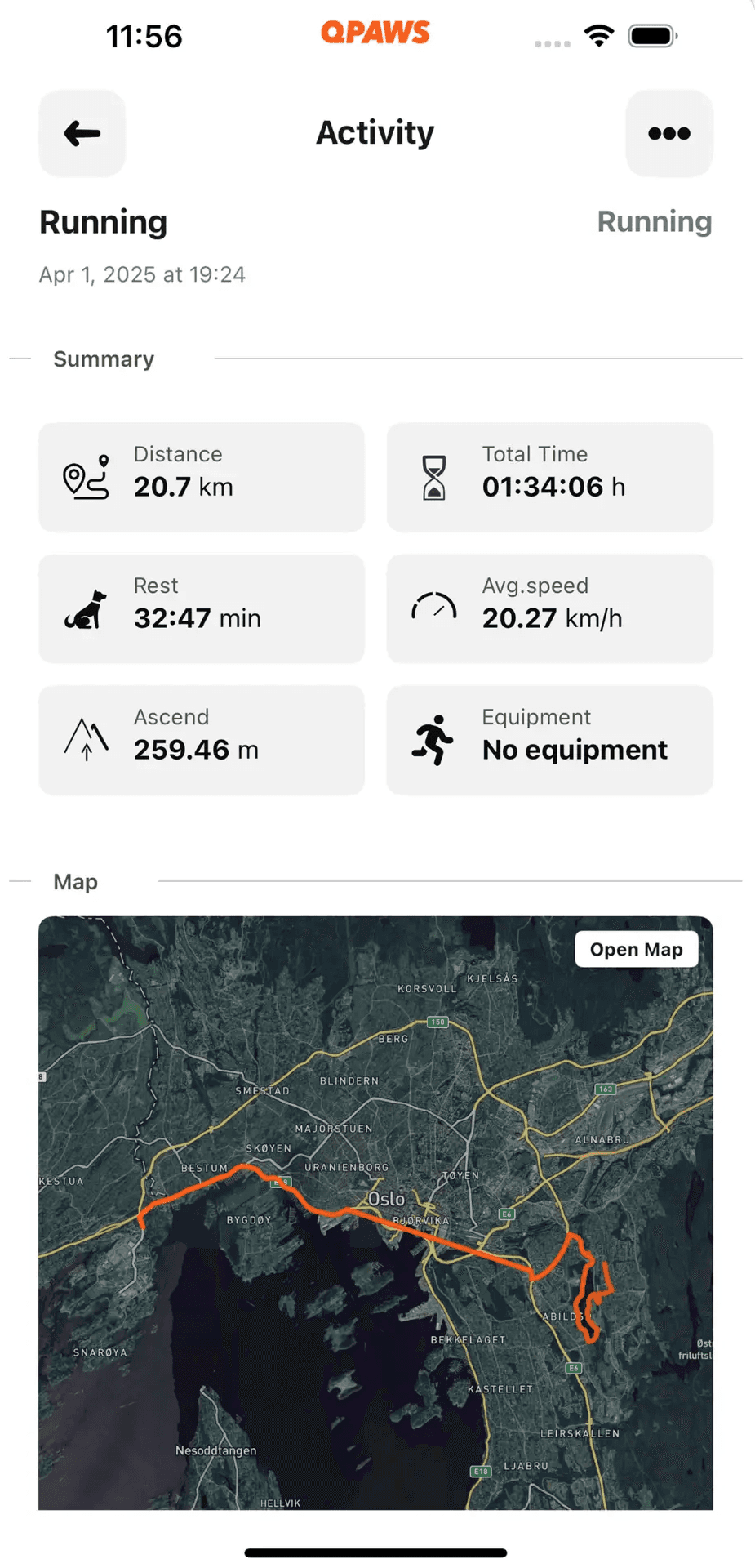
For hunters managing multiple dogs across a full season – separate profiles per dog, individual run logs, per-dog health notes, and brace composition tracking – the Qpaws platform for hard-core working dog owners is built for exactly this kind of structured record-keeping. Each dog gets an individual profile, session notes are attached to the relevant dog rather than just the outing, and health observations are tracked separately from performance data.
For owners running one or two dogs with a less intensive logging approach, the Qpaws active owners experience provides the same per-dog logging structure in a format that fits a lighter record-keeping habit – field day notes, health checks, and session summaries without the full team management layer.
The key, either way, is individual records per dog, not a single session note that collapses three dogs into one entry. The data that matters for training decisions is always per-dog.
The Bottom Line
A hunting dog that's been logged across a full season is not just better understood – they're better managed. You know their physical limits more precisely. You know how they respond to back-to-back outings. You know which brace pairings bring out their best work and which conditions compromise their scenting. You know what early fatigue looks like for them specifically, not just for dogs in general.
That knowledge doesn't come from experience alone. Experience without a record produces instinct. Experience with a record produces data. Both matter – but only data compounds.
Twenty outings with notes on each one turn into a seasonal baseline. A seasonal baseline turns into informed decisions about conditioning, veterinary timing, and next spring's training priorities. And those decisions – made from actual records rather than approximate memory – are what make each season smarter than the last.
Call to action: Start your hunting dog's field day log in Qpaws before the first outing of the season. Per-dog profiles, session notes, and health tracking – free on iOS and Android. [Download Qpaws – Free]
Related articles:


![Dog Endurance Training: Build Stamina Safely [Guide]](https://framerusercontent.com/images/7Y2HphZSTrLGkXRZ9TrZXx7u30.png?width=2240&height=1260)