





Why Your Dog Gets Tired on Flat Ground (But Not on Trails): A Science Breakdown
12 déc. 2025
It’s a scenario every dog owner knows. You strap on the leash for a neighborhood walk, and ten minutes in, your dog is lagging behind, sniffing the same blade of grass for eternity, or looking at you with pure exhaustion. You worry they are out of shape.
Yet, drive that same dog to a forest trail, unclip the leash, and suddenly they are a rocket—sprinting over logs, banking off trees, and running for two hours without a sign of fatigue.
How can a dog be "too tired" to walk around the block but have endless energy for a mountain hike?
The answer isn't just "excitement." It is a complex mix of neuroscience, biomechanics, and psychology. On flat ground, your dog isn’t physically tired; they are mentally under-stimulated and physically restricted.
Here is the science of why the "Pavement Plod" happens—and how to fix it.
The "Battery" Analogy: Draining vs. Recharging
Think of your dog’s energy not as a gas tank, but as a battery that relies on input to stay charged.
Pavement Walks (The Drain): A flat, gray sidewalk offers predictable visual inputs and limited smells. The repetitive motion and lack of novelty slowly drain the battery. The brain enters a "standby mode" to conserve energy because nothing interesting is happening.
Trail Runs (The Charger): The forest is a sensory firehose. The smell of deer, the sound of rustling leaves, and the visual chaos of the undergrowth trigger the release of neurochemicals that actively recharge the battery while it’s being used.
This phenomenon is rooted in a specific emotional system in your dog’s brain.
The Neuroscience: The "Seeking System"
Neuroscientist Jaak Panksepp identified seven primary emotional systems in the mammalian brain. The most powerful among them is the Seeking System.
This system evolved for foraging, hunting, and exploration. It is fueled exclusively by dopamine. Contrary to popular belief, dopamine isn't just about "pleasure" (the reward you get after eating); it is the fuel for anticipation and effort. It’s what pushes a wolf to track a scent for 20 miles.
Why Trails Trigger It:
When a dog steps onto a trail, the variable environment (scents, animal tracks, obstacles) flips the Seeking System switch to "ON." The brain floods with dopamine, which does two things:
Increases Motivation: It creates an urge to investigate what is around the next bend.
Masks Fatigue: High arousal states and dopamine release can override feelings of physical tiredness. Your dog literally doesn't feel the burn because their brain is prioritizing the hunt.
Why Pavement Kills It:
On a flat, familiar sidewalk, there is nothing to "seek." The environment is static. Without the dopamine drip, your dog feels the full weight of every step. The "laziness" you see is actually a lack of neurochemical fuel.
Biomechanics: The "Repetitive Motion" Trap
You might assume that a flat, paved surface is easier on your dog’s body than a rugged trail. Biomechanically, the opposite is true.
1. The Curse of Repetition
On a flat sidewalk, your dog uses the exact same gait, stride length, and muscle recruitment pattern for thousands of steps in a row. This leads to focal fatigue—specific muscles (usually the primary movers like the hamstrings and quadriceps) get overworked while stabilizer muscles sit dormant.
It’s the difference between standing still in one spot for an hour vs. walking around a room. Standing often hurts more because the load never shifts.
2. Dynamic Loading (The Trail Advantage)
Trails are chaotic. Roots, rocks, and elevation changes force your dog to constantly adjust their stride. This is called proprioceptive engagement.
Stabilizer Recruitment: To balance on uneven ground, your dog must engage their core and small stabilizer muscles around the joints.
Load Distribution: The physical effort is spread across the entire body rather than just the legs. Even though the total energy expenditure is higher on a trail, the perceived effort is lower because no single muscle group is being hammered to failure.
3. Surface Impact: Concrete vs. Soil
Physics also plays a role. Asphalt and concrete are high-stiffness surfaces, meaning they return almost all the energy of impact back up the limb (shock). Soil, sand, and pine needles are "compliant surfaces"—they absorb impact. A 5km walk on pavement inflicts significantly more cumulative joint stress than a 5km run on soft dirt.
The Psychology of Autonomy
The final piece of the puzzle is agency.
The "Heel" Fatigue:
Walking on a loose leash or in a perfect "heel" position requires inhibitory control. Your dog has to constantly stop themselves from walking faster, sniffing that bush, or chasing that squirrel.
Self-control is a finite resource in the brain. Studies suggest that "self-control depletion" leads to mental fatigue. A dog that has to mentally restrain themselves for 30 minutes straight will be exhausted, even if they barely moved.
Micro-Choices:
On a trail (especially if using a long line or off-leash), the dog makes hundreds of micro-choices per minute: Jump this log? Go left or right? Sniff this fern?
This autonomy is empowering. Instead of constantly hearing "No" (don't pull, don't sniff), they are interacting with the world. This shifts their mental state from passive endurance (waiting for the walk to end) to active engagement.
How to Measure the Difference (The Qpaws Angle)
You don't have to guess if your dog is experiencing the "Pavement Plod." You can see it in your data.
As active owners, we often focus on distance, but intensity and consistency tell the real story.
The "Trail Effect" in Data:
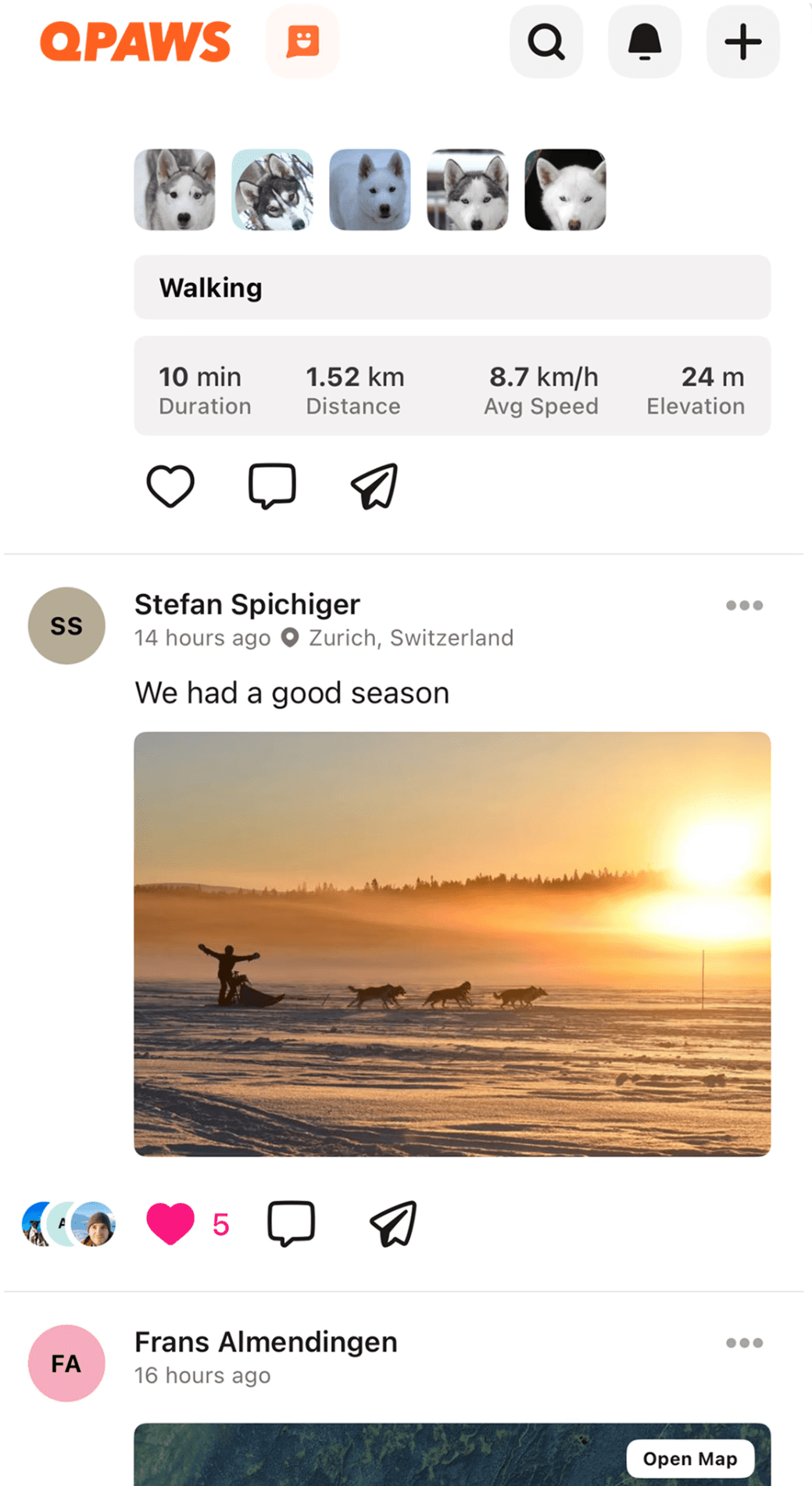
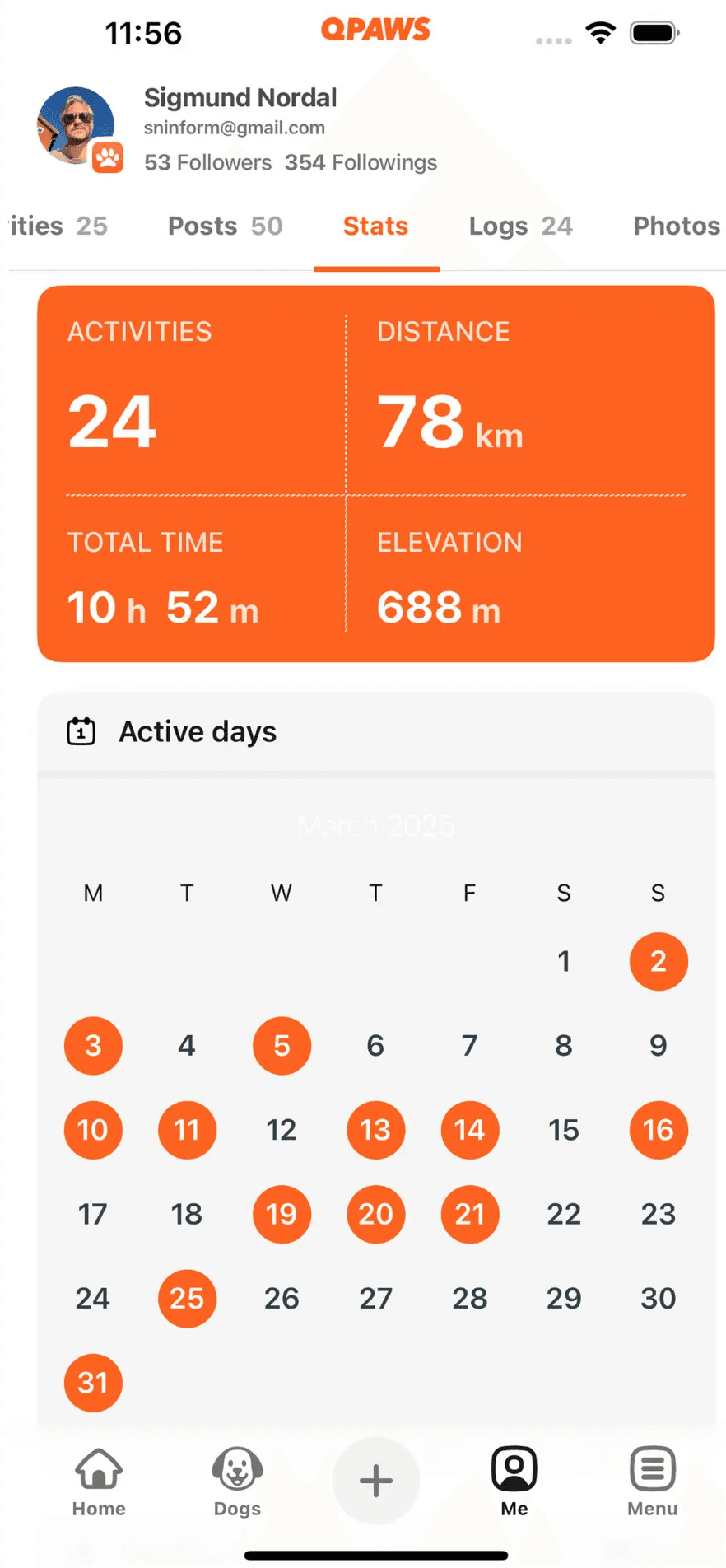
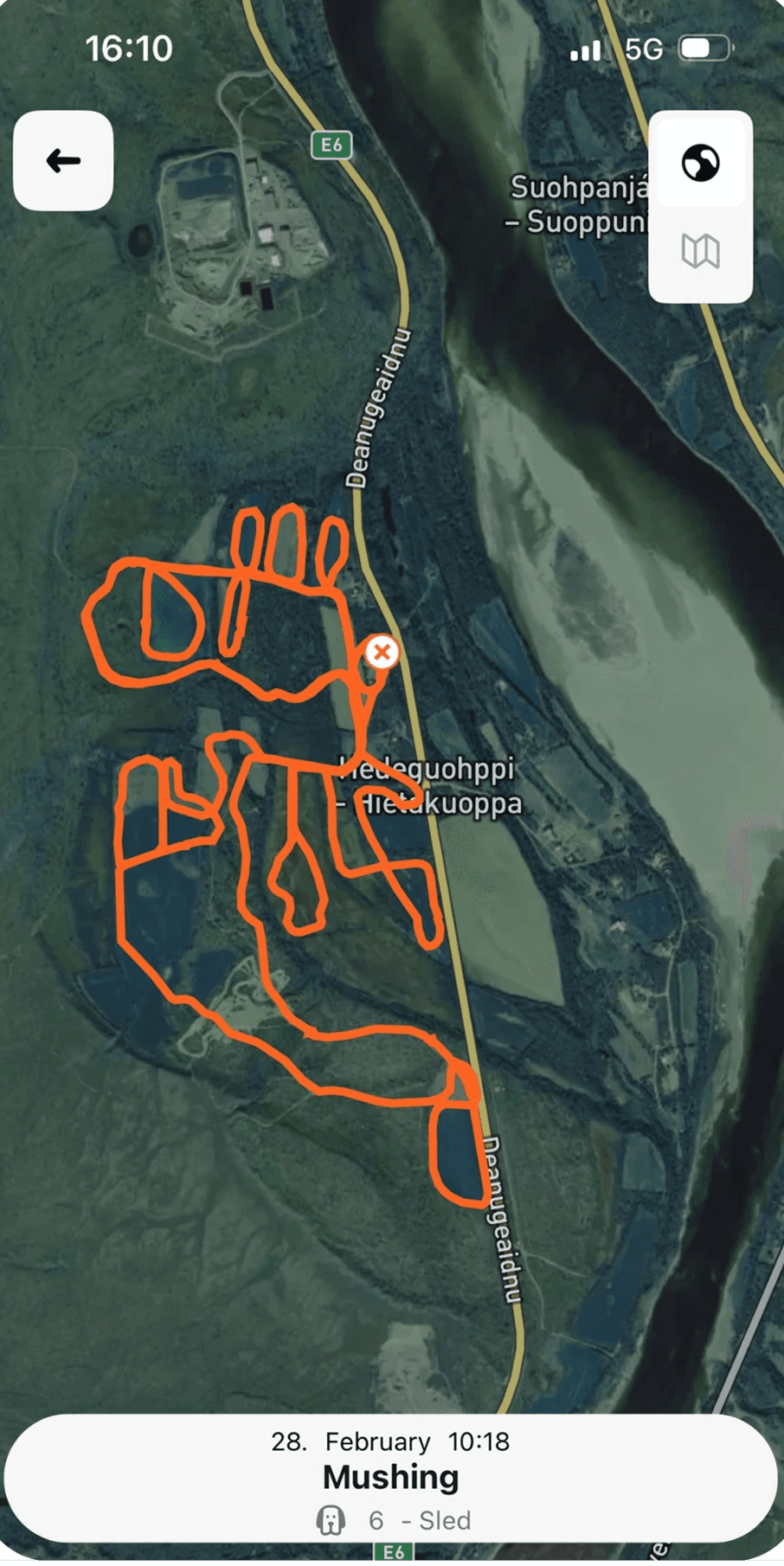
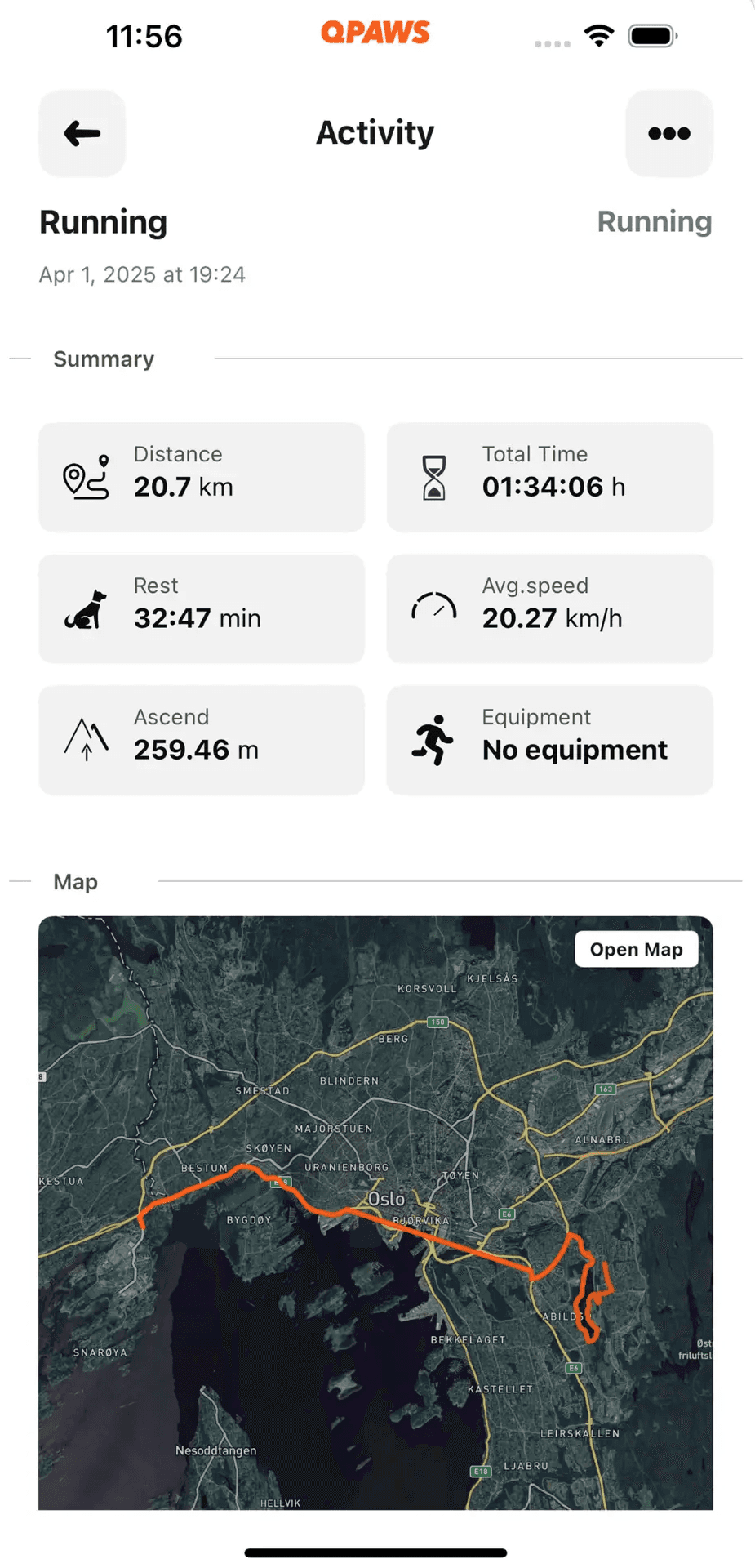
If you track your dog's activity using Qpaws (either directly or via our Garmin and Strava integrations), compare a "Neighborhood Walk" to a "Trail Run."
Pace Consistency: On pavement, you’ll often see a "sawtooth" pace graph—stop, start, drag, sprint.
Moving Time: On trails, the "Moving Time" is often much closer to the "Elapsed Time." The dog is motivated to keep moving forward.
The Decompression Metric:
We often ask, how much exercise does a dog need?. The answer isn't just about miles. A 3km "sniffari" on a trail might burn more holistic energy (mental + physical) than a 5km forced march on pavement.
By tagging your activities correctly in Qpaws (e.g., distinguishing "Walk" from "Hike"), you can track which activities leave your dog calm and satisfied vs. which ones leave them restless.
Practical Takeaways
You can’t always drive to the mountains. Here is how to apply trail science to your daily routine:
The "Sniffari": If you must walk on flat ground, stop treating it like a march. Let your dog sniff. Sniffing increases breathing rate and mental engagement, mimicking the "Seeking System" activation of a trail. Consistent small walks that focus on sniffing are better than long, boring marches.
Surface Switching: Even in the city, try to walk on grass verges or uneven park terrain instead of the concrete path. This introduces small amounts of proprioceptive work and reduces joint impact.
The 50/50 Rule: Aim for a balance. Use pavement walks for recovery and potty breaks, but prioritize variable terrain for fitness.
Watch for Signs: If your dog is refusing to walk on pavement, they aren't being stubborn—they might be sore or bored. Check for invisible signs of pain or simply change the environment to see if their energy returns.
Conclusion:
Your dog isn't lazy. They are an evolutionary hunter designed for complex terrain. When we force them into a linear, monochromatic world of concrete, we work against their biology. By understanding the science of the "Seeking System" and biomechanics, you can turn every walk into a recharge session.
____
Thanks to Julie Bernaschina from 🇨🇭 Swietzerland for providing the photos!