





Your dog was built to move. Thousands of years of evolution didn't design them for the couch. But life happens. Maybe you adopted an older dog who spent years in a kennel. Maybe winter slowed you both down. Maybe you just fell out of the habit.
Whatever the reason, you're here now. And the good news? Getting your dog sport-ready doesn't require extreme measures. It requires a plan, some patience, and a few weeks of consistent effort.
Let me take you through a safe, progressive conditioning program to take your dog from sedentary to running their first 5K alongside you. Let's go!
First Things First: A Vet Check
Before you lace up your running shoes, book a vet appointment. This isn't optional. Ask your vet to evaluate:
joint health (hips, knees, elbows),
heart and lung function,
weight and whether your dog needs to lose some before high-impact exercise,
breed-specific risks (brachycephalic breeds, for instance, have different limits).
Some dogs are cleared right away. Others may need a few weeks of low-impact activity first. Either way, you'll train with confidence knowing where your dog stands.
The 6-Week Conditioning Plan
This plan assumes a healthy adult dog that's currently doing minimal structured exercise. Adjust the timeline based on your vet's advice and your dog's response.
Weeks 1–2: Build the Foundation
Goal: Wake up dormant muscles. Establish a daily movement habit:
walk 30–40 minutes daily, at a brisk but comfortable pace,
mix in short bursts of trotting (30–60 seconds) followed by walking recovery,
choose flat, even terrain (grass or packed trails work well),
end each session with 5 minutes of slow cool-down walking.
Watch for excessive panting, lagging behind, limping during or after walks. These are signals to dial back.
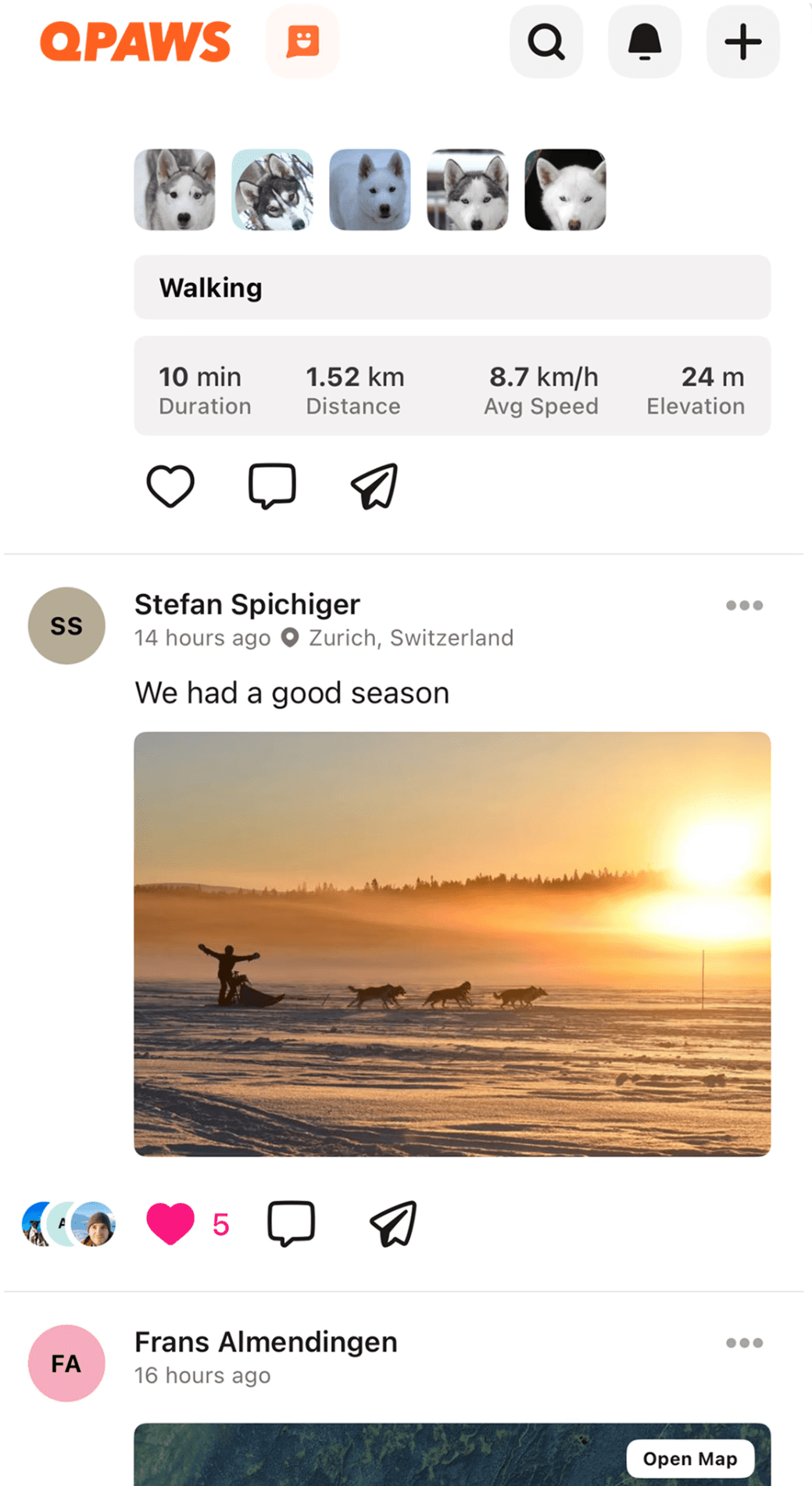
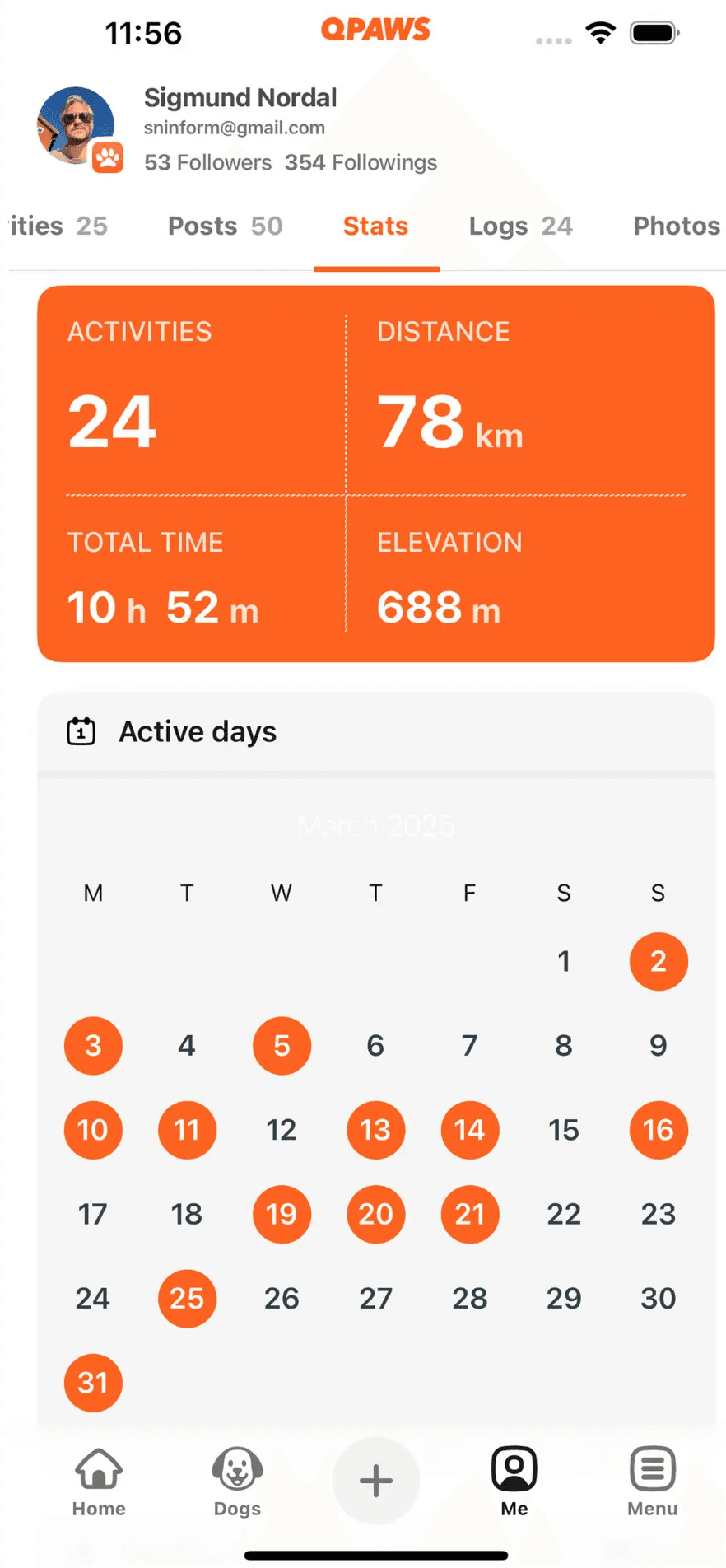
Track this in Qpaws. Log every walk to see your dog's weekly activity trend, built from day one.
Weeks 3–4: Introduce Structured Intervals
Goal: Build cardiovascular endurance. Introduce running intervals:
increase total session time to 40–50 minutes,
alternate 2 minutes of jogging with 3 minutes of walking,
repeat 4–6 times per session,
add gentle inclines once or twice a week for strength work,
include one rest day with only light walking.
By the end of Week 4, your dog should be trotting comfortably for 2-minute stretches without slowing down or heavy breathing afterward.
Watch for stiffness the morning after a session. If your dog is slow to stand or reluctant to move, you're progressing too fast.
Weeks 5–6: Build Toward 5K
Goal: Continuous movement at a jogging pace. Reach the 5K distance.
Shift to 3 minutes jogging / 2 minutes walking intervals,
gradually extend jogging intervals to 5 minutes, then 8 minutes,
by Week 6, aim for 20–25 minutes of continuous jogging,
total distance target: 3–5 km per session,
maintain one rest day per week.
Watch for your dog pulling ahead and wanting more. That's the sign you've built a solid base.
Recovery Is Part of the Plan
Conditioning isn't just about the runs. What happens between sessions matters just as much. After each session:
offer water in small amounts (not a full bowl right away),
allow 10–15 minutes of calm sniffing and walking before heading inside,
check paw pads for abrasions, especially on rough surfaces.
Between sessions:
light play and free movement on rest days (no structured running),
watch how quickly your dog recovers. Faster bounce-back = better conditioning,
adjust nutrition if your dog is losing weight too fast or seems low-energy.
Picking the Right Sport
Once your dog hits 5K, you've got options. Here's a quick match based on what your dog seems to enjoy:
Your dog loves... | Try this sport |
|---|---|
Running beside you | Canicross (cross-country running with your dog) |
Pulling on the leash | Bikejoring or scootering |
Sprinting in short bursts | Agility |
Running with other dogs | Sled dog sports or group canicross |
Each sport has its own training path from here. But the conditioning base you've built in these 6 weeks applies to all of them.
5 Mistakes That Stall Progress
Too much, too soon. The most common error. Dogs are eager to please and will push past their limits if you let them. Build gradually.
Skipping rest days. Muscles grow during recovery, not during exercise. One rest day per week is the minimum.
Running on hot pavement. Paw pads burn faster than you think. Stick to grass, dirt trails, or early morning runs if you're on asphalt.
Ignoring subtle pain signals. Dogs don't limp until the problem is serious. Watch for more subtle cues: licking a joint, shifting weight, sitting down mid-walk.
No tracking or structure. "We ran a bit today" isn't a plan. Logging your sessions helps you spot trends, catch overtraining early, and stay motivated when progress feels slow.
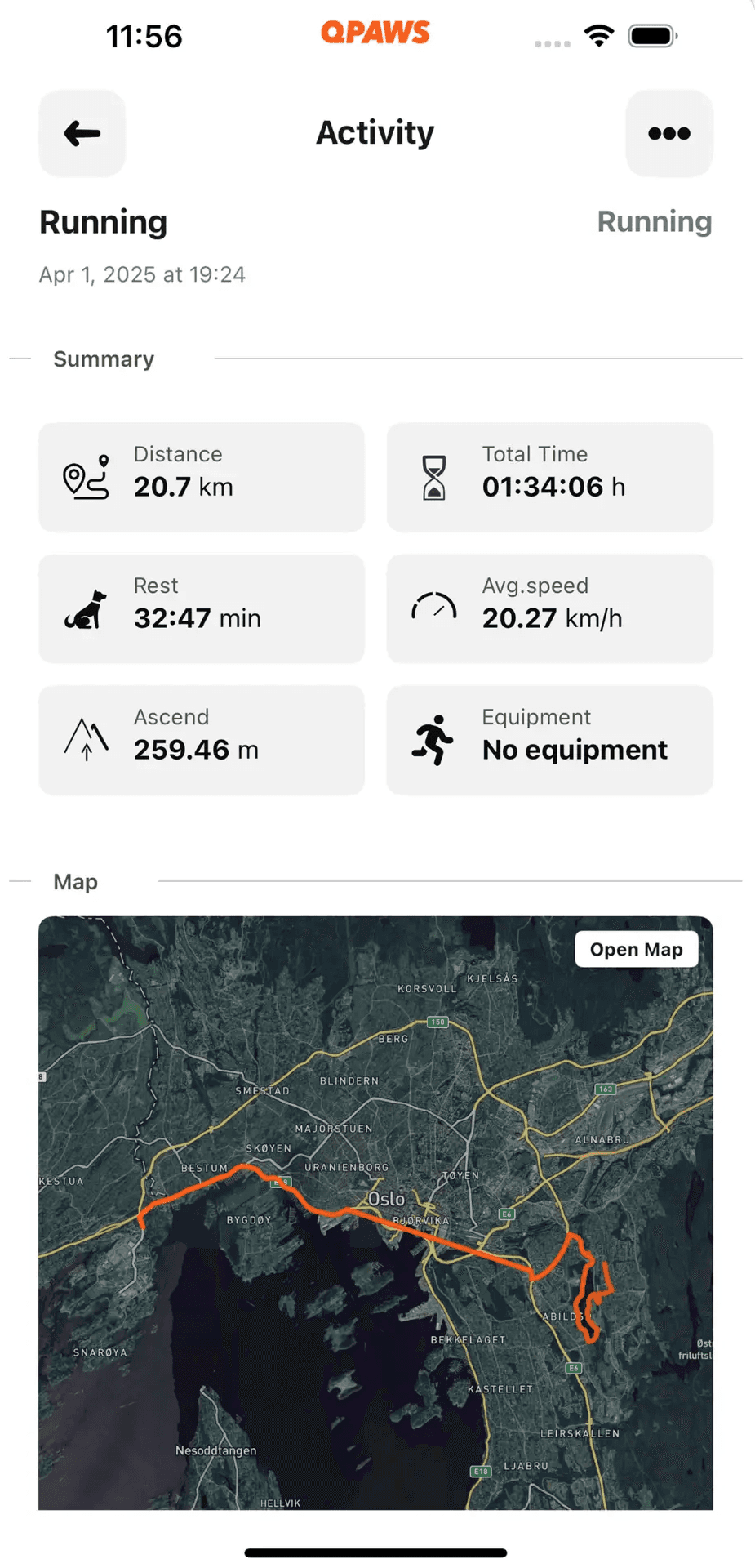
Track this in Qpaws – the app's training log gives you a clear picture of distance, frequency, and rest patterns, so you always know if you're on track.
Running With Older Dogs
Dogs over 7 (or over 5 for large breeds) can still get active. But the timeline stretches out, and the ceiling may be lower.
For senior dogs:
double each phase (12 weeks instead of 6),
focus on walking endurance before introducing any jogging,
prioritize low-impact movement (swimming is excellent if available),
get vet checks more frequently (every 4 weeks during the conditioning phase).
A senior dog doing a brisk 3K walk is a huge win. Sport participation doesn't have to mean competition. It means moving with purpose.
Your Dog Is Waiting
Six weeks from now, your dog could be running their first 5K with you. Not because you pushed them into it, but because you built up to it, session by session, with the patience they deserve.
The couch will still be there when you get home. But the trail? That's where you'll both come alive.
Ready to start tracking your journey? [Download Qpaws → Track your dog's progress from day one.]
_________
FAQ
How do I know if my dog is ready for sport after this plan?
If your dog can jog 3–5 km without excessive panting, limping, or reluctance, and recovers within an hour of finishing, they're ready for sport-specific training. A follow-up vet check at the 6-week mark is a good idea.
Can any breed do this?
Most breeds can improve their fitness with this plan. However, flat-faced breeds (Bulldogs, Pugs, French Bulldogs) have breathing limitations that may limit their running distance. Talk to your vet about breed-specific limits before starting.
What if my dog seems bored during walks?
Boredom usually means you're going too slow or the route is too repetitive. Try new trails, add sniff breaks as rewards between intervals, or bring a toy for short play bursts mid-session.
Should I change my dog's diet during conditioning?
Increased activity means increased calorie needs, but don't overcompensate. A 10–15% calorie increase is a reasonable starting point for most dogs. Adjust based on body condition, not the label on the bag.
What's the difference between this and just walking my dog more?
Structure. Walking more is better than not walking at all, but structured intervals with progressive overload build cardiovascular fitness and muscle endurance in a way that unstructured walks can't. You're training, not just moving.
How does Qpaws help with this plan?
Qpaws lets you log every session, track distance and frequency over time, and spot patterns in your dog's activity. You can see the full progression from Week 1 to Week 6 in one place, and access structured training plans in the app for when you're ready to go beyond 5K.
Related articles:

![Dog Endurance Training: Build Stamina Safely [Guide]](https://framerusercontent.com/images/7Y2HphZSTrLGkXRZ9TrZXx7u30.png?width=2240&height=1260)