





You adopted a Border Collie and a Basset Hound. Or a two-year-old rescue and a twelve-year-old golden retriever. Or maybe just two dogs who turned out to be opposites — one who could run a half marathon and one who'd rather sit in a sunbeam.
Multi-dog households are increasingly common, and so is the challenge that comes with them: one dog needs a hard workout, another needs a gentle stroll, and you have one body, one leash hand, and one schedule. Getting it wrong means an under exercised athletic dog who destroys furniture, an over-exerted senior dog who pays for it in the morning, and a frustrated owner stuck in the middle.
This guide gives you a practical system for balancing those competing needs – without burning out, playing favorites, or compromising anyone's health.
Why Dogs in the Same Household Can Have Such Different Needs
Before building a routine, it helps to understand why the gap exists. Fitness differences between dogs usually come down to one or more of the following factors:
Breed and genetic makeup. Working breeds – Huskies, Australian Shepherds, Vizslas, German Shepherds – were built for sustained physical output. Brachycephalic breeds (Bulldogs, Pugs, French Bulldogs) have structural limits on how hard they can breathe during exertion. Sighthounds sprint in bursts but don't sustain long efforts. Toy breeds have small frames with small cardiovascular systems. There's no universal "one hour of exercise per day" rule, because breed matters enormously.
Age. Puppies under 12–18 months actually need less sustained exercise, not more. Repeated impact on developing growth plates can cause long-term joint damage. Senior dogs (generally 7+ for large breeds, 10+ for small breeds) may have arthritis, reduced cardiovascular capacity, or other age-related conditions that limit how hard they can safely work.
Health status and weight. A dog carrying extra weight gets winded more quickly and puts more strain on its joints. A dog managing a heart condition, orthopedic issue, or post-surgery recovery has medically defined limits that override everything else on this list.
Fitness baseline. Just like humans, an out-of-shape dog needs conditioning before matching a fit dog's output. A newly adopted shelter dog may have had weeks or months of minimal movement before arriving at your home.
Step One: Assess Each Dog Individually
You can't design a fair system without knowing what you're working with. Spend one to two weeks observing each dog in isolation before trying to create a joint routine.
Signs a dog wants (and can handle) more:
sustained, bouncy energy after a walk,
destructive behavior or restlessness indoors,
pulling hard on the leash, eager to go further,
quick recovery – normal breathing within 5–10 minutes of stopping.
Signs a dog is at or near their limit:
heavy panting that takes more than 10–15 minutes to fully resolve,
lagging, lying down mid-walk, or reluctance to continue,
stiffness or soreness in the hours after exercise,
reduced appetite or lethargy the day after a session.
How Much Exercise Does Your Dog Really Need? Signs of Overexertion to Watch For
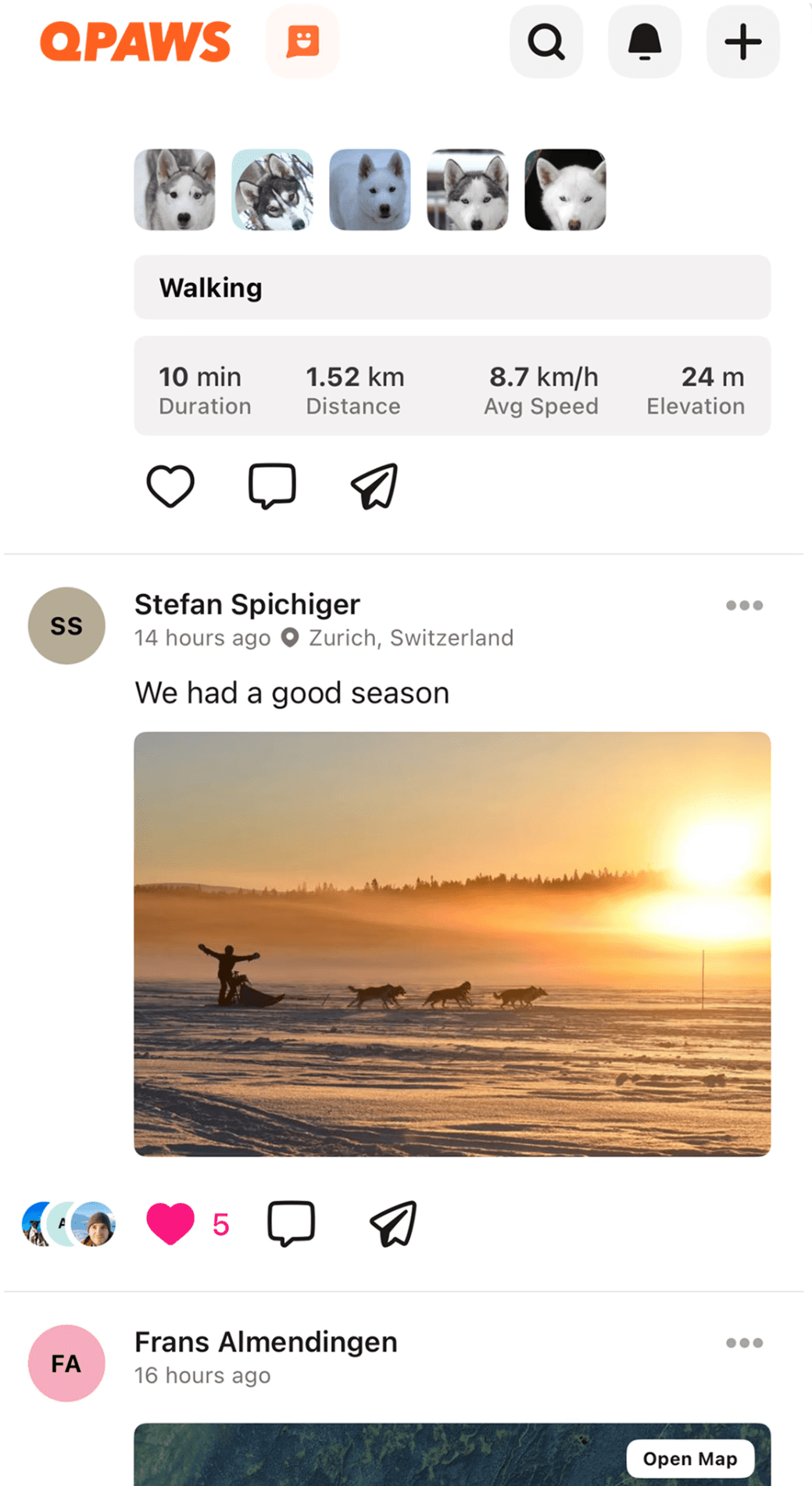
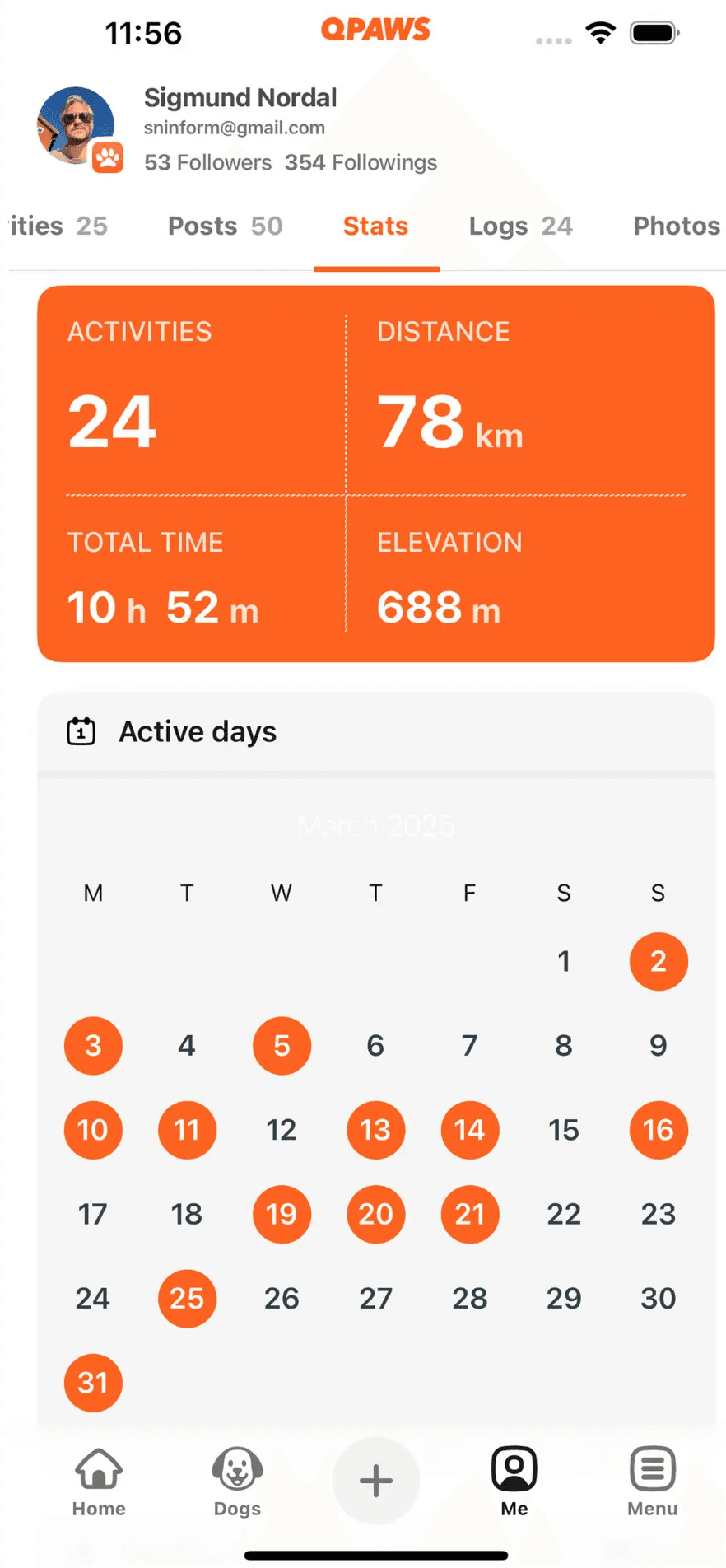
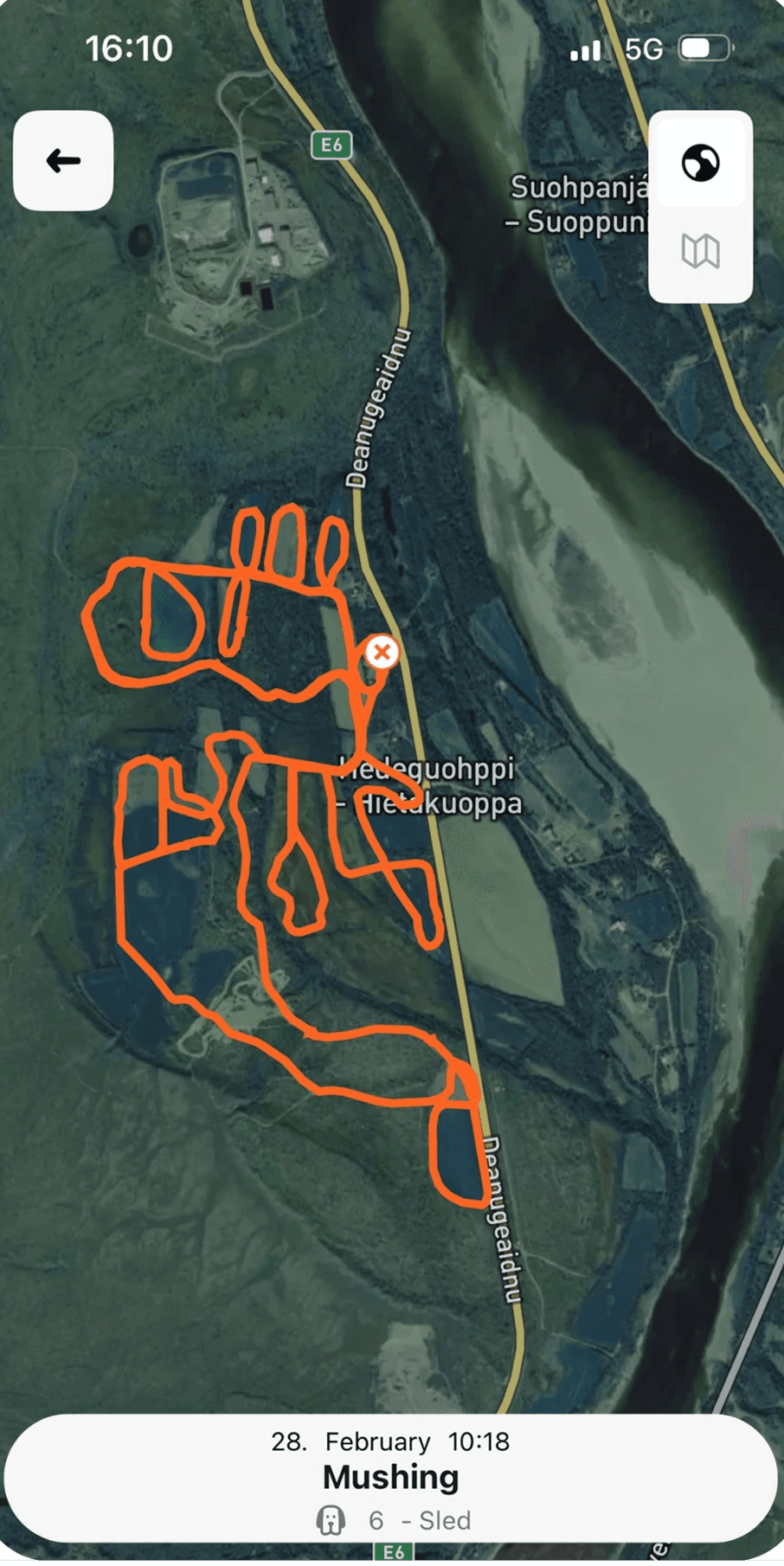
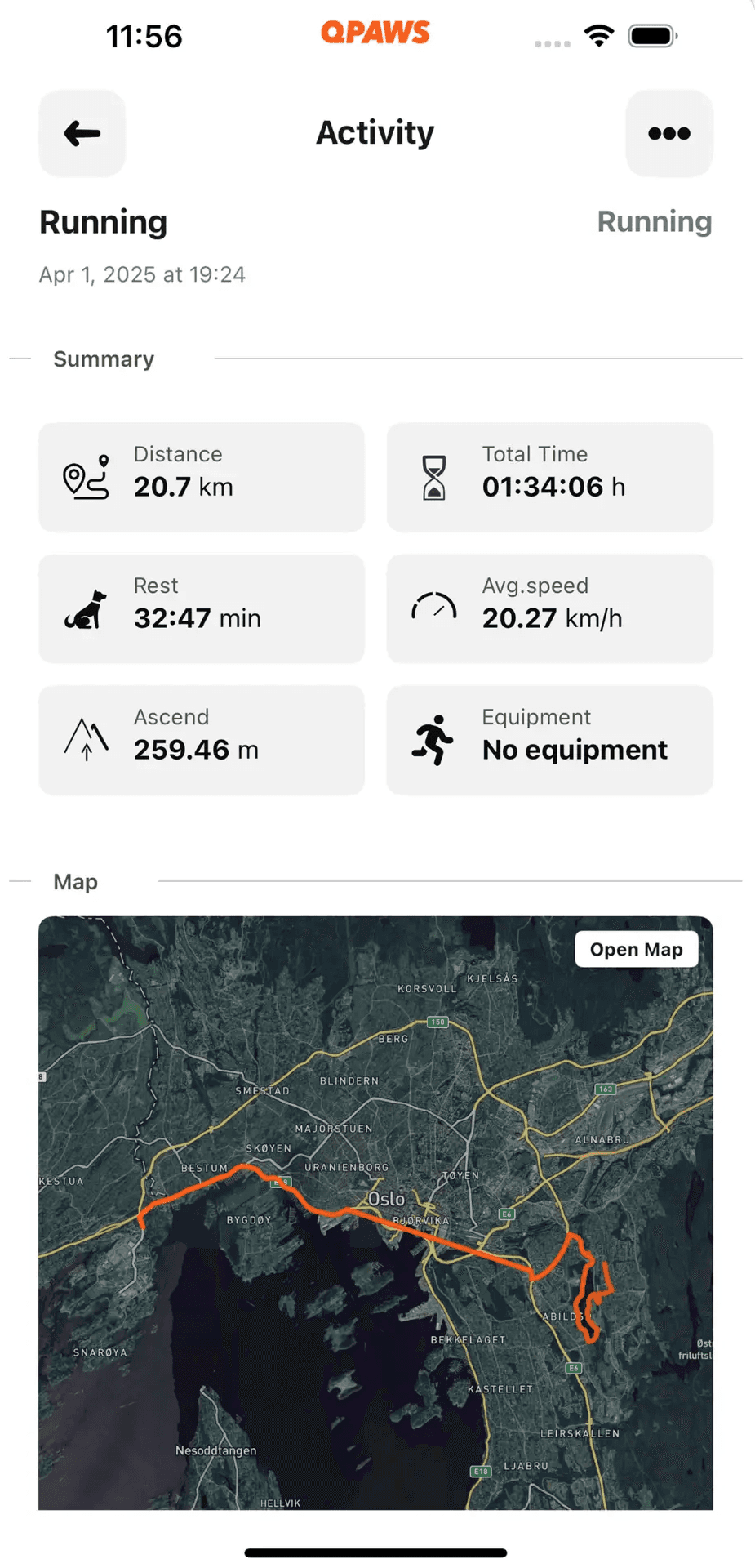
Activity tracking tools remove the guesswork here. An app like Qpaws can log each dog's daily distance, pace, and active minutes separately, so instead of estimating, you have actual data showing you that your Labrador covered 4.2 miles with no strain, while your Beagle mix tapped out at 1.8. That baseline makes the planning concrete.
For this purpose is useful to know how to use a dog fitness tracker to set the right exercise goals.
The Core Strategy: Separate Before You Combine
The biggest mistake multi-dog owners make is trying to meet everyone's needs in a single outing. It rarely works – either the high-energy dog is held back, the lower-energy dog is pushed too hard, or you're constantly managing tension between them.
The better framework: separate workouts first, shared time second.
Each dog gets individual exercise that meets their specific level. Then they share lower-intensity activities (exploration walks, backyard play, mental stimulation) where pace differences matter less.
This sounds like more work. It often isn't, because you stop fighting against the mismatch.
Practical Structures That Work
Structure 1: Split Sessions (Most Common)
Walk Dog A hard in the morning: a 45-minute brisk walk or run.
Walk Dog B gently: a 20-minute sniff walk at their pace. In the evening, both dogs go out together for a casual 20-minute explore. Total time isn't necessarily more than one long outing; it's just distributed differently.
Works best when: you have a significant energy gap, or one dog is medically limited.
Structure 2: Layered Outings
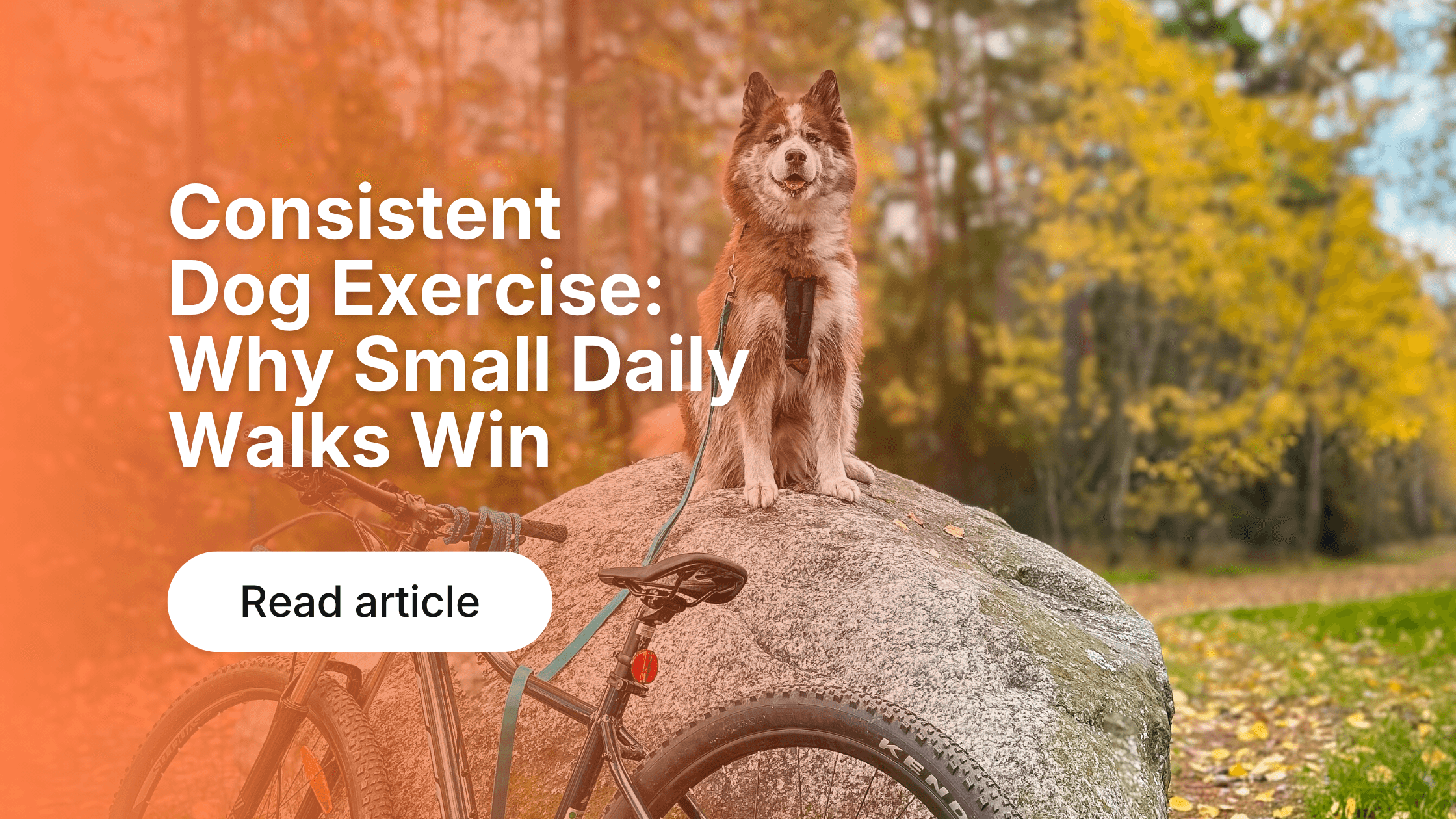
Take both dogs on the same route, but bring a bike, run yourself, or use a long line to let the athletic dog cover more ground while the other walks. The high-energy dog runs circles around you; the lower-energy dog walks. You're managing one outing, but both dogs are working at their own intensity.
Works best when: the fitness gap is moderate, both dogs have reliable recall, and you're comfortable handling leashes at varying speeds.
Structure 3: Tag-Team Days
Rotate which dog gets the "workout day." On Monday, your athletic dog gets a dedicated 60-minute trail run. Tuesday, your senior dog gets a slow, enrichment-focused 30-minute outing with lots of sniffing. Alternate throughout the week. This works particularly well when you're also doing breed-specific activities (agility, swimming, dock diving) that only one dog participates in.
Works best when: schedules are tight, or you have a dog in active rehabilitation.
Structure 4: Dog Park or Play Group (with Caveats)
Off-leash play self-regulates naturally – dogs opt in and out based on how they feel. But this only works if both dogs are comfortable in group settings and the energy dynamic at the park doesn't lead to your calmer dog being harassed or your athletic dog being frustrated by a less playful crowd. Monitor the first several times.
Works best when: both dogs are socially confident and the play environment is well-managed.
Don't Underestimate Mental Exercise
A Border Collie who's physically tired but mentally bored is still a problem dog. A Basset Hound who got a gentle walk but also worked through a puzzle feeder and a 10-minute nose work session is a satisfied dog.
Mental stimulation is particularly valuable for:
high-energy dogs on rest or recovery days,
senior dogs whose bodies can't keep up with their brain,
days when time or weather limit physical output.
Low-effort mental exercise options:
sniff walks (leash, no pace agenda – just let them follow their nose),
puzzle feeders and Kongs,
hide and seek with treats or toys,
basic training sessions (5–10 minutes of obedience or new tricks),
chews and lick mats during downtime.
One overlooked benefit: while your athletic dog works through a challenging training session, your calmer dog gets a social, calm sniff walk – and neither feels neglected.
Building a Sample Weekly Schedule for Your Dog
Here's what a realistic week might look like for a household with a high-energy dog (Dog A: 3-year-old Australian Shepherd) and a lower-energy dog (Dog B: 9-year-old Labrador with mild hip dysplasia):
Day: Mon
Dog A: 45-min run
Dog B: 20-min gentle sniff walk
Together: 15-min backyard decompression
────────────────────────────────────────
Day: Tue
Dog A: Agility training (45 min)
Dog B: Puzzle feeder + 20-min walk
Together: Evening snuggle/calm time
────────────────────────────────────────
Day: Wed
Dog A: 60-min trail hike
Dog B: 25-min leash walk
Together: None (Dog A tired enough to match Dog B's pace)
────────────────────────────────────────
Day: Thu
Dog A: Fetch session (30 min)
Dog B: Slow neighborhood walk + sniff
Together: Brief shared walk (20 min)
────────────────────────────────────────
Day: Fri
Dog A: Off-leash dog park (45 min)
Dog B: Lick mat + 15-min backyard time
Together: Shared yard time
────────────────────────────────────────
Day: Sat
Dog A: 90-min hike/adventure
Dog B: 30-min gentle exploration walk
Together: Short shared stroll
────────────────────────────────────────
Day: Sun
Dog A: Rest + nose work game
Dog B: Rest + gentle stretch walk
Together: Shared rest day
This is just a useful template to illustrate how separate sessions and shared time can coexist without consuming your entire day.
Managing the Logistics
Leaving one dog at home while you walk the other. This is the moment most owners dread – the dog left behind will let you know how they feel about it. Solutions: practice brief separations before making it routine, give the stay-home dog a high-value chew or frozen Kong that only appears during this time, and keep departures calm and matter-of-fact. Most dogs adapt within one to two weeks.
Keeping track of who got what. It's easier to lose track than you'd think. A simple dog log helps. Better: a dog fitness and activity tracker that automatically records each dog's movement data, so you can see at a glance that one dog had a hard day and the other was light.
When one dog needs to be crated or confined. If crate training isn't established, start now. A dog who can rest calmly in their crate while the other gets a workout isn't being punished – they're settling. Pair the crate with good things: meals, high-value chews, Kongs. Make it a den, not a jail.
Special Scenarios
Senior Dog + Young Dog
The most common pairing, and the most mismatched. The young dog's enthusiasm can inadvertently push a senior dog beyond safe limits – they want to keep up and will try to, even when their body says no.
Rule: let the senior dog set the tone for shared outings. Their pace, their duration, their rest breaks. The young dog gets their intensity needs met in separate, dedicated sessions.
Athletic Dog in Conditioning vs. Average Dog
If one dog is training for something (dog mushers, canicross, agility, dock diving) – their structured conditioning program will quickly outpace what any shared outing can provide. Embrace the separation. Their sport training is their workout; shared time is social.
Post-Surgery or Injury Recovery
One dog on restricted exercise creates an imbalance even in previously matched pairs. Double down on mental stimulation for the recovering dog, maintain the healthy dog's routine separately, and resist the urge to scale back the healthy dog's exercise "in solidarity" – it creates two under-exercised dogs instead of one.
Watching for Red Flags
Even a well-designed routine needs adjustment. Check in regularly for:
Signs the routine is working:
both dogs are calm and settled indoors,
neither is destructive, anxious, or pestering for attention constantly,
both dogs approach exercise with willingness (not reluctance or frantic overexcitement),
recovery after sessions is smooth — breathing returns to normal promptly, no stiffness the next morning.
Signs something needs adjusting:
persistent destructive behavior or indoor hyperactivity (high-energy dog not getting enough),
reluctance to go for walks, stiffness after outings, or soreness the following day (lower-energy dog being
pushed too hard),weight gain or loss in either dog,
behavioral changes: increased reactivity, anxiety, or withdrawal.
If you're tracking activity data across both dogs, look for trends over weeks, not just individual days. A dog who's consistently covering less ground week over week may be dealing with something worth a vet conversation.
Dog Stamina: How to Build It Safely – and When Low Stamina Is a Warning Sign
The Bottom Line
Multi-dog households don't need one perfect routine. They need a system – one that treats each dog as an individual, uses separate workouts where the gap is large, finds shared activities where it isn't, and stays flexible as dogs age and needs change.
The most important shift is mindset: stop trying to meet everyone's needs simultaneously in every outing, and start designing a week that gives each dog what they need, even if it doesn't all happen at the same time.
Your athletic dog will stop destroying the furniture. Your senior dog will stop looking exhausted after morning walks. And you'll stop feeling guilty about whoever seems to be getting the short end of the leash.
Track each dog's activity separately with the Qpaws app: automatically log distance, pace, and active minutes per
dog so you always know who needs more and who's had enough. [Download Qpaws →]
____
Thanks to Julie Bernaschina from 🇨🇭 Swietzerland for providing the photos!
Related articles:

![Dog Endurance Training: Build Stamina Safely [Guide]](https://framerusercontent.com/images/7Y2HphZSTrLGkXRZ9TrZXx7u30.png?width=2240&height=1260)