





You've watched your dog slow down on walks and wondered — is she tired, or is something wrong? You've second-guessed every meal, every rest day, every burst of energy. That uncertainty is exhausting, and it's unnecessary.
The full picture of your dog's health and fitness often remains hidden beneath the surface of daily observation, but dog activity tracking changes that, transforming pet care from guesswork into informed decision-making.
Activity tracking for dogs has evolved from simple pedometers to sophisticated systems that monitor movement, rest, sleep quality, heart rate, and caloric output. Research[1] demonstrates that dog activity trackers increase owners' motivation to boost their own physical activity with their canines while reinforcing the human-dog bond and building a clearer awareness of their pets' needs.
Why Track Your Dog's Activity? The Science Behind the Benefits
When you track your own fitness, you get objective metrics: distance, pace, heart rate, calories burned, and rest periods. The same logic applies to dogs. Wearable sensors and dog-activity monitors allow owners and trainers to capture meaningful metrics such as distance, intensity of motion, sleep and rest periods, and behaviour changes.
Understanding Real Health Indicators
Activity trackers like Tractive or Pitpat, provide a wealth of data about your dog's overall well-being – step counts, calories burned, sleep duration, rest quality, and behaviour trends. This goes far beyond casual observation, toward early detection of illness, optimised training, and a longer, healthier life for your dog.
A fitness tracker monitors key health indicators — activity levels, sleep patterns, and behaviour changes. Reviewing weekly trends helps you spot unusual changes early, allowing you to take action before minor issues become major health concerns.
Early Detection of Health Problems
One of the most valuable aspects of dog activity tracking is its ability to serve as an early warning system. If your dog's activity level suddenly decreases, a tracker can alert you to potential problems so you can get your dog to the veterinarian for the treatment they need.
Real-world examples demonstrate this life-saving potential. One owner noticed that their dog's sleep quality had dropped significantly and active minutes had decreased by about 50 minutes each day, though the dog appeared completely normal. Trusting the data led to a veterinary visit that discovered the beginnings of an ear infection.
Weight Management and Exercise Goals
Just like people, dogs need the right balance of food and exercise to stay at a healthy weight. A proper activity app helps you ensure your dog is getting enough movement throughout the day: adjusting food intake and walk duration based on actual calorie burn, not estimates, making weight management easier and more accurate.
For dogs struggling with obesity or requiring specific fitness regimens, accurate activity data becomes essential for progress monitoring and goal adjustment.
Behavioral Insights and Mental Health
Activity tracking extends beyond physical health into behavioural and mental wellness. Changes in activity level could indicate stress, anxiety, or an underlying medical issue. Understanding these patterns helps owners identify when their dogs might be experiencing emotional distress or physical discomfort that isn't immediately obvious through observation alone.
Optimizing Fitness and Performance Through Quantification
For competitive athletes and dedicated active owners, the objective is not merely monitoring activity volume, but optimizing the physiological outcomes of that activity. High-level performance requires moving beyond simple distance and time metrics to quantify effort, intensity, and recovery – the key elements that drive adaptation and elite capacity in mushing dog teams and other canine sports.
Dog Activity Tracking for Different Training Scenarios
Monitoring changes in activity gives you an early warning system. If your dog's baseline activity drops, that could signal injury, illness, or discomfort. As Texas A&M's College of Veterinary Medicine & Biomedical Sciences notes:
"If a pet has maintained a certain level of activity and then it decreases, that could be reflective of early illness or an injury."
This means tracking offers preventive health benefits, not just reactive ones.
Professional Dog Training Programs
For professional dog trainers and working dog handlers, systematic data collection has become indispensable. In Qpaws, you can document training progress clearly, making sessions more progressive instead of repetitive. Professional programs benefit from the ability to review historical data, identify patterns, and make evidence-based training decisions.
Dog Obedience Training
For basic obedience training, tracking provides accountability and motivation. Trackers help develop a habit of training in small sessions and taking stock of what is working and what might need adjustment. The ability to see quantifiable results encourages consistent practice and helps owners maintain training schedules.
Dog Training for Reactive Dogs
Reactive dog training presents unique challenges where data becomes particularly valuable. By tracking your and your dog's progress, you'll notice the small shifts in your dog's behaviour, reassuring you that what you're doing is working. For reactive dogs, these small shifts can be difficult to perceive without objective measurement.
Progress trackers, setup guides, and real-life troubleshooting tips support every step of the training journey for reactive dogs. Documenting triggers, threshold distances, and successful interventions allows trainers to make incremental adjustments based on actual performance rather than perception.
In Home Dog Training
Home-based training programs benefit enormously from activity tracking because it bridges the gap between trainer sessions. Keeping track of how your dog is progressing is an invaluable tool for both yourself and your mentors, as problems often only come to light when documented across multiple sessions.
For families working with in-home trainers, shared access to activity data ensures everyone involved in the dog's care can monitor progress and maintain consistency across different family members.
Mushing Dog and Working Dog Programs
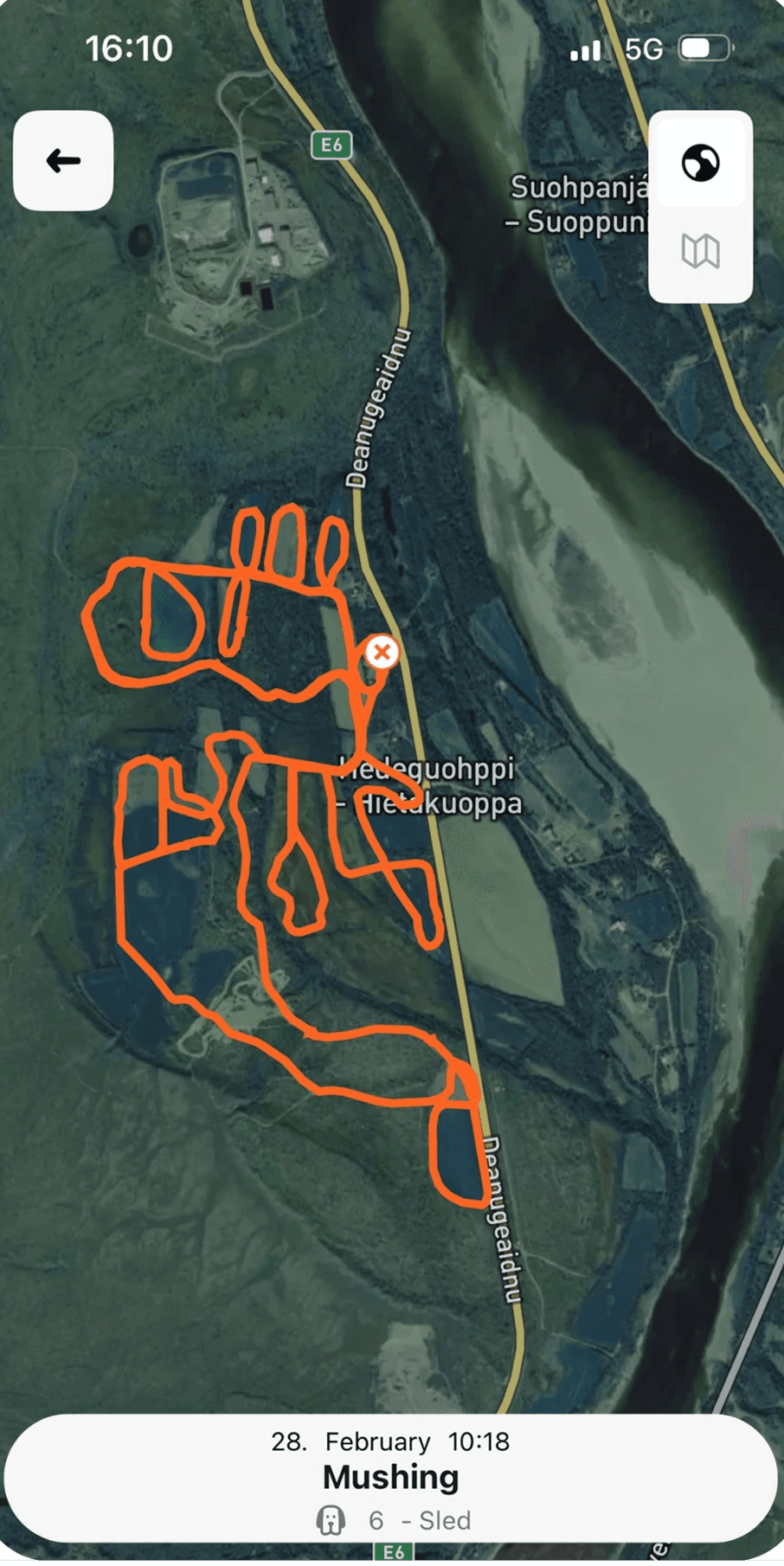
For mushing dogs and other high-performance working dogs, precise activity metrics are non-negotiable. Qpaws is used by search and rescue units for the detailed record keeping that is essential when learning to identify the strengths and weaknesses in your training routines, and maintaining your credibility as a search team.
Working dogs require optimisation of training intensity, rest periods, and performance monitoring to prevent injury while maximising capability. Activity tracking provides the granular data necessary for these adjustments.
The Science of Effort: Targeting Specific Physiological Goals
For everyday pet owners, step counts and sleep data are enough. But for serious trainers and working dog handlers, the science goes deeper.
Structured training must align exercise intensity with specific physiological objectives. Research on quantifying canine activity demonstrates that different levels of effort (measured by Pulse Reserve percentages) correlate directly with predictable physiological benefits.
Targeted training ensures that the dog is adequately stressed for physical adaptation without risking overtraining or injury. Light effort (Pulse Reserve of 61–70%) improves basic endurance and fat burning. Moderate effort (71–80%) builds aerobic fitness. Hard efforts (81–90%) are reserved for short sessions aimed at increasing maximal performance capacity.
Quantifying Canine Activity Levels and Physiological Benefits[2]
Effort Level (Perceived) | Pulse Reserve (%) | Associated Physiological Benefit | Typical Duration |
|---|---|---|---|
Very Light 10 | 50–60 | Improves overall health, helps with recovery | 20–40 minutes |
Light (Manageable) 10 | 61–70 | Improves basic endurance and fat burning | 40–80 minutes |
Moderate (Aerobic Focus) 10 | 71–80 | Improves aerobic fitness | 10–40 minutes |
Hard (Difficult) 10 | 81–90 | Increases maximal performance capacity for short sessions | 2–10 minutes |
Qpaws: The Complete Solution for Dog Activity Tracking
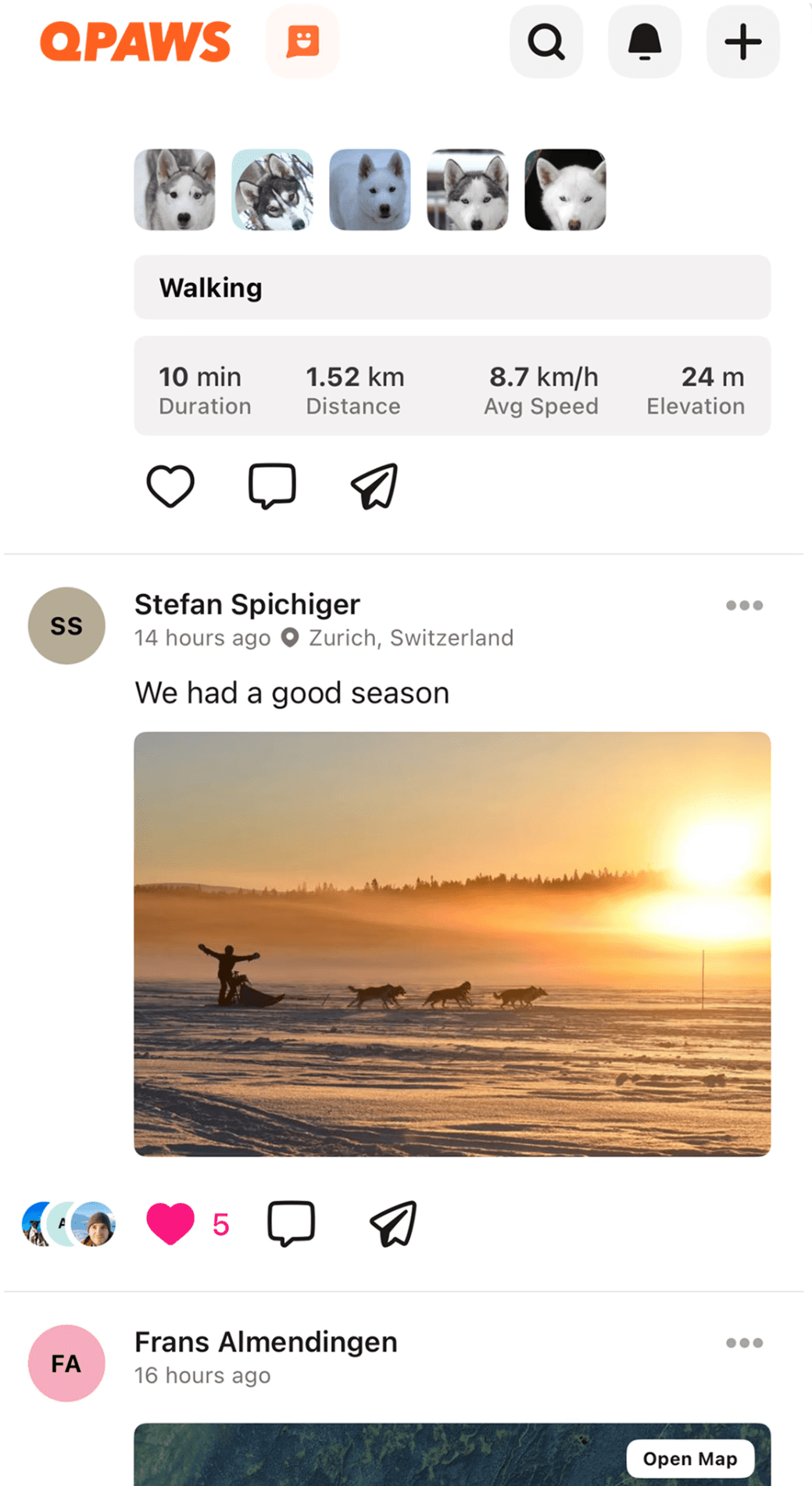
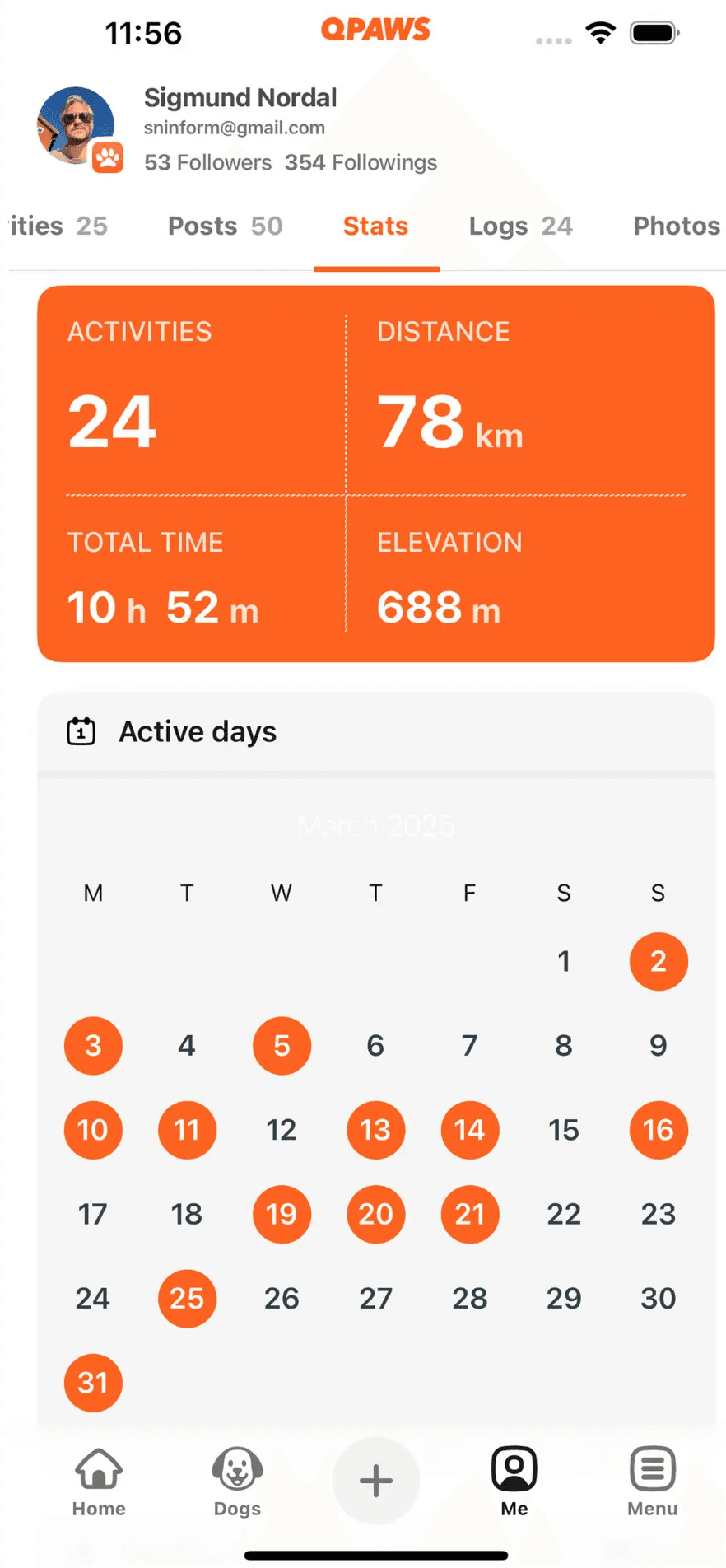
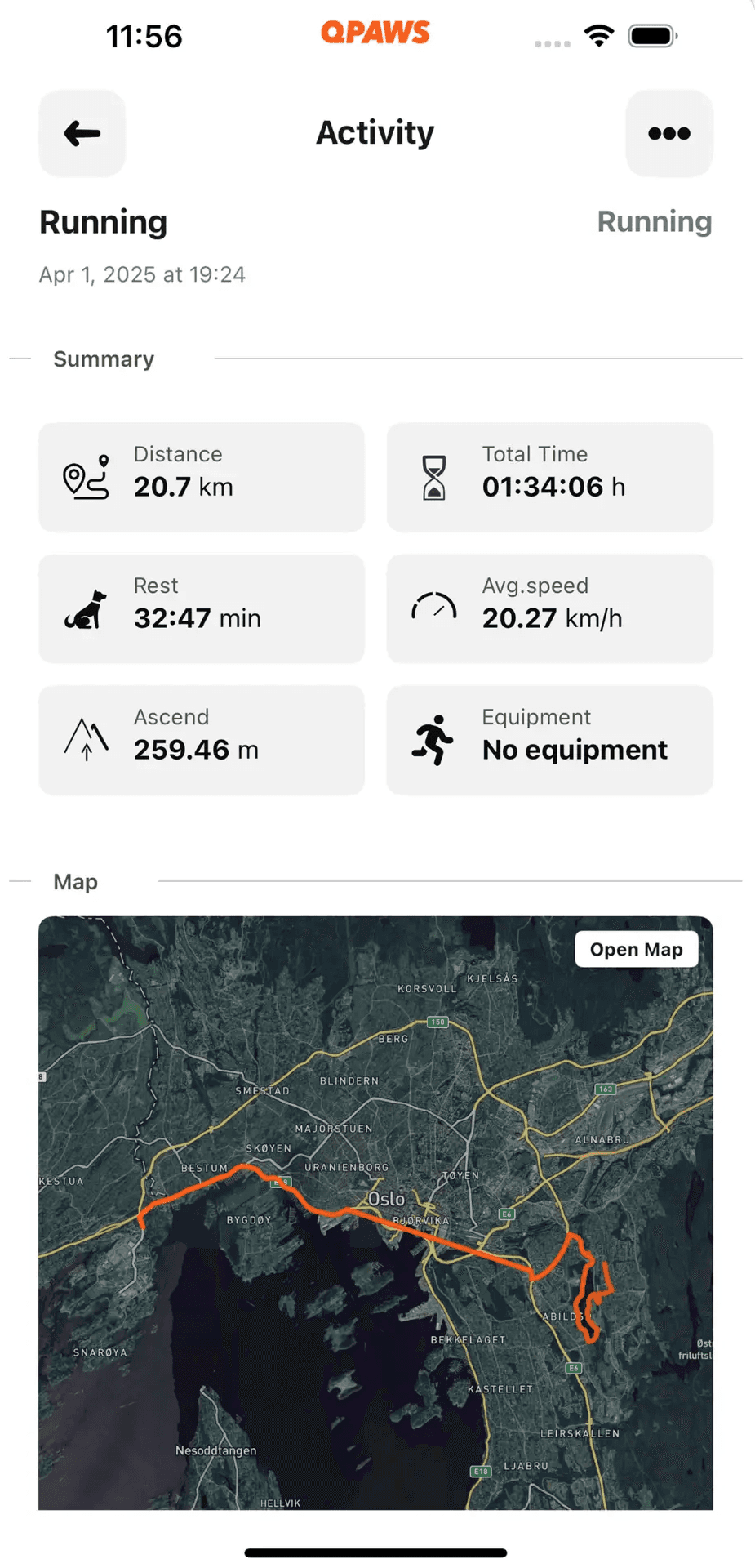
Unlike single-purpose devices, Qpaws doesn't stop at collecting data. It unites your dog's activity, training logs, and community feedback into one intuitive space – saving you the time of cross-referencing apps and giving you one complete view of your dog's health. Whether you sync your Garmin or Strava data, follow your mushing team's progress, or share milestones with your trainer, Qpaws keeps everything connected.
Seamless Activity Integration
Qpaws eliminates the fragmentation that comes from using separate devices and apps for different aspects of dog care. Whether you're tracking daily walks, logging professional dog training sessions, managing multiple dogs in a mushing program, or documenting progress in dog training for reactive dogs, Qpaws provides a centralised hub for all your data.
Evidence-Based Training Support
Qpaws doesn't just collect data – it helps you understand what the data means for your specific training goals. Whether working on basic commands, addressing reactivity, or preparing for professional dog training certifications, Qpaws guides your next steps based on what the data actually shows.
Implementing Activity Tracking in Your Dog Training Routine
Before beginning any training program, establish baseline metrics for your dog's activity levels, sleep patterns, and behaviour. Apps ask you to input basic information about your dog and then recommend a daily exercise goal — personalised by breed, age, and current fitness level.
Consistent Documentation
Logging training sessions helps you and any handler see patterns and catch problems early. Regular documentation transforms training from reactive troubleshooting to proactive optimisation.
Reviewing and Adjusting
Take time to review your tracker's data insights regularly. If you notice unusual changes in activity, sleep, or behaviour, it could indicate a health concern worth discussing with your vet. For casual owners, a weekly review is enough; for professional programs, daily check-ins are standard.
The Future of Data-Driven Dog Care
Activity tracking builds confidence in both dogs and handlers. For owners of reactive dogs, seeing documented progress during challenging periods reassures you that what you're doing is working, even when progress feels invisible day to day.
For professional trainers, comprehensive data documentation supports credibility and enables continuous improvement. Certifications capture a moment in time, but they don't track day-to-day progress: real-time data fills that gap.
Strengthening the Human-Dog Bond
Dog activity trackers increase owners' motivation to be more physically active alongside their dogs, while deepening their awareness of their pets' individual needs. The shared experience of working toward fitness goals creates a stronger connection between owner and dog.[1]
Optimizing Health Outcomes
Owners and their dogs in community groups have the opportunity to increase their physical activity together, which may lead to positive health outcomes – including improved cardiovascular, physical, and mental health for both ends of the lead.
Conclusion: From Data to Better Lives
Dog activity tracking represents far more than technological novelty – it's a fundamental shift in how we understand and care for our canine companions. Whether you're working through dog obedience training basics, managing the complexities of dog training for reactive dogs, running professional dog training programs, or simply wanting to ensure your pet lives their healthiest life, data provides the foundation for informed decisions.
The transformation from observational pet care to data-driven health management enables early problem detection, optimised training protocols, weight management, and deeper insights into behavioural patterns. For mushing dogs and working animals, precision tracking ensures peak performance without compromising welfare. For family pets, it provides peace of mind and actionable guidance.
Qpaws brings all of these capabilities together in a single, intuitive platform designed for the realities of modern dog ownership and training – bridging the gap between activity monitoring, training documentation, health tracking, and community support.
Instead of wondering if yesterday's long hike was too much, you can see your dog's recovery data and know. Start tracking your dog's activity with Qpaws today – connect your existing Garmin or Strava data, or start fresh.
__________
[1] A. Zamansky, D. van der Linden, I. Hadar and S. Bleuer-Elsner, "Log My Dog: Perceived Impact of Dog Activity Tracking," in Computer, vol. 52, no. 9, pp. 35-43, Sept. 2019, doi: 10.1109/MC.2018.2889637
[2] dr. A. Dagan, M. Scheinowitz, Calculation of a Physical Activity Index for Dogs Using Smart Collars, https://international-animalhealth.com/
Related articles:


![Dog Endurance Training: Build Stamina Safely [Guide]](https://framerusercontent.com/images/7Y2HphZSTrLGkXRZ9TrZXx7u30.png?width=2240&height=1260)