





Every dog can exercise. But not every dog was built for the same kind of work.
A Siberian Husky pulling through the kind of cold that stops most dogs in their tracks. A Border Collie reading an agility course the way a chess player reads a board. A Greyhound accelerating from a standstill to 70 km/h in three strides. These aren't flukes of individual talent – they're the result of centuries of selective breeding for specific physical and cognitive demands.
Understanding which sports suit your dog's genetics doesn't limit what you can do together. It tells you where your dog will genuinely thrive – where training will feel like play, where improvement will come faster, and where performance will peak beyond what's possible in a mismatched discipline.
This guide breaks down the major canine sports by the physical traits they demand, and names the breeds that carry those traits most reliably. If your breed appears in multiple categories, that's not an accident. If it doesn't appear at all, there's a section at the end for you too.
What Actually Makes a Breed "Good" at a Sport
Before the sport-by-sport breakdown, it's worth understanding the three variables that determine breed aptitude.
Physical conformation. Body proportions, muscle-to-bone ratio, chest depth, limb length, and paw structure all determine what a dog's body is mechanically suited for. A deep-chested dog with long legs and a light frame is built for speed. A broad-chested dog with short, powerful hindquarters is built for power. These aren't preferences, they're physics.
Metabolic profile. Breeds differ significantly in how they produce and sustain energy. Sprint breeds run on fast-twitch muscle fibers; endurance breeds run on slow-twitch. Some breeds have unusually high aerobic capacity – the ability to deliver oxygen to working muscles at race pace for extended periods. Others have exceptional anaerobic capacity for short, explosive efforts. These differences also shape how endurance breeds recover differently from sprint breeds.
Working drive and cognitive profile. Herding breeds make exceptional agility athletes in part because they were selected for fast, independent decision-making. Northern breeds tolerate sustained effort in cold conditions because discomfort-resistance was a survival trait. Scent hounds maintain focus through smell rather than visual cues, which makes them strong in tracking but difficult to redirect in ball sports.
The best sport-dog matches align all three. The result is a dog that doesn't just perform, they're built to.
Canicross and Trail Running: The Endurance Specialists
What the sport demands: Sustained aerobic output over 5–30+ km, pace-holding in varied terrain, mental engagement over long efforts, heat tolerance (in summer events), and collaborative forward drive with a human runner.
Top breeds:
Vizsla
Arguably the most complete canicross breed. The Vizsla has a lean, muscular frame, exceptional aerobic capacity, and working-dog drive without the northern-breed independence that can challenge handlers. They were bred as hunting dogs in Hungary – expected to work all day across varied terrain, maintaining pace and focus. In canicross, that translates directly: strong pull, consistent pace, easy to read and run with.Weimaraner
The Vizsla's German counterpart. Slightly heavier, with enormous stamina and a strong forward drive. Weimaraners tend to pull harder and need slightly more training to moderate pace, which makes them excellent once channeled, and more challenging to start with.German Shorthaired Pointer (GSP)
One of the most athletic dogs ever bred. GSPs were designed for all-day hunting work requiring both speed and endurance. Their chest depth gives them exceptional oxygen-carrying capacity. They run cool (in the physiological sense), produce less heat per unit of work than heavier breeds, and recover quickly between sessions.Siberian Husky
Dominant at longer distances and cold-weather events. The Husky's endurance is extraordinary. Working dogs can sustain effort over hundreds of kilometres in conditions that incapacitate other breeds. The trade-off in canicross is that Huskies can be less "switched on" to human pace cues than pointer breeds. They run in their own rhythm and need training to synchronise.
Border Collie
Their stamina is strong, but what distinguishes Border Collies in canicross is mental engagement. They read terrain, anticipate turns, and maintain focus across long efforts better than almost any other breed. Their lighter frame means they're faster to overheat in warm weather – an important management factor.
Whatever the breed, building canicross fitness without trail access is entirely possible – city athletes have more training tools than most owners realise.
Sled Dog Sports and Skijoring: The Cold-Weather Power Breeds
What the sport demands: Sustained pulling force over long distances, cold-weather performance, high pain and discomfort tolerance, pack cooperation, and exceptional metabolic efficiency at low temperatures.
Top breeds:
Siberian Husky
The gold standard of endurance sled work. Their unique metabolism allows them to shift between burning fat and carbohydrate in ways other breeds can't match – a documented physiological adaptation that sustains performance across multi-day efforts. It's the same physiology behind how elite sled dogs sustain performance across hundreds of miles. Paw structure (tight, arched toes with thick padding) is optimised for snow and ice. Coat insulates without overheating during effort.
Alaskan Malamute
Where the Husky is built for speed across distance, the Malamute is built for freight. Larger and more powerfully muscled, Malamutes excel in pulling heavy loads at a moderate pace – the original Arctic freight dog. They are not as fast as racing Huskies, but their raw pulling strength is unmatched among domestic breeds.
Greenland Dog
Less common outside Scandinavia, but arguably the most durable sled dog in extreme conditions. Bred on the Greenlandic ice sheet, they carry higher body fat ratios that insulate in temperatures that other breeds can't sustain. Exceptional for polar-style long-distance events.
Samoyed
Often overlooked in serious sled sport due to their popularity as companion dogs, the Samoyed was historically a genuine working sled dog. They have the metabolic and coat characteristics for cold-weather work and strong forward drive, though they tend toward independence in training.
Agility: The Fast-Twitch Thinkers
What the sport demands: Explosive acceleration, tight turning radius, aerial confidence (jumping), fast independent decision-making, and sustained focus in high-distraction competitive environments.
Top breeds:
Border Collie
The dominant force in competitive agility for decades, and for clear reasons. Border Collies combine physical speed with a working intelligence that processes course structure in real time. They are fast-twitch athletes (explosive rather than purely endurance) and their herding background means they track moving objects, read spatial patterns, and respond to handler cues with a precision other breeds rarely match. At the international level, Border Collies win most categories. For a deeper look at training fast-twitch capacity in agility and sprint dogs, periodised strength and speed work makes a measurable difference.
Australian Shepherd
Very close to the Border Collie profile: high drive, strong spatial intelligence, explosive movement, and an intense desire to work. A slightly heavier frame means they're more powerful over longer course sequences. Their versatility makes them strong in both agility and other dog sports.
Shetland Sheepdog (Sheltie)
Pound for pound, one of the fastest turning dogs in agility. Their compact frame and low centre of gravity allow tight directional changes that larger dogs can't match. In height-categorised competitions, Shelties regularly beat Border Collies for turning efficiency.
Jack Russell Terrier
Surprising on this list for many owners, but JRTs are legitimate agility athletes. Their terrier drive is relentless, their fast-twitch capacity is high, and their fearlessness on jumps and contacts removes a barrier that slows more cautious breeds. The challenge is handler-focused – terrier independence requires more training investment to channel into competition precision.
Belgian Malinois
Increasingly prominent in agility after decades of dominance in protection sports. The Malinois has exceptional athletic ability (arguably the highest power-to-weight ratio of any breed), combined with extreme handler-focus. Their speed on the course is elite-level. The training investment is also elite-level.
Lure Coursing and Sprint Racing: The Speed Specialists
What the sport demands: Pure top-end speed, explosive acceleration, sight-focus (tracking a moving target), and an extreme lean frame tolerating high-speed turns.
Top breeds:
Greyhound
The fastest dog breed by a significant margin. Greyhounds reach speeds of 70–72 km/h and have the highest fast-twitch muscle density of any breed. Their deep chest houses enormous lungs and a heart that, relative to body size, is the largest of all dog breeds. They are sprint animals – built for explosive short-distance effort, not endurance. A Greyhound who runs a 30-second lure course and then lies down for three hours isn't lazy; that's their physiology doing exactly what it was built to do.
Whippet
The Greyhound's smaller counterpart and one of the most versatile sprint-sport breeds. Whippets are faster relative to body weight than Greyhounds and have a wider practical use in dog sports because of their size and adaptability. They compete in lure coursing, flyball, and agility with equal seriousness.
Saluki
Where the Greyhound is a pure sprinter, the Saluki is a distance sighthound. Bred across the Arabian Peninsula for hunting over long, open terrain, Salukis sustain high speed over distances that exhaust Greyhounds. Their stride is different – more elastic and ground-covering than the Greyhound's explosive burst. In lure coursing formats that reward sustained pace over distance, Salukis often outperform pure sprint breeds.
Borzoi
Another distance sighthound, with a distinctive silhouette and a long, elastic stride, built for open terrain. Like Salukis, they are endurance-speed dogs, not burst-speed dogs, and they perform best in longer coursing formats.
Flyball: The Relay Specialists
What the sport demands: Explosive acceleration, precise ball-catching, tight turning ability, high arousal tolerance in competitive noise environments, and team relay consistency.
Top breeds:
Border Collie
Again. Their explosive speed over 15-20 metres, combined with ball drive and handler connection, makes them the most consistent flyball competitor. Many flyball teams build their "seed" (fastest dogs) around Border Collies.
Whippet
Their pure acceleration makes them dangerous relay legs. Whippets tend to have lower arousal ceilings than Border Collies, which can make them more consistent in chaotic team competition environments.
Staffordshire Bull Terrier
Underrated flyball dogs. Staffordshire Bull Terriers have exceptional ball drive, high arousal tolerance, and surprising speed for their compact frame. Their physical power through turns compensates for slightly lower top speed.
Jack Russell Terrier
The terrier drive that challenges agility handlers is actually an asset in flyball, where obsessive ball focus is the whole point. JRTs are competitive in their height category and genuinely enjoy the format.
Dock Diving: The Water Specialists
What the sport demands: Explosive running start, powerful launch, comfort in water, strong retrieve drive, and fearlessness at height.
Top breeds:
Labrador Retriever
Built for this sport. Water-repellent double coat, webbed feet, powerful hindquarters for launch, and a retrieve drive that makes the act of jumping into water for an object intrinsically rewarding. Labs are the most consistent dock diving competitors across all age categories.
Golden Retriever
Nearly identical profile to the Labrador in dock diving capacity. The Golden's softer temperament means slightly less explosive drive off the dock, but more consistent performance in high-distraction event environments.
Belgian Malinois
Elite dock divers in the open distance category. The Malinois's athletic capacity and prey drive, combined with proper training, produce some of the longest jumps in the sport. They don't have the natural water affinity of retrievers, but their athleticism compensates fully.
Chesapeake Bay Retriever
Specifically bred for cold-water retrieval in the Chesapeake Bay. Stronger and more powerfully built than Labs or Goldens, with the most water-resistant coat of the retriever group. Highly competitive in dock diving, particularly in cold conditions.
What If Your Breed Isn't Here?
Not appearing in a sport-specific list doesn't mean your dog can't participate. It means the genetic match is less perfect, which changes the training investment required, not the outcome.
A mixed breed with strong forward drive can be an excellent canicross dog. A Labrador who loves running can finish a 10 km trail race. A well-conditioned rescue mutt can compete in agility.
What breed aptitude tells you is where the ceiling is likely to be, and where training will feel natural versus where it will require more deliberate work. Most owners aren't trying to win international championships – they're trying to find an activity their dog loves and thrives in.
The more honest question is: what does your individual dog show natural drive toward? Breed is a strong predictor, but it's a population-level statistic. The dog in front of you is an individual.
Watch what they chase, how they move, what makes them light up on a walk. That tells you as much as their ancestry does, and it's the best starting point for matching exercise volume to your dog's actual capacity.
Tracking Performance Across a Season
Understanding your dog's breed aptitude is the starting point. Measuring their actual performance is what tells you whether training is working.
Whether you're running canicross, entering agility trials, or just building a conditioning base for the sport you've chosen, tracking session data over weeks reveals patterns that single sessions never show: the training load that produces peak performance, the recovery time your dog actually needs, the early signs that effort is accumulating faster than adaptation.
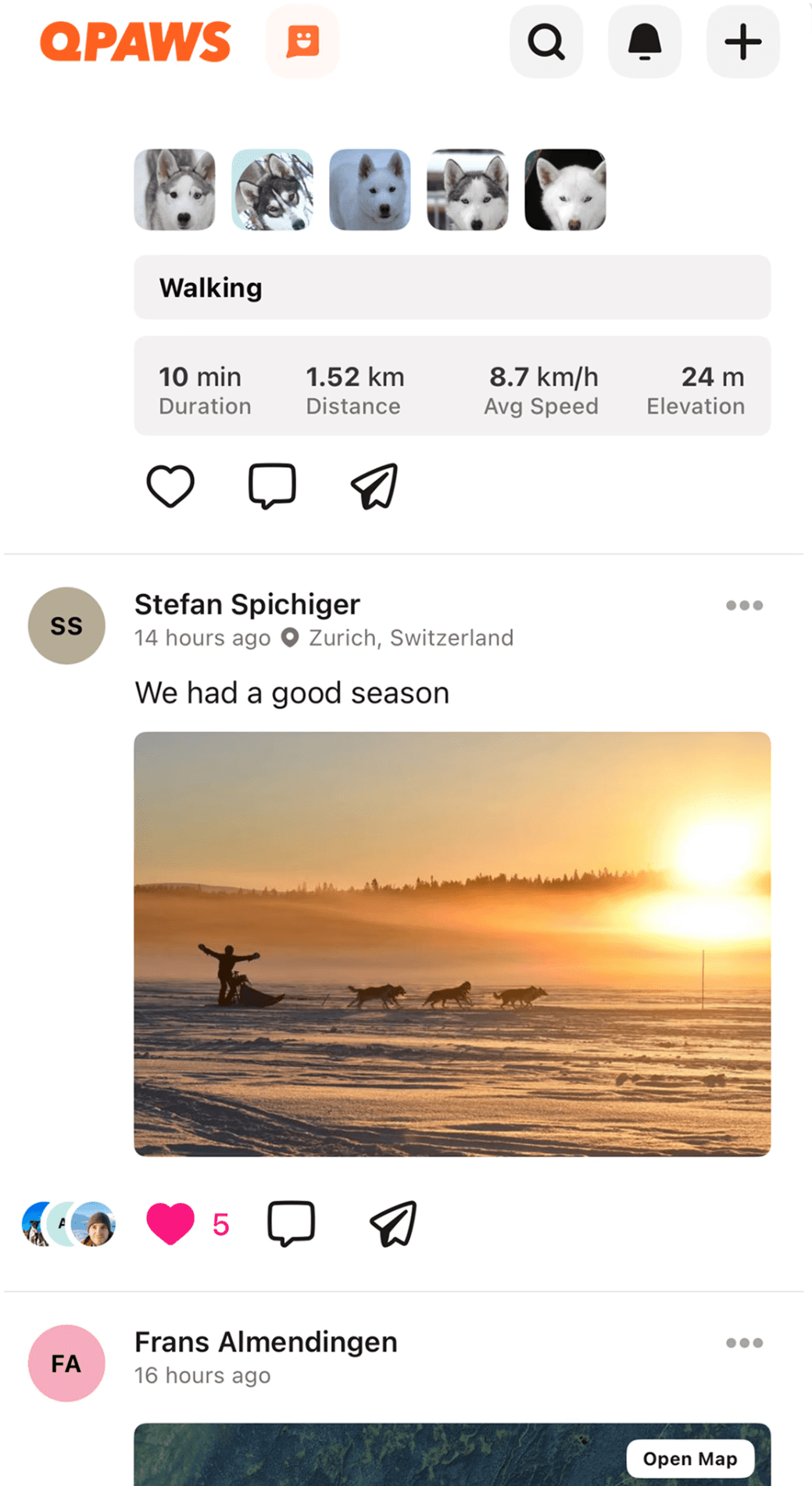
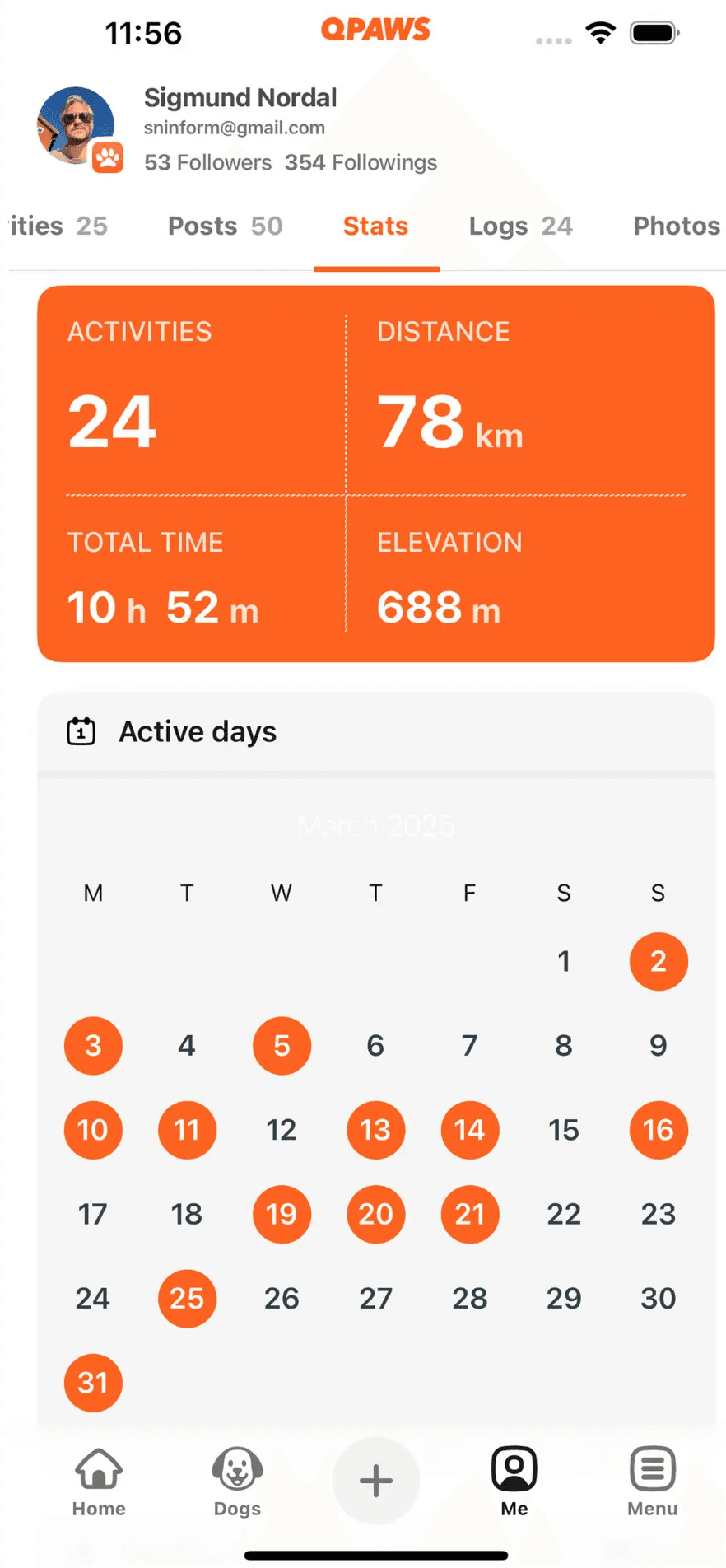
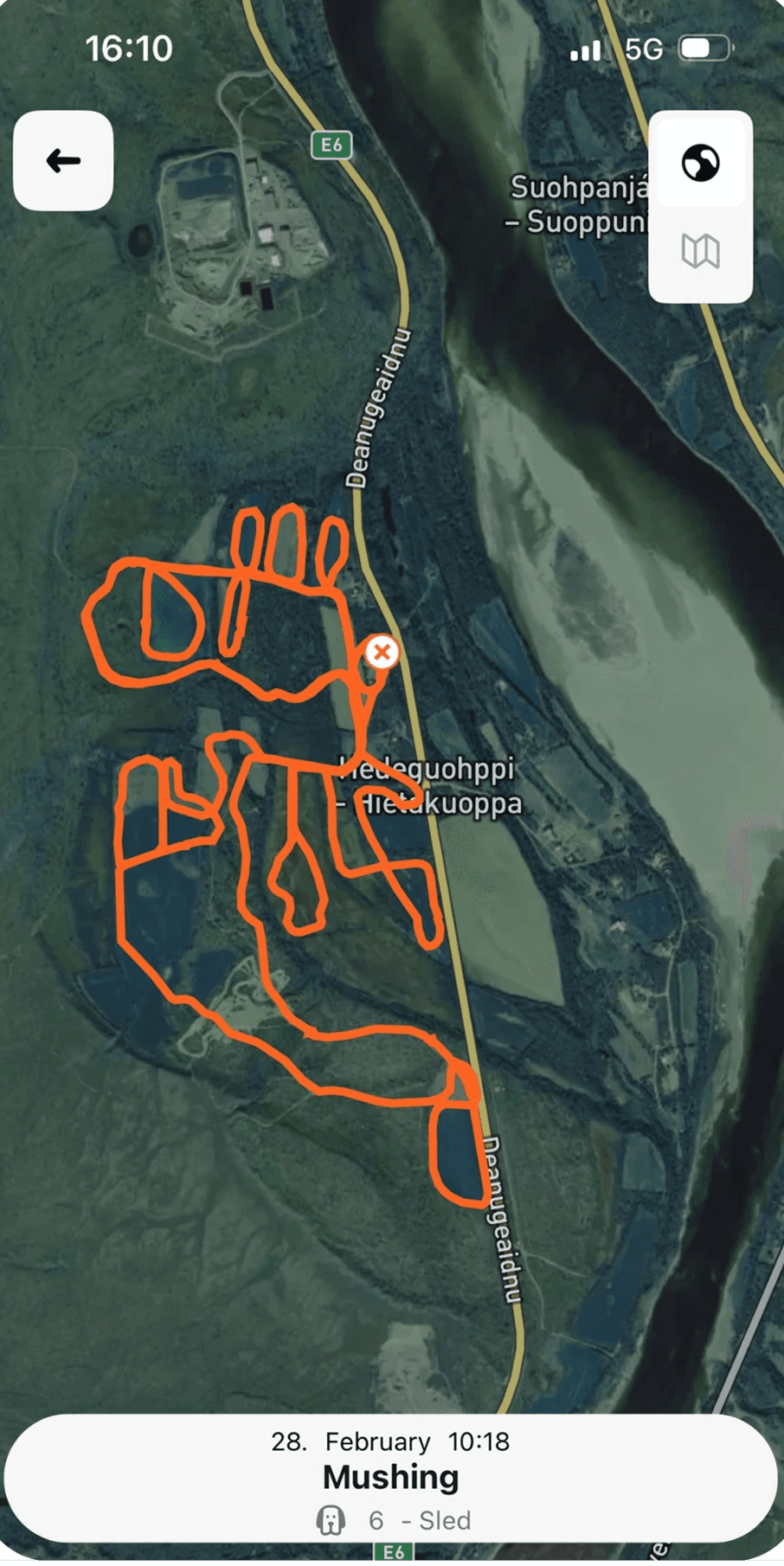
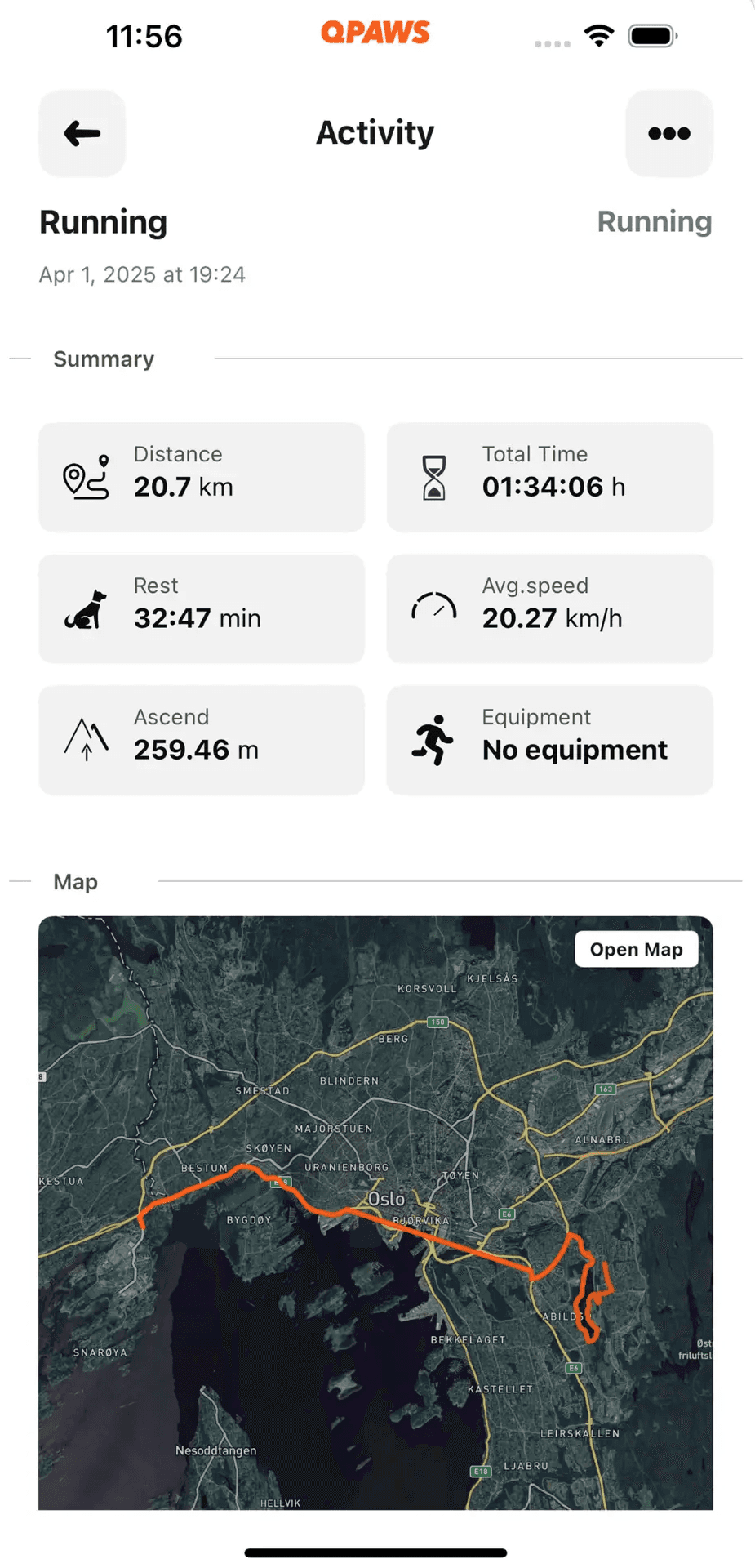
Log your dog's training sessions and track performance trends in Qpaws – distance, duration, effort level, and post-session state, so you can build a picture of what their body responds to. Over a training block, that data tells you more than guesswork does. And if you want to understand how sleep and rest drive athletic adaptation in active dogs, that's where the real performance gains often hide.
The Bottom Line
Genetics built your dog for something specific. The breeds that dominate competitive dog sports aren't there by accident – they carry physical traits, metabolic profiles, and working drives that align precisely with what those sports demand.
The best sport for your dog is the one that works with their biology rather than against it. Find that match, and training stops feeling like work for both of you.
Found your dog's sport? Log your training, track their progress, and see the patterns that drive real performance. Start free on Qpaws.
Related articles:

![Dog Endurance Training: Build Stamina Safely [Guide]](https://framerusercontent.com/images/7Y2HphZSTrLGkXRZ9TrZXx7u30.png?width=2240&height=1260)