





If you share your home with more than one dog, you already know the math doesn't work out evenly. One dog is ready for a five-mile trail. Another needs a twenty-minute walk and a long nap. Train them together at the same intensity and you either hold back the fit one or push the slower one past their limit – sometimes both, in the same session.
Most multi-dog owners solve this by defaulting to the middle: a pace and duration that's not quite right for anyone. The fittest dog ends up chronically under-stimulated. The lowest-fitness dog gets pushed past where they should be – and that's where soft tissue problems start. Neither outcome is intentional, but both are predictable.
This guide is the alternative. It covers how to assess each dog individually, sort them into practical fitness tiers, and design sessions where every dog works at the right level – at the same time.
Why Same-Session Training Fails Mixed-Fitness Groups
When you train multiple dogs together at a flat intensity – same distance, same pace, same duration – someone always gets the wrong dose.
The under-fit dog gets overloaded. Not dramatically, not in ways you'd see in real time – they finish the session, drink water, lie down. But the next morning they're stiff, or quiet, or slow to rise. Small signals that compound over weeks into soft tissue injuries that sideline dogs for months.
The over-fit dog gets chronically under-worked. That energy goes somewhere: restlessness at home, harder pulling on the leash, fixating on stimuli, or destructive behavior that wasn't there before. These aren't personality problems – they're behavioral signals of unmet physical need.
The fix isn't more sessions or a longer schedule. It's treating your dogs as individuals, even when they're on the same walk.
Step 1: Assess Each Dog Individually
Before you structure anything, you need a clear picture of where each dog is starting. Breed and age give you rough context, not actual data – a five-year-old Labrador who's been largely inactive is not the same athlete as a five-year-old Labrador who runs trails twice a week.
Run through this assessment for each dog separately. It takes fifteen minutes per dog and gives you a foundation for every decision that follows.
Endurance check. Take each dog on a 20-minute walk at your normal pace. Afterward, time how long until they stop panting and return to normal breathing. Under 10 minutes: solid baseline. Over 20 minutes: they're working harder than the session looked.
Muscle symmetry. Run both hands down either side of the spine, along the shoulders, and across the hindquarters. Both sides should feel even. Noticeable asymmetry (one side more developed or tighter) suggests a dog who's been compensating for discomfort. That matters before you add a load.
Mobility check. Watch each dog walk, then trot, across a flat surface. Note: stiffness in the first few steps, shortened stride on one side, reluctance to turn in one direction, or head bobbing. These are flags to track, not immediate diagnoses.
Recovery observation. Think back to the last time this dog had real physical output. How did they seem the following morning? Normal is your baseline confirmed. Stiff, slow to rise, or quieter than usual means their current ceiling is lower than their activity level.
Write one line per dog. You're not building a training log yet – you're establishing a reference point to measure progress and regression against.
Related: How to Read Your Dog's Post-Exercise Body Language – the subtle signals owners miss until something goes wrong.
Step 2: Sort Your Dogs into Fitness Tiers
Once you've assessed each dog, sort them into three tiers. These aren't permanent labels, but starting points that inform how you structure sessions now.
[Tier 1] Low Baseline
Dogs who've had limited activity recently, seniors, dogs recovering from illness or injury, or breeds with known physical constraints. These dogs need a gradual ramp over 4–6 weeks before any intensity is added. The priority is building the habit and conditioning the connective tissue – tendons and ligaments adapt significantly slower than cardiovascular fitness does, and that gap is where most injuries happen.
[Tier 2]
Moderate Baseline
Dogs maintaining some activity (regular walks, occasional off-leash time) but nothing structured or high-output. They're ready for moderate sessions now and can handle increases every 1–2 weeks once they've shown consistent recovery.
[Tier 3]
Active Baseline Dogs who've been regularly active and are showing it: fast recovery, strong muscle tone, high resting energy. They need intensity and duration. Hold them at a low level for too long and they'll plateau fast – then regress behaviorally.
In most multi-dog households, you'll have dogs spread across two or three tiers. That spread is the problem, and once you name it, it becomes the solution. Sessions need variation built in, not the same input for every dog.
Step 3: Build Sessions That Work for Mixed Groups
The default assumption is that different fitness levels mean separate sessions for everyone. That's occasionally true, but usually it's not required – and it's rarely sustainable long-term.
The better approach: design sessions with intentional variation baked in so each dog works at their appropriate level within the same block of time.
The Anchor-and-Extend Method
Start every session with a shared activity at the pace of your lowest-tier dog. This is the anchor — what everyone does together. Then, while Tier 1 rests or sniffs, extend the session for Tier 2 and Tier 3 dogs.
Example: 60-minute session, three dogs across three tiers
Time | Tier 1 Dog | Tier 2 Dog | Tier 3 Dog |
|---|---|---|---|
0–20 min | Leash walk, easy pace | Same | Same |
20–35 min | Rest, long sniff break | Light jog or off-leash play | Interval work + recall drills |
35–50 min | Short sniff walk | Sniff walk | Fetch or agility |
50–60 min | Cool-down together | Cool-down together | Cool-down together |
Your Tier 1 dog gets 30 minutes of appropriate movement. Your Tier 3 dog gets 50 minutes, including high-output work. Everyone cools down together. Nobody is under-served.
Shared Off-Leash, Individual Leash Work
Off-leash time is a natural self-regulator: fit dogs run, lower-fitness dogs sniff and move at their own pace. If your dogs are reliably safe off-leash together, let the open space handle individual calibration during that portion.
Use leash time (where you control pace and duration) for the structured portions where tier differences need to be managed actively.
The Double Loop
Map two routes from the same start point: a short loop and a long loop. Walk the short loop with your Tier 1 dog, settle them, then take your higher-tier dogs on the long loop. Works well with two people and works solo if you have a safe spot to crate or settle your lower-fitness dog mid-session.
Surface variation across loops matters too – trails and inclines recruit different muscle groups than flat ground and load dogs differently, even at the same duration. If your Tier 3 dog's loop includes terrain and your Tier 1 dog's is flat, the difference in training stimulus is larger than the time difference alone.
Related: Urban Canicross Training: Getting Results Without Trail Access – how to structure sessions when your environment limits what's possible.
Step 4: Log Stats That Tell You Something Real
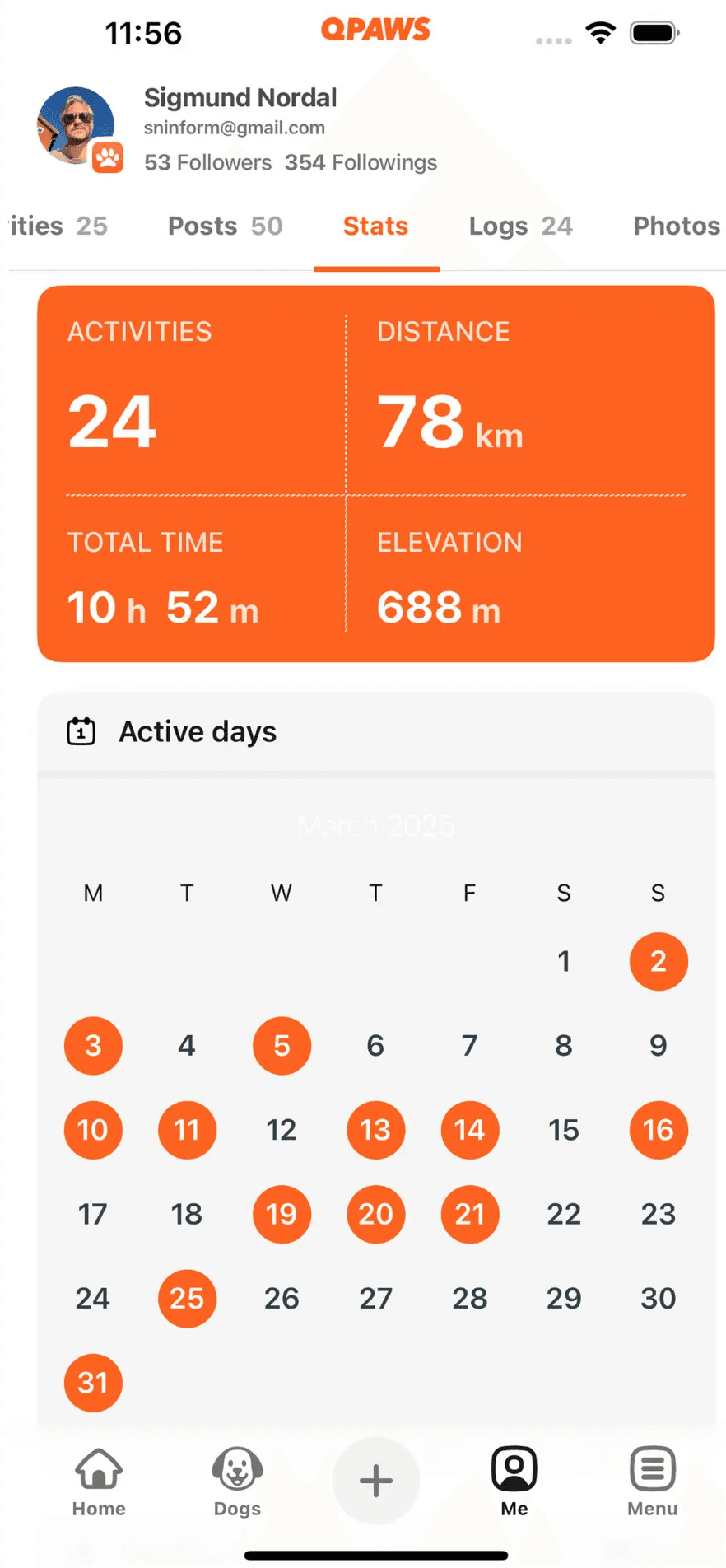
Multi-dog owners are making ongoing decisions: how hard to push, when to hold back, when to progress, across multiple animals with different baselines. Without any record-keeping, those decisions are based on memory, which degrades fast and tends to average across dogs rather than capture individual variation.
You don't need an app or a spreadsheet. A notes file updated for 60 seconds after each session is enough, if you're capturing the right things.
What to Log Per Dog, Per Session
Duration or distance. Even roughly: "25-min easy walk" or "40-min with 10-min jog."
Perceived exertion (1–5). How hard did this dog work? 1 = light, 3 = appropriate effort, 5 = clearly pushed. This is more useful than GPS data because it's calibrated to the individual dog, not an external number.
Recovery time. Minutes until they stopped panting after the session. Five seconds to note and diagnose over time.
Next-morning observation. One line: "normal" or "stiff / slow / quiet." Add a note if something specific stood out.
Flags. Anything unusual – favoring a leg, not finishing water, reluctance to go out. Low-signal on their own; high-signal as a pattern.
Logging every session is the difference between making decisions based on vibes and making them based on what actually happened.
What Two Weeks of Logs Tell You
After two weeks of consistent notes, you can answer questions that would otherwise be invisible:
Is your Tier 1 dog's recovery time trending shorter? They're building fitness. Staying flat or lengthening? They're at capacity or slightly over it.
Does one dog consistently show stiffness after hilly terrain but not flat? That's specific, actionable information.
Is your Tier 3 dog scoring 1–2 on perceived exertion across every session? You're under-working them and the behavioral fallout is coming.
Are you consistently skipping the extension portion of sessions? Your highest-tier dog isn't getting what they need.
The logs aren't about precision. They're about having enough information to make better decisions than guessing.
Step 5: Catch Imbalances Before They Become Injuries
Dogs don't communicate in the way humans do. They keep going, often well past where they should, because movement and being with you are both instinctively rewarding. By the time a dog is visibly limping or refusing to go out, you've usually missed a two-week window of early signals.
Signs a Tier 1 Dog Is Being Over-Extended
Takes longer to warm up at the start of walks than before;
Slows down earlier in the session – not distracted, just done;
Drinking noticeably more water post-session;
Sleeping harder than normal, even on rest days;
Morning stiffness that's getting worse across the week, not better.
If you see two or more of these together, reduce session length by 25% and hold at that level for a full week before progressing. Accumulated fatigue presents behaviorally before it presents physically – catching it at this stage costs you a week; missing it can cost you months.
Signs a Tier 3 Dog Is Under-Worked
Restlessness in the evenings at home, especially after sessions;
Destructive behavior that's new or increasing;
Pulling harder on the leash during shared sessions than they used to;
Pestering other dogs or becoming hypervigilant to outdoor stimuli;
Perceived exertion scores consistently at 1–2 out of 5.
Under-worked high-fitness dogs develop real behavioral issues. These are not personality flaws – they're data points. The fix is addressing the output deficit, not the behavior.
The Weekly Asymmetry Check
Once a week, watch each dog trot across a hard, flat surface – a driveway or sidewalk works. You're watching for:
any favoring of one leg,
shortened stride on one side,
head bobbing (front leg issue) or hip drop (rear leg issue),
reluctance to trot at all, or stiffness beyond the first few steps.
Asymmetry caught at this stage is usually a rest-and-monitor situation. Dogs rarely show pain directly – a subtle stride change is often the only visible signal of something worth investigating before it becomes structural. Caught at the stage where a dog won't bear weight, it's a vet visit. The check takes two minutes.
Related: Joint Health in Active Dogs: What to Know Before the Problem Starts – proactive care for dogs who train regularly.
Gear and Recovery for Each Dog's Level
Different fitness tiers have different gear and recovery needs. Treating them identically here is as much of a mistake as giving them the same training load.
Harness fit by build, not just size. A harness that fits a 90-lb working breed is not appropriate for a 40-lb mixed breed with a narrow chest, even if the sizing chart suggests otherwise. Poor fit changes gait – and gait compensations sustained over weeks of consistent activity accumulate. Check that each dog's harness sits correctly for their specific structure, and watch for coat wear patterns at the chest and withers that signal a fit or design problem.
Individual water access post-session. In multi-dog homes, lower-fitness dogs often don't drink enough after sessions because more assertive dogs dominate the shared bowl. Make sure each dog, especially Tier 1 dogs who are working harder relative to their baseline (even when the session looked easy), has their own access.
Recovery support matched to workload. Higher-tier dogs working at intensity need post-session recovery care: joint support, adequate rest, and appropriate nutrition timing. Tier 1 dogs coming off a low-activity period have connective tissue being asked to adapt quickly – they need it too, just for different reasons. What a dog needs immediately after a high-effort session differs by tier and by the session type.
Paw care per terrain exposure. Not all dogs in a group have the same paw pad toughness. A dog whose exercise has been minimal has softer pads than one that's maintained regular outdoor activity. Terrain that's routine for a Tier 3 dog can cause cracking or raw spots in a Tier 1 dog on the same walk.
Rest days are structural components, not gaps in the schedule – and Tier 1 dogs need more of them per week than Tier 3 dogs, even when everyone did the same session. Build that into the plan from the start.
The Bottom Line
Training multiple dogs with different fitness levels is a calibration problem, not a logistics problem. The mistake isn't having dogs at different levels – that's just reality in most multi-dog households. The mistake is treating the group as a unit when each member has different needs.
Assess individually. Tier clearly. Design sessions with variation built in. Log what actually informs decisions. Run the asymmetry check weekly. And when you see signals – overwork in a Tier 1 dog, behavioral restlessness in a Tier 3 one – act on them before they compound.
Your fittest dog gets what they actually need. Your lowest-fitness dog doesn't get pushed past their current limit. And you spend more time doing it right, and less time managing the fallout from getting it wrong.
__
Managing dogs at different fitness levels? Log each dog's sessions separately (effort, recovery time, and morning behavior) in Qpaws. Two weeks of individual data show you patterns that group averages hide. Download free on iOS and Android. [Download Qpaws – Free]
____
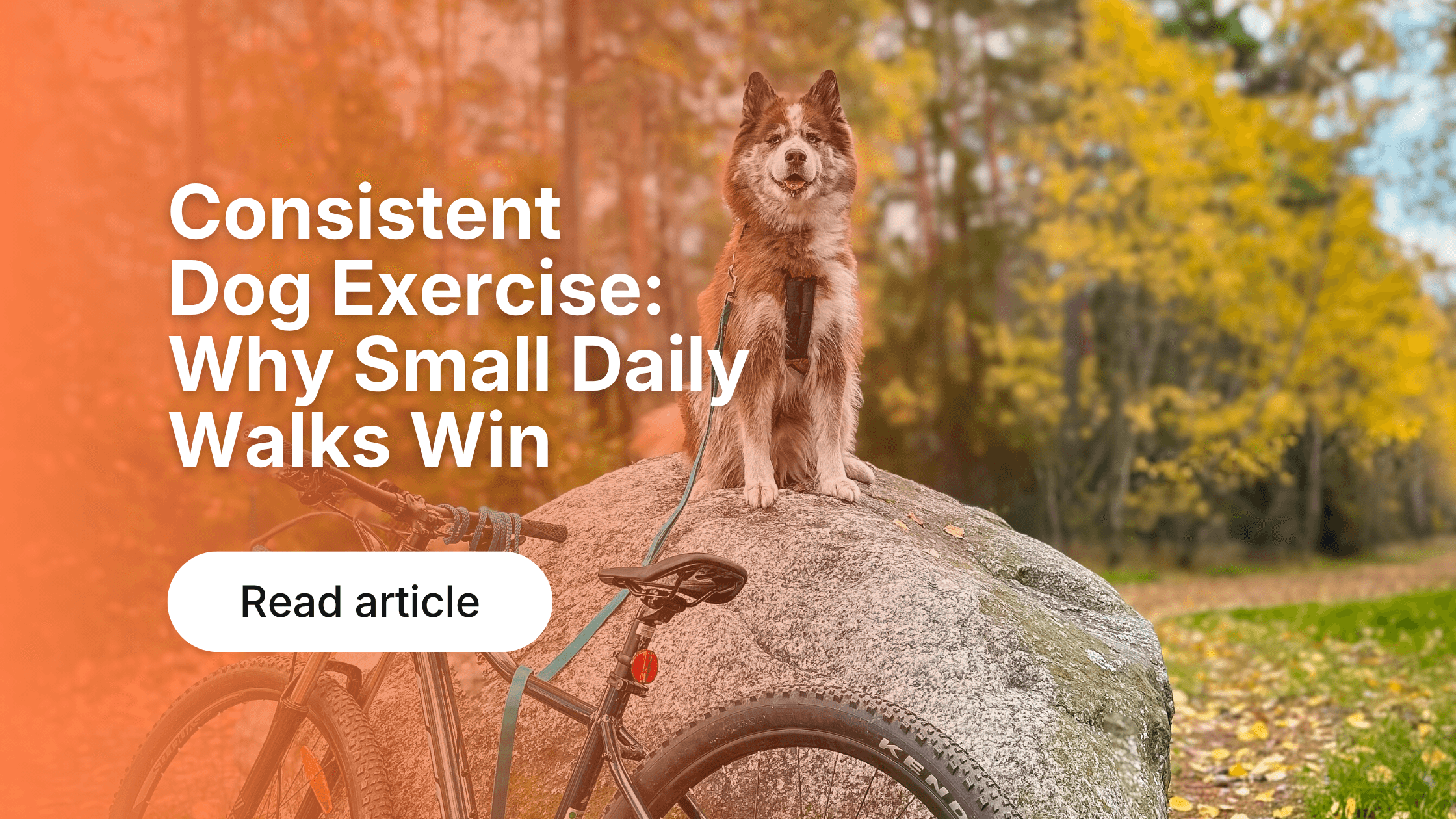
Thanks to Julie Bernaschina from 🇨🇭 Swietzerland for providing the photos!
Related articles:

![Dog Endurance Training: Build Stamina Safely [Guide]](https://framerusercontent.com/images/7Y2HphZSTrLGkXRZ9TrZXx7u30.png?width=2240&height=1260)