





Most dog fitness trackers aren't fitness trackers.
They're location safety devices with a step counter bolted on. They'll tell you if your dog escapes the yard. They'll show you a rough step count for the day. What they won't tell you is whether your dog's training load is building correctly, whether they've recovered from yesterday's hard session, or whether the drop in performance you noticed last week follows a pattern you should act on.
That distinction matters more in 2026 than it did a few years ago. The market for dog activity hardware has grown, but most of the growth has been in GPS safety collars and basic health tags. If you're an active dog owner – running canicross, training a mushing team, doing agility, or simply serious about keeping a working dog genuinely fit – understanding which data actually tells you something useful is the starting point before you choose any hardware.
This guide breaks the market into its real categories, explains what each type actually captures, and shows where the gaps are.
What Dog Fitness Trackers Really Do in 2026 – The 3 Main Categories
Dog trackers fall into three functionally distinct groups. The distinction matters because they're solving different problems – and buying the wrong category means missing the data you need, regardless of how premium the hardware is.
1. GPS Trackers – Location Safety First
Examples: Pitpat, Tractive, Fitbark, Fi, Lildog
These devices are purpose-built for one job: knowing where your dog is. They do it well.
What they track:
live or near-live GPS location,
escape alerts and geofencing,
basic activity metrics (steps, rest, minutes active).
What they don't track: training load, recovery state, session-by-session performance trends, or anything specific to a sport or activity type. Step counts are useful for sedentary or weight-monitoring dogs. For a dog doing 25 km runs or multi-day sled work, step count tells you almost nothing actionable.
On Tractive specifically: Qpaws does not currently integrate with Tractive. Many active dog owners use Tractive alongside Qpaws – Tractive handles location safety, Qpaws handles training and performance data. They're solving different problems.
2. Fitness and Health Tags – Lightweight Monitoring
Examples: PitPat, Maven Pet
These clip-on tags focus on health monitoring rather than navigation. They're better suited to dogs where the primary concern is weight management, recovery from illness, or early detection of behavior changes.
Where these become more useful: paired with a training log, the rest and sleep data from a health tag provides context for performance patterns. The early signs that a dog's training load is too high often show up in sleep disruption and behavioral changes before they appear in performance – and a health tag captures those signals in a way that observation alone doesn't.
The limitation is that health tags aren't designed for sport-specific data. There's no field for "bikejoring session," no per-dog split in a multi-dog team, and no training load accumulation across a season.
Watch and Phone-Based Tracking – The Performance Layer
Examples: Garmin (synced to Qpaws), Apple Watch, Polar, Suunto, Fitbit
This is where performance-focused tracking actually lives: mushers, canicross runners, hikers, and active dog owners. Human-grade sports watches record the data that matters for athletic dogs:
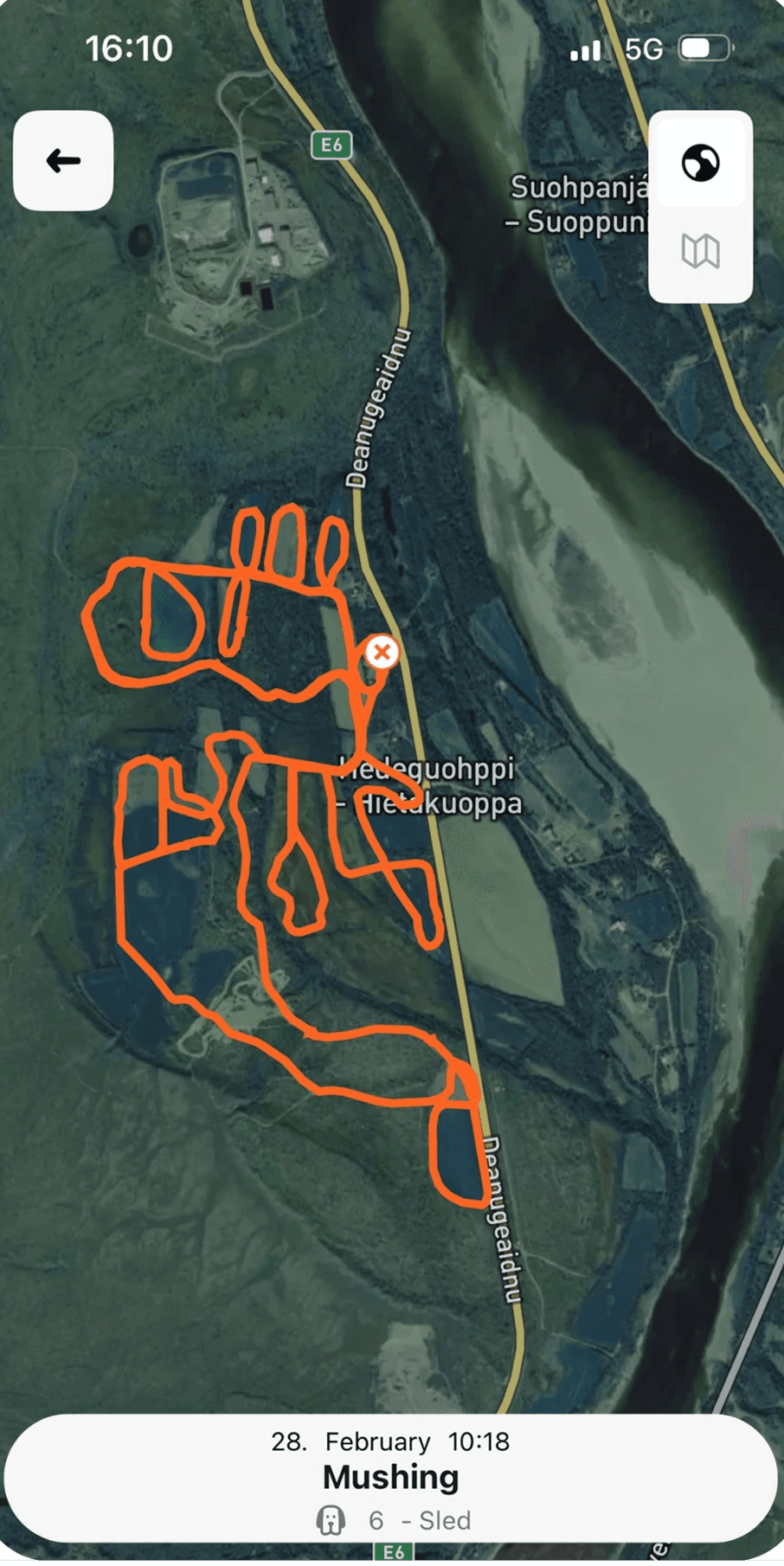
GPS route and distance
Elevation and terrain profile
Pace
Heart rate (yours – which correlates with effort even in dog-powered sports)
Automatic session recording
The limitation of using these alone: they're built around you, not your dog. Activity data tells you far more when it's tagged to the specific dog who ran, on what surface, at what effort level – and no sports watch has a field for "Border Collie, 14 km trail, paw condition: minor wear."
GPS Dog Trackers – The Big Shake-Up
The GPS tracker market has consolidated significantly. Whistle has been acquired by Tractive, meaning Whistle devices are effectively phasing out, and Tractive has solidified its position as the global leader.
The GPS Tracker Comparison
Device | Key Features | Ideal For | Notes |
|---|---|---|---|
Tractive | GPS, escape alerts, virtual fences, basic activity | Off-leash safety | Global leader. Best choice for pure safety tracking. |
Fi (Series 3) | GPS, activity & step tracking, long battery | Escape-prone dogs (US) | Stylish, rugged, excellent battery life. Strong US coverage. |
Where Qpaws Fits
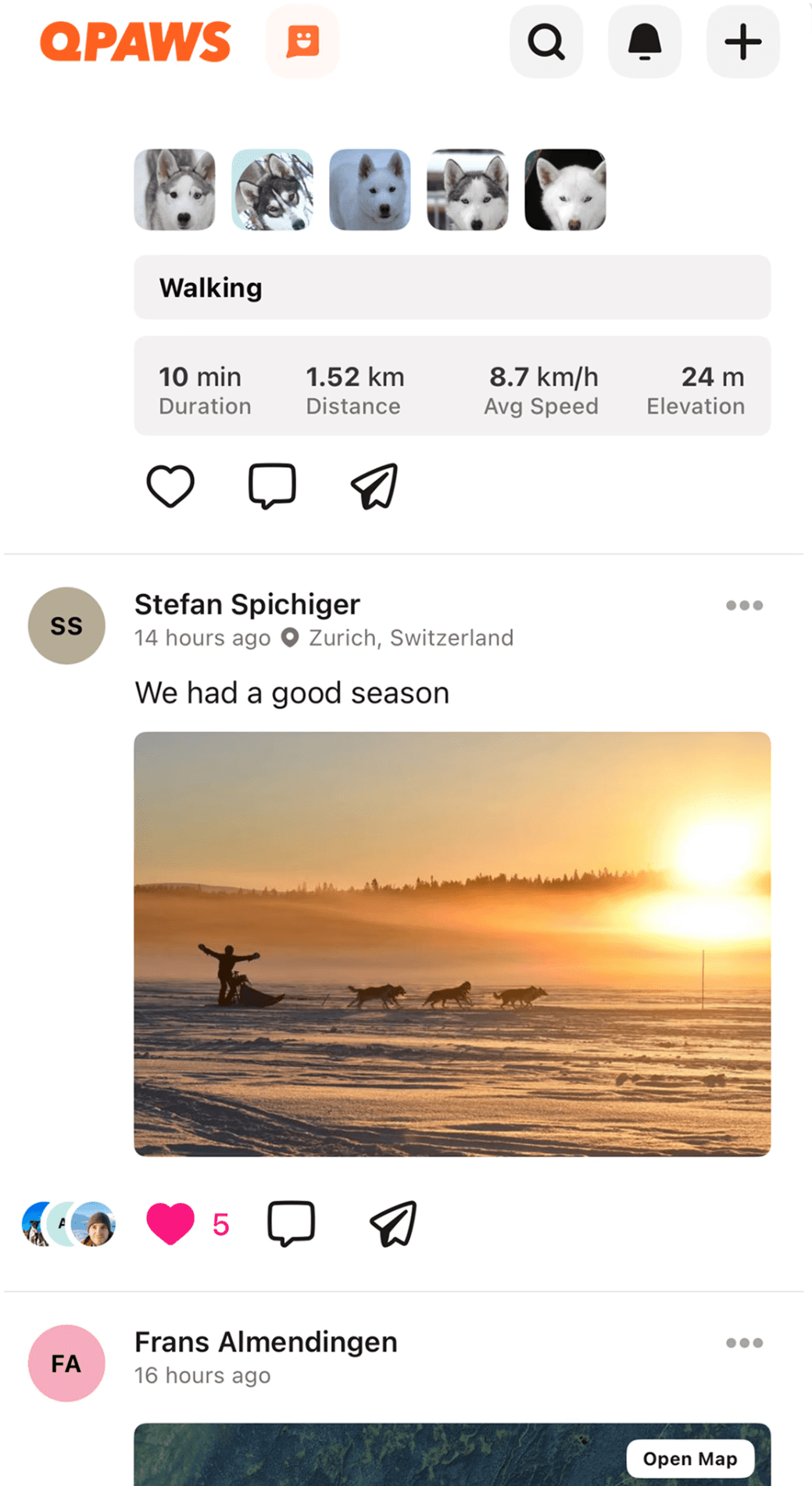
Qpaws is not a GPS collar. It's not a step counter. It's the data layer that sits on top of whatever hardware you already have and turns raw activity data into training and health insight.
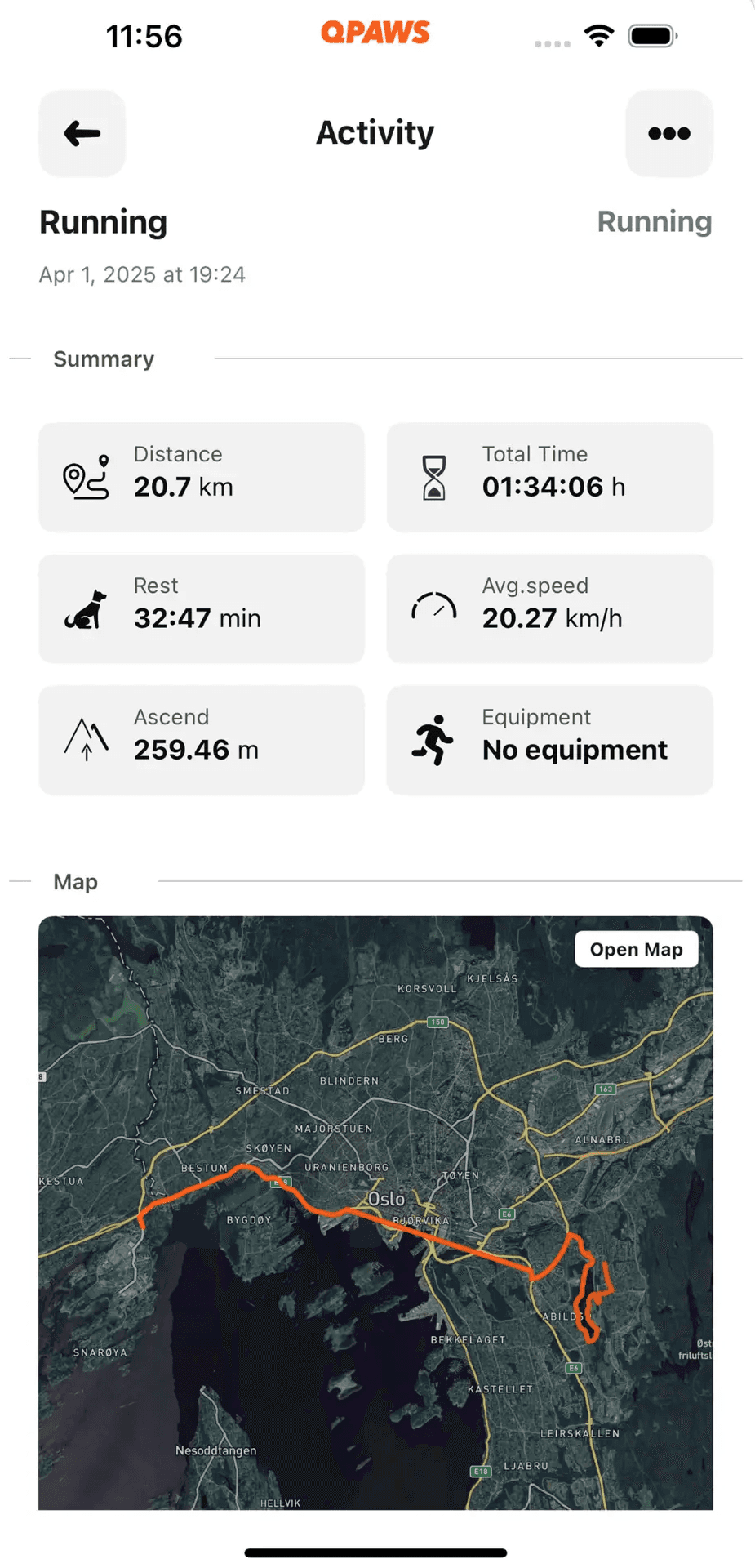
It works by syncing directly with Garmin and Strava, importing your activity sessions and letting you tag which dog (or dogs) ran. That transforms a generic "outdoor run" into a timestamped log entry for a specific dog, with fields for effort level, terrain, paw condition, and post-session behavior.
What Qpaws adds that no hardware device captures on its own:
Sport-specific activity types: canicross, bikejoring, mushing, skijoring, agility, and more
Per-dog session logging – essential for multi-dog teams and households
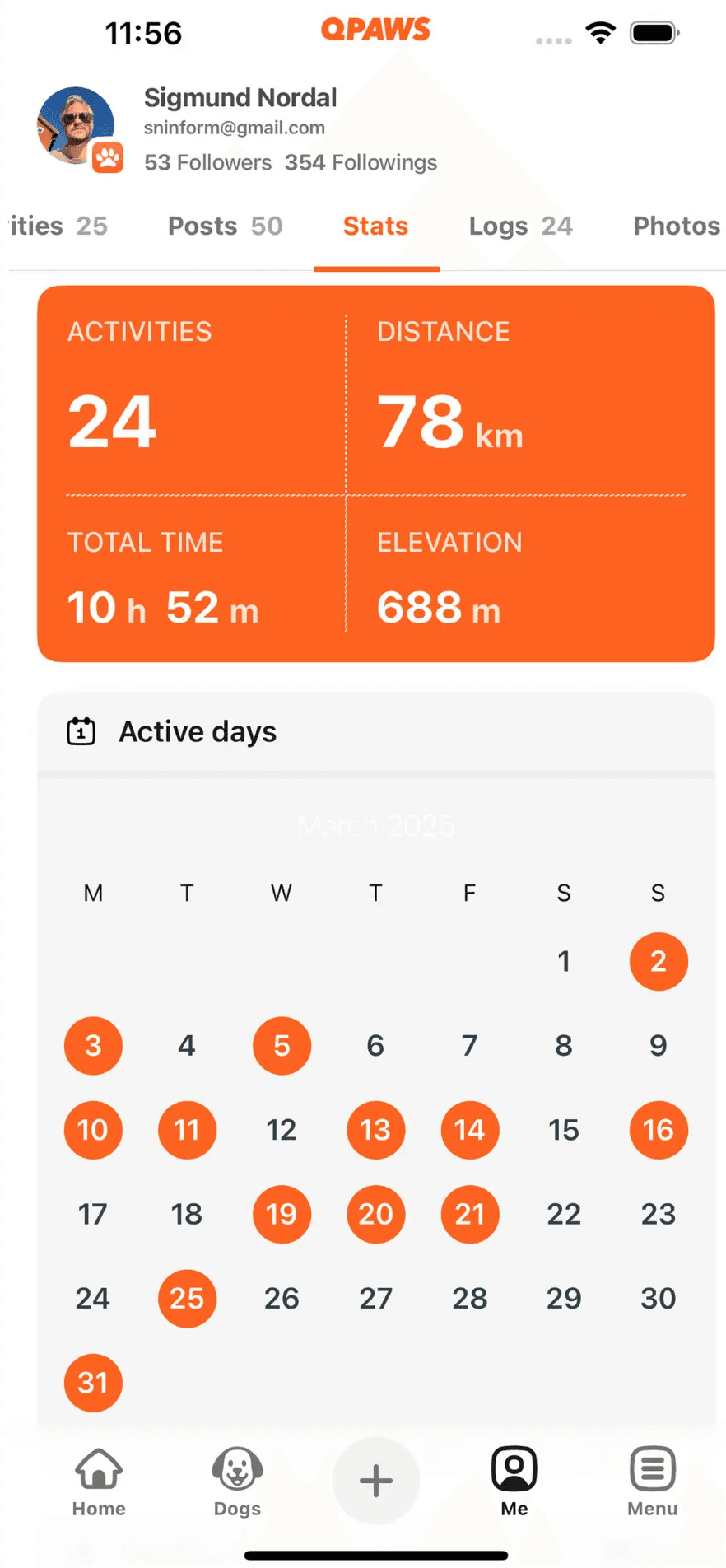
Training load tracking across weeks and seasons
Recovery logging alongside activity data
Seasonal performance trends
This is why the most useful setup for active dog owners is a hardware device for location and basic recording, plus Qpaws as the analysis layer. The hardware does the measurement. Qpaws does the meaning.
Fitness & Health Tags – When You Want Simplicity
If you don't need GPS location tracking, a lightweight tag is a great low-cost alternative. Fitness tags like PitPat and Maven Pet are small, tough, and battery-efficient (often lasting a year). They are perfect for:
monitoring a dog on a weight-loss plan,
tracking rest levels in senior dogs.
owners who use a standard collar/harness and don't want a more bulky GPS device.
With the data from both PitPat and Qpaws logs, these rest patterns become meaningful. You can read more about it especially alongside articles like Signs of Overexercising a Dog and Invisible Warning Signs.
Watch & Phone-Based Tracking – The "Pro" Option for Active Dogs
This is where Garmin, Apple, Fitbit, Polar, Suunto, and Strava enter the picture. You may be wondering why human-grade trackers can work best for dog sports. That's because they deliver:
accuracy: real-time pace, distance, and elevation,
route history: detailed maps of every run, hike, or ride,
convenience: you are already wearing the watch or carrying the phone.
Why Owners Pair These Trackers with Qpaws
Qpaws adds the "dog layer" that Strava and Garmin lack:
Dog-Specific Tagging: Tag a single dog or a full mushing team.
Seasonal Stats: See total distance per dog for the season (crucial for working dogs).
Load Progression: Monitor training volume to prevent injury.
Activity Types: Log specific sports like agility, canicross, and kickbike.
This is why mushers and performance dog owners use Qpaws as their central dashboard. It separates their dog's training load from their own. For more on athletic dog planning, see Dog Endurance Training – Build Stamina Safely.
Comparison – Which Tracker Fits Your Lifestyle?
Goal | Best Device Type | Why |
|---|---|---|
Off-leash safety | GPS Tracker (Tractive, Fi) | Real-time location is the only thing that matters if a dog is lost. |
Daily activity and | Health Tag (PitPat, | Simple daily movement and calorie goals. |
Hiking / Outdoors | Garmin, Suunto, Apple | You need map accuracy and terrain data. |
Canicross / Mushing | Garmin + Qpaws | Track route + training load + team stats. |
Everyday Fitness | Qpaws + Strava | Lightweight, simple, uses the phone you already have. |
Multi-dog Teams | Qpaws | The only tool that handles team tagging effectively. |
How Qpaws Makes All Tracking Data Useful
Qpaws doesn’t try to replace your devices – it acts as the hub where all your activity data becomes meaningful. And here's Qpaws, which helps you understand:
weekly training load trends,
recovery patterns (are we resting enough?),
seasonal performance,
overtraining warning signs.
And because Qpaws logs walks, runs, bike trips, sled training, agility sessions, true rest days, and vet notes, you finally see the full picture of your dog’s active life.
Recently, many readers explored agility-specific training alongside fitness data through Dog Agility Training for Beginners – Build Confidence & Coordination.
Choosing the Right Dog Fitness Tracker – A Simple Decision Flow
If Your Priority is SAFETY (preventing lost dogs):
Choose: Tractive (Global) or Fi (US).
Why: Real-time GPS is unbeatable for finding a lost dog.
If Your Priority is HEALTH & SIMPLICITY:
Choose: PitPat or Maven Pet.
Why: Lightweight, long battery, great for monitoring weight and rest.
If You’re an ACTIVE OWNER or DOG SPORT ATHLETE:
Choose: Garmin, Suunto, Apple Watch, Polar...
...and sync to Qpaws (Garmin integration at the moment).
Why: You get professional-grade sport data + dog-specific training logs.
If You Want ONE APP to See Everything:
Use: Qpaws + any hardware you own.
Why: Mix a GPS collar for safety with a sports watch for training, and see it all in one place.
FAQ
How Does Qpaws Work with My Garmin or Strava?
Qpaws automatically imports your workouts from Garmin or Strava. After syncing, you tag the dog (or dogs) who joined. This transforms your personal fitness data into a precise, timestamped dog activity log.
Do I Need a GPS Collar if I Use Qpaws?
Not necessarily. GPS collars are for location safety (finding a lost dog). Qpaws is for training and health insight. Many owners use both: a Tractive/Fi collar for peace of mind, and Qpaws for training data.
Can I Track Multiple Dogs with Qpaws?
Yes. You can tag individual dogs or full teams, which is essential for mushers and multi-dog households.
Which Tracker Is Best for Mushing or Canicross?
Garmin + Qpaws is the most accurate combination, specifically for distance, elevation, terrain, and seasonal stats.
Why Should I Track Recovery and Rest?
Dogs rarely show discomfort clearly. Subtle changes in rest or enthusiasm can be early warnings. See Invisible Signs You Shouldn’t Ignore.
____
Thanks to Matiu Crusener-Mattei from 🇫🇷 France for providing the photos!
→ https://www.facebook.com/otxoateam/
→ https://www.instagram.com/otxoa_team/
Related articles:

![Dog Endurance Training: Build Stamina Safely [Guide]](https://framerusercontent.com/images/7Y2HphZSTrLGkXRZ9TrZXx7u30.png?width=2240&height=1260)